Cardan Shaft Coupling Improves The Operation Stability And Efficiency Of Polyurethane Sandwich Panel Production Line
In the modern manufacturing industry, the production of polyurethane sandwich panels has become an indispensable part of the construction, refrigeration, and industrial insulation fields due to their excellent thermal insulation, sound insulation, and structural strength. The production line of polyurethane sandwich panels is a complex integrated system that involves multiple links such as uncoiling, feeding, compounding, foaming, curing, and cutting. Each link is closely connected, and the stable operation of the transmission system directly determines the production efficiency, product quality, and operational cost of the entire line. Among the key components of the transmission system, the cardan shaft coupling plays an irreplaceable role. It not only undertakes the task of transmitting power between different equipment components but also effectively solves the problems of axial, radial, and angular deviations caused by installation errors, equipment operation deformation, and temperature changes, thereby significantly improving the operation stability and production efficiency of the polyurethane sandwich panel production line.
To understand the role of cardan shaft coupling in the polyurethane sandwich panel production line, it is first necessary to clarify the operational characteristics and transmission requirements of the production line. The production process of polyurethane sandwich panels requires continuous and stable power transmission between multiple pieces of equipment, such as the uncoiler, conveyor belt, foaming machine, pressing roller, and cutting machine. These equipment components are often installed in different positions, and due to factors such as foundation settlement, equipment vibration during operation, and thermal expansion and contraction of mechanical parts, it is difficult to ensure absolute coaxiality between the output shaft of the power source (such as a motor or reducer) and the input shaft of the driven equipment. In addition, the production line needs to adjust the operating speed and torque according to different product specifications and process requirements, which puts higher demands on the flexibility and adaptability of the transmission system. Traditional rigid couplings, which have strict requirements on coaxiality and cannot compensate for deviations, often lead to increased equipment vibration, accelerated wear of mechanical parts, frequent shutdowns for maintenance, and other problems in long-term operation, seriously affecting the stability and efficiency of the production line.
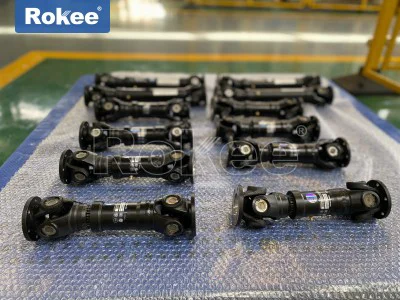
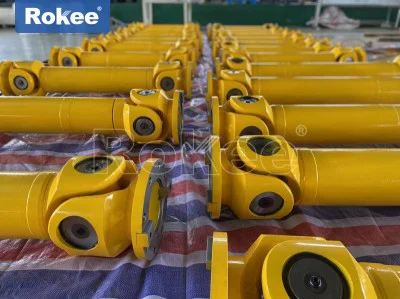
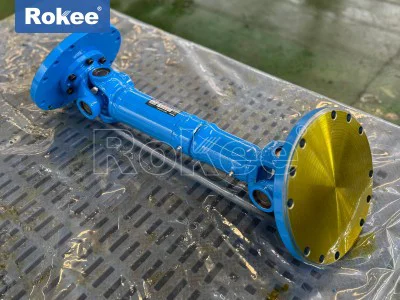
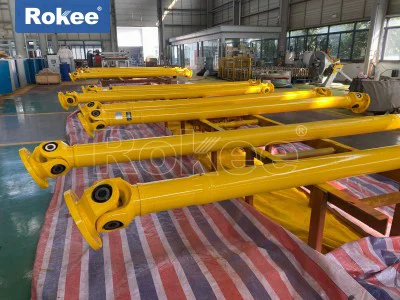
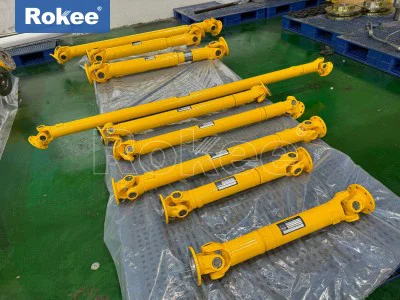
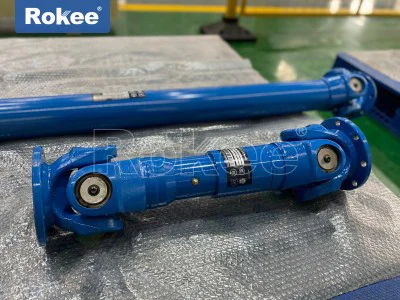
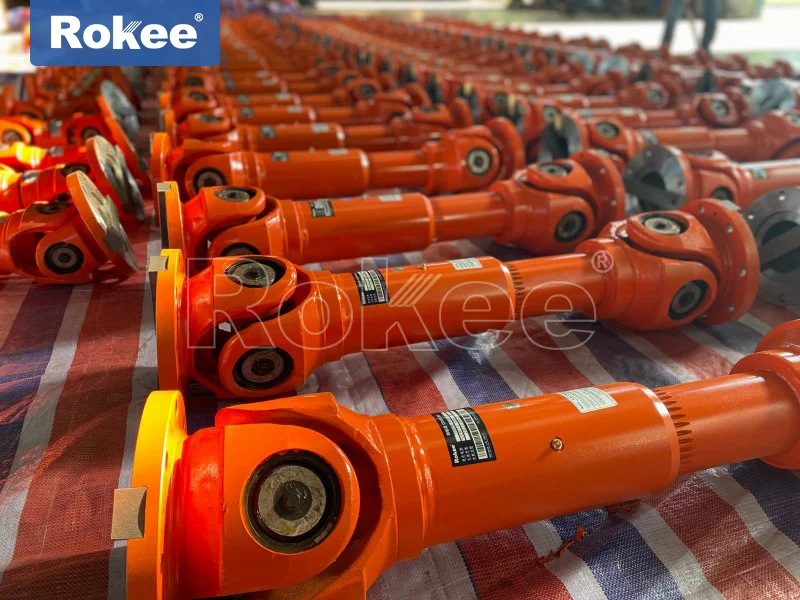
The cardan shaft coupling, also known as the universal joint coupling, is a mechanical component that connects two shafts with different axes or angular displacements and transmits power. Its unique structural design allows it to compensate for axial, radial, and angular deviations between the two connected shafts within a certain range, ensuring stable and efficient power transmission even when the equipment is not perfectly coaxial. This characteristic is particularly important for the polyurethane sandwich panel production line, where the installation and operation conditions are complex and deviations are inevitable. Compared with other types of couplings, the cardan shaft coupling has significant advantages in terms of deviation compensation, load-bearing capacity, and service life, making it an ideal choice for the transmission system of the polyurethane sandwich panel production line.
One of the core functions of the cardan shaft coupling in improving the operation stability of the polyurethane sandwich panel production line is its excellent deviation compensation capability. In the production process, the uncoiler needs to continuously release the base material (such as color steel plate or aluminum plate), and the conveyor belt needs to stably transport the base material to the foaming and compounding link. The installation positions of these two pieces of equipment are often not on the same straight line, and there may be a certain angular or radial deviation. If a rigid coupling is used, the deviation will cause additional stress on the shaft and bearing, leading to intense vibration of the equipment during operation. This vibration not only affects the smooth transportation of the base material, resulting in uneven feeding and affecting the compounding effect of the sandwich panel but also accelerates the wear of the bearing, shaft, and other components, increasing the failure rate of the equipment. The cardan shaft coupling can effectively absorb these deviations through its cross-axis structure and flexible connection mode, reducing the additional stress on the transmission system, thereby reducing equipment vibration and noise. Practice has shown that after adopting the cardan shaft coupling, the vibration amplitude of the key equipment in the production line can be reduced by more than 30%, the wear of bearings and shafts is significantly reduced, and the frequency of equipment failures is reduced by nearly half, ensuring the continuous and stable operation of the production line.
In addition to deviation compensation, the cardan shaft coupling also has strong load-bearing capacity and impact resistance, which further enhances the operation stability of the production line. The production of polyurethane sandwich panels involves high-pressure foaming and high-temperature curing links. The foaming machine needs to output a certain pressure to inject the foaming material into the gap between the two base materials, and the pressing roller needs to apply a stable pressure to ensure the bonding firmness of the base material and the foaming layer. These processes require the transmission system to bear large torque and impact load. If the coupling has insufficient load-bearing capacity, it may cause deformation or even fracture of the coupling during operation, leading to sudden shutdown of the production line. The cardan shaft coupling is usually made of high-strength materials such as alloy steel, which has high tensile strength, fatigue resistance, and impact resistance. It can stably transmit large torque and effectively absorb the impact load generated during equipment startup, shutdown, and load change, avoiding the occurrence of coupling failure. At the same time, the cardan shaft coupling has a compact structure and small size, which can be installed in a limited space, ensuring the rational layout of the production line and reducing the mutual interference between equipment components.
The improvement of operation stability by the cardan shaft coupling directly promotes the improvement of production efficiency of the polyurethane sandwich panel production line. In the traditional production line using rigid couplings, due to frequent equipment failures and the need for regular maintenance, the effective operation time of the production line is greatly reduced. Every shutdown for maintenance not only takes a lot of time but also may lead to waste of raw materials and unqualified products, increasing production costs. After adopting the cardan shaft coupling, the stability of the production line is significantly improved, the frequency of equipment failures is reduced, and the maintenance cycle is extended. This allows the production line to operate continuously for a long time, increasing the effective operation time. At the same time, the cardan shaft coupling has high transmission efficiency, which can reduce the energy loss in the power transmission process. Compared with rigid couplings, the transmission efficiency of the cardan shaft coupling can reach more than 98%, which means that more power can be transmitted to the driven equipment, improving the operating speed of the equipment. For example, in the cutting link of the production line, the stable power transmission of the cardan shaft coupling can ensure that the cutting machine operates at a uniform speed, reducing the cutting error and improving the cutting efficiency. In the foaming link, the stable operation of the foaming machine ensures the uniform foaming of the polyurethane material, reducing the time required for foaming and curing, and further improving the overall production efficiency of the production line.
Another important role of the cardan shaft coupling in improving production efficiency is to reduce the adjustment time during product specification replacement. The polyurethane sandwich panel production line needs to produce products of different thicknesses, widths, and specifications according to market demand. When replacing product specifications, it is necessary to adjust the operating parameters of each equipment and the relative position between equipment components. Due to its excellent deviation compensation capability, the cardan shaft coupling can adapt to the slight position adjustment of the equipment without the need for complex disassembly and assembly of the coupling, greatly reducing the adjustment time. For example, when adjusting the width of the sandwich panel, the position of the pressing roller needs to be adjusted, which may cause a certain deviation between the output shaft of the reducer and the input shaft of the pressing roller. The cardan shaft coupling can automatically compensate for this deviation, avoiding the need to re-calibrate the coaxiality of the coupling, thus shortening the adjustment time by more than 40% compared with the traditional rigid coupling. This not only improves the flexibility of the production line but also enables the production line to quickly respond to market changes and improve market competitiveness.
The application of the cardan shaft coupling also has a positive impact on improving the product quality of polyurethane sandwich panels. The stable operation of the production line is the premise of ensuring product quality. In the production process, if the equipment vibrates violently or the power transmission is unstable, it will lead to problems such as uneven thickness of the sandwich panel, poor bonding between the base material and the foaming layer, and irregular cutting edges. These problems will not only affect the appearance and performance of the product but also reduce the qualified rate of the product. The cardan shaft coupling reduces equipment vibration and ensures stable power transmission, making the base material feeding more uniform, the foaming more consistent, and the cutting more accurate. For example, in the compounding link, the stable operation of the conveyor belt and pressing roller ensures that the two base materials and the foaming layer are fully bonded, avoiding the occurrence of bubbles and delamination. In the cutting link, the uniform speed of the cutting machine ensures that the cutting edge is flat and smooth, reducing the waste of raw materials caused by cutting errors. Practice has shown that after adopting the cardan shaft coupling, the qualified rate of polyurethane sandwich panels can be increased by 5% to 8%, which significantly reduces production costs and improves product competitiveness.
To give full play to the role of the cardan shaft coupling in improving the operation stability and efficiency of the polyurethane sandwich panel production line, it is necessary to select the appropriate type and specification of the cardan shaft coupling according to the actual operating conditions of the production line. The selection should be based on factors such as the transmission torque, operating speed, deviation range between shafts, and working environment of the equipment. For example, in the high-torque transmission links such as the foaming machine and pressing roller, it is necessary to select a cardan shaft coupling with strong load-bearing capacity; in the links with large deviation between shafts such as the uncoiler and conveyor belt, it is necessary to select a cardan shaft coupling with good deviation compensation capability. At the same time, regular maintenance of the cardan shaft coupling is also essential. Regular lubrication of the cross-axis and bearing of the coupling can reduce friction and wear, extend the service life of the coupling, and ensure its stable operation. In addition, it is necessary to check the wear and deformation of the coupling regularly, and replace the damaged parts in time to avoid coupling failure affecting the operation of the production line.
In the context of the increasing demand for polyurethane sandwich panels in the market and the continuous improvement of production automation, the requirements for the operation stability and efficiency of the production line are getting higher and higher. The cardan shaft coupling, as a key component of the transmission system, has become an important guarantee for improving the performance of the polyurethane sandwich panel production line. Its excellent deviation compensation capability, strong load-bearing capacity, high transmission efficiency, and long service life not only solve the problems of unstable operation and low efficiency of the traditional production line but also help enterprises reduce production costs, improve product quality, and enhance market competitiveness. With the continuous development of mechanical manufacturing technology, the structure and performance of the cardan shaft coupling will be further optimized, and its application in the polyurethane sandwich panel production line will be more extensive and in-depth. In the future, the combination of cardan shaft coupling and intelligent control technology will further improve the automation level and operation stability of the production line, promoting the sustainable development of the polyurethane sandwich panel manufacturing industry.
It is worth noting that the application of cardan shaft coupling in the polyurethane sandwich panel production line is not a simple replacement of traditional couplings, but a systematic optimization of the transmission system. Enterprises need to comprehensively consider the overall layout of the production line, the operating characteristics of each equipment, and the actual production needs, and reasonably match the cardan shaft coupling with other components of the transmission system to maximize its role. At the same time, enterprises should strengthen the training of technical personnel to improve their ability to select, install, and maintain the cardan shaft coupling, ensuring that the coupling can operate stably for a long time. In addition, with the increasing emphasis on energy conservation and environmental protection, the cardan shaft coupling with higher transmission efficiency and lower energy consumption will become the mainstream choice of the industry, which will further promote the green and efficient development of the polyurethane sandwich panel production line.
In summary, the cardan shaft coupling plays a crucial role in improving the operation stability and efficiency of the polyurethane sandwich panel production line. Its unique structural advantages and excellent performance effectively solve the problems existing in the traditional transmission system, ensuring the continuous, stable, and efficient operation of the production line. By selecting the appropriate cardan shaft coupling and strengthening daily maintenance, enterprises can not only improve production efficiency and product quality but also reduce production costs and enhance market competitiveness. With the continuous progress of technology, the cardan shaft coupling will continue to play a more important role in the development of the polyurethane sandwich panel manufacturing industry, contributing to the upgrading and development of the entire industry.