Identification And Replacement Skills Of Wearing Parts Of Cardan Shaft Coupling In Continuous Sandwich Panel Production Line
In the field of modern industrial manufacturing, the continuous sandwich panel production line plays an irreplaceable role in the construction, refrigeration, and transportation industries due to its high efficiency, continuity, and stability. As a core transmission component in the production line, the cardan shaft coupling undertakes the important task of transmitting power between different equipment, ensuring the coordinated operation of uncoilers, forming machines, composite presses, and cutting equipment. However, under the long-term working conditions of high load, continuous operation, and frequent start-stop, the wearing parts of the cardan shaft coupling are prone to wear, aging, and damage, which directly affects the transmission accuracy and stability of the production line, and even leads to production interruptions, bringing economic losses to enterprises. Therefore, mastering the identification methods and replacement skills of the wearing parts of the cardan shaft coupling is crucial to ensuring the normal operation of the continuous sandwich panel production line, improving production efficiency, and reducing maintenance costs.
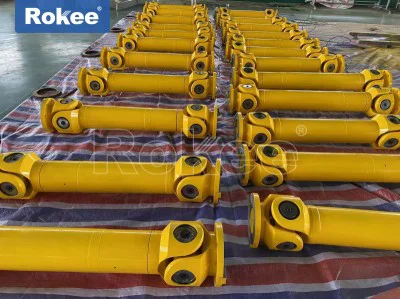
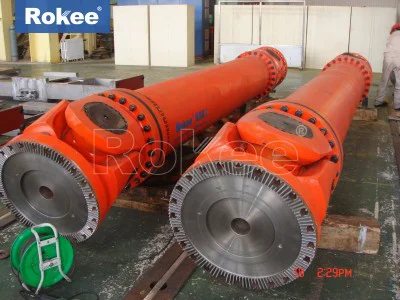
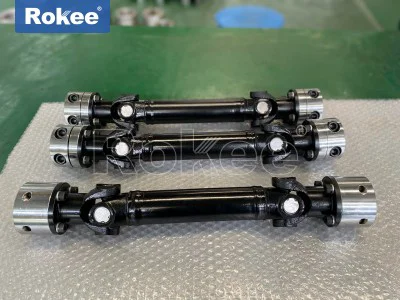
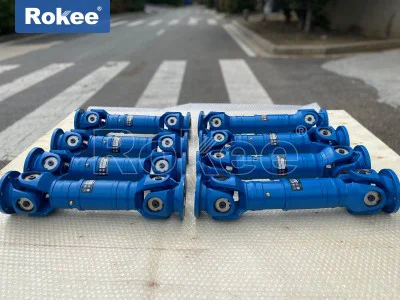
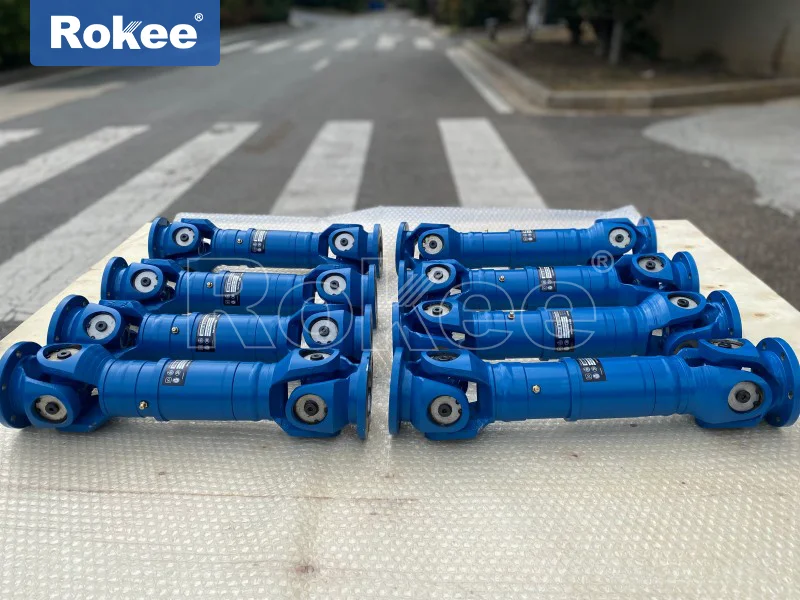
Before exploring the identification and replacement skills of wearing parts, it is necessary to first understand the structural characteristics of the cardan shaft coupling in the continuous sandwich panel production line and the types of wearing parts. The cardan shaft coupling used in the continuous sandwich panel production line is mainly composed of a cross shaft, yoke, bearing, seal, and connecting bolts. Due to the special working environment of the production line, the coupling needs to adapt to the transmission requirements of different angles and distances, and bear the impact load generated during the operation of the equipment. Among these components, bearings, seals, cross shafts, and yoke contact surfaces are the most prone to wear, which are the key wearing parts that need to be focused on in daily maintenance. The wear of these parts is not accidental; it is the result of the combined action of multiple factors, including the long-term transmission of large torque, the friction between components, the erosion of dust and impurities in the production environment, the lack of effective lubrication, and the improper installation and adjustment. Understanding the causes of wear of each wearing part can provide a basis for accurate identification and scientific replacement.
The identification of wearing parts of the cardan shaft coupling needs to be carried out in combination with daily inspection and actual operation conditions, and adopts the methods of visual inspection, listening, measuring, and comparing to comprehensively judge the wear status of each component. Visual inspection is the most direct and basic identification method, which needs to be carried out regularly during the shutdown of the production line. During the inspection, first, check the appearance of the cardan shaft coupling, observe whether there are obvious signs of wear, deformation, or damage on the surface of the yoke, cross shaft, and connecting bolts. For example, if there are scratches, grooves, or material peeling on the contact surface of the yoke and the cross shaft, it indicates that the component has been worn; if the cross shaft is bent or the yoke is cracked, it is a serious wear or damage phenomenon, which needs to be replaced immediately. At the same time, pay attention to checking the seal of the coupling. If there is oil leakage, dust accumulation, or damage to the seal ring, it means that the seal has failed, and it is necessary to replace the seal in time to prevent dust and impurities from entering the interior of the coupling, which will accelerate the wear of bearings and other components.
Listening is another important identification method, which is carried out during the operation of the production line. Under normal working conditions, the cardan shaft coupling should operate stably, and there should be no abnormal noise such as friction sound, impact sound, or squeaking sound. If abnormal noise occurs during operation, it is usually a sign of wear or failure of the wearing parts. For example, the friction sound between the bearing and the cross shaft indicates that the bearing is worn or lacks lubrication; the impact sound may be caused by the loosening of the connecting bolts or the wear of the cross shaft, leading to the inaccurate fit between components. When listening to abnormal noises, it is necessary to distinguish the source and type of the noise, combined with the operation parameters of the production line, to initially judge which wearing part has problems. For example, if the noise increases with the increase of the production line speed, it is more likely that the bearing is worn; if the noise is intermittent and accompanied by vibration, it may be that the cross shaft is worn or the yoke is deformed.
Measuring is a more accurate identification method, which requires the use of professional measuring tools to detect the size and precision of the wearing parts, so as to judge the degree of wear. Common measuring tools include calipers, micrometers, dial indicators, and concentricity measuring instruments. For bearings, the inner diameter, outer diameter, and clearance of the bearing can be measured. If the measured clearance exceeds the standard value, it indicates that the bearing is worn and needs to be replaced; for the cross shaft, the diameter of the cross shaft and the parallelism of the four ends can be measured. If the diameter is reduced or the parallelism is out of tolerance, it means that the cross shaft is worn or bent. For the yoke, the size of the contact surface with the cross shaft and the coaxiality of the connecting hole can be measured. If the contact surface is worn and the coaxiality is out of tolerance, it will affect the transmission accuracy of the coupling. Through measurement, the wear degree of each wearing part can be accurately judged, and a scientific basis can be provided for the replacement of wearing parts, avoiding blind replacement or delayed replacement.
Comparing is to compare the current state of the wearing parts with the new parts or the standard parameters, so as to judge the wear status. For example, when inspecting the bearing, the new bearing can be taken as a reference to compare the surface roughness, size, and clearance of the used bearing; when inspecting the cross shaft, the diameter and shape of the cross shaft can be compared with the standard parameters provided by the manufacturer. If there is a significant difference between the used part and the new part or the standard parameter, it indicates that the part has been worn and needs to be replaced. In addition, the operation data of the production line can also be compared. For example, if the power consumption of the production line increases, the transmission efficiency decreases, or the product quality is unstable, it may be caused by the wear of the wearing parts of the cardan shaft coupling, and further inspection and identification are needed.
In the process of identifying wearing parts, it is necessary to pay attention to the comprehensiveness and accuracy of the identification, and avoid misjudgment caused by single identification method. For example, if only visual inspection is used, it may be impossible to detect the internal wear of the bearing; if only listening is used, it may be impossible to accurately judge which component has problems. Therefore, it is necessary to combine multiple identification methods, comprehensively analyze the wear status of each wearing part, and ensure that the identified wearing parts are accurate and reliable. At the same time, it is necessary to record the identification results in detail, including the type of wearing parts, the degree of wear, the time of identification, and other information, so as to provide a basis for subsequent maintenance and replacement.
After accurately identifying the worn parts, it is necessary to carry out the replacement work in a standardized manner. The replacement of the wearing parts of the cardan shaft coupling in the continuous sandwich panel production line needs to follow the correct operation steps and skills to ensure the replacement quality, avoid secondary damage to the coupling and other equipment, and ensure that the coupling can return to normal working state after replacement. Before replacement, it is necessary to make full preparations, including preparing the required tools, materials, and new wearing parts, and ensuring that the production line is in a shutdown state, cutting off the power supply, and hanging the warning sign to prevent safety accidents.
The preparation work before replacement mainly includes the following aspects: first, according to the type and model of the cardan shaft coupling, select the corresponding new wearing parts, ensuring that the specifications and models of the new parts are consistent with the original parts, so as to avoid the problem of improper fit caused by inconsistent models. Second, prepare the necessary tools, including wrenches, screwdrivers, pullers, measuring tools, lubricants, and cleaning agents. The puller is used to disassemble the bearing and other components, the measuring tool is used to check the installation accuracy after replacement, and the lubricant is used to lubricate the components after installation to reduce friction and wear. Third, clean the surface of the coupling and the surrounding area to remove dust, oil stains, and other impurities, so as to avoid the impurities entering the interior of the coupling during the replacement process, which will affect the installation quality and the service life of the new parts. Fourth, check the status of other components of the coupling, such as the yoke, cross shaft, and connecting bolts. If other components have obvious wear or damage, they should be replaced at the same time to avoid the problem that the new wearing parts are quickly worn due to the damage of other components.
The specific replacement steps of wearing parts are as follows: first, disassemble the cardan shaft coupling. According to the structure of the coupling, use the corresponding tools to disassemble the connecting bolts, separate the coupling from the connected equipment, and then place the coupling on a clean workbench. When disassembling, it is necessary to pay attention to the force, avoid using excessive force to damage the components, and mark the position of each component to facilitate the installation of new parts. For example, when disassembling the bearing, use a puller to slowly pull out the bearing, and do not knock the bearing with a hammer, so as to avoid the bearing being deformed or damaged. Second, remove the worn parts. After disassembling the coupling, take out the worn bearings, seals, cross shafts, or other components, and clean the installation position of the parts to remove the residual lubricant, dust, and other impurities. During the cleaning process, use a cleaning agent that does not corrode the components, and dry the installation position after cleaning to avoid the impact of moisture on the installation quality.
Third, install the new wearing parts. When installing new parts, it is necessary to check the new parts first to ensure that there are no defects such as scratches, deformation, or damage on the surface of the parts, and the specifications and models are consistent with the original parts. For bearings, apply an appropriate amount of lubricant to the inner and outer rings of the bearing before installation, and then slowly press the bearing into the installation position to ensure that the bearing is installed in place and the fit is tight. For seals, ensure that the seal ring is installed correctly, and the seal surface is free of impurities to ensure the sealing effect. For the cross shaft and yoke, ensure that the contact surface is clean and smooth, and the connecting bolts are tightened according to the specified torque to avoid loosening during operation. When installing, it is necessary to use measuring tools to check the coaxiality, parallelism, and other parameters of the components to ensure that the installation accuracy meets the requirements. If the installation accuracy is not up to standard, it will lead to uneven stress on the coupling during operation, accelerate the wear of the wearing parts, and affect the transmission stability.
Fourth, assemble the coupling and test run. After installing the new wearing parts, assemble the coupling according to the reverse order of disassembly, and tighten the connecting bolts according to the specified torque. After assembly, check the overall state of the coupling to ensure that there is no looseness, jamming, or other problems. Then, start the production line for no-load test run. During the test run, observe the operation state of the coupling, listen to whether there is abnormal noise, check the temperature rise of the coupling, and measure the transmission accuracy. If there is no abnormal noise, the temperature rise is within the normal range, and the transmission accuracy meets the requirements, it indicates that the replacement is successful. If there is abnormal phenomenon during the test run, it is necessary to stop the machine immediately, check the installation situation, find out the problem, and solve it in time, so as to avoid the occurrence of equipment failure.
In the process of replacing the wearing parts, it is necessary to pay attention to some key skills to improve the replacement quality and efficiency. First, when disassembling and installing the bearing, it is necessary to avoid direct contact between the bearing and the tool, and use a special tool to operate, so as to prevent the bearing from being damaged. For example, when pressing the bearing, use a pressure plate that matches the size of the bearing to ensure that the force is uniform, and avoid partial force leading to bearing deformation. Second, when applying lubricant, it is necessary to control the dosage of lubricant. Too much lubricant will cause the lubricant to overflow, attract dust and impurities, and accelerate the wear of components; too little lubricant will not play an effective lubrication role, leading to increased friction between components. It is necessary to apply lubricant according to the specifications and requirements of the coupling to ensure that the lubrication effect is optimal. Third, when tightening the connecting bolts, it is necessary to use a torque wrench to tighten according to the specified torque, and adopt the diagonal tightening method to ensure that the force of each bolt is uniform, avoid uneven stress on the coupling, and prevent the bolts from loosening during operation.
Fourth, pay attention to the protection of the components during the replacement process. Avoid scratching the surface of the components, especially the contact surface and the sealing surface, to ensure the fit accuracy and sealing effect of the components. For example, when placing the cross shaft and yoke, place them on a soft workbench, and do not place heavy objects on them to avoid deformation. Fifth, after the replacement is completed, it is necessary to clean the surrounding environment of the coupling, remove the tools and materials used during the replacement, and keep the production site clean and tidy. At the same time, record the replacement situation, including the type of replaced parts, the replacement time, the installation situation, and the test run results, so as to provide a basis for subsequent maintenance and management.
In addition to mastering the identification and replacement skills of wearing parts, it is also necessary to strengthen the daily maintenance of the cardan shaft coupling, which can effectively reduce the wear of wearing parts, extend the service life of the coupling, and reduce the frequency of replacement. Daily maintenance mainly includes the following aspects: first, regular lubrication. According to the working conditions of the production line and the requirements of the coupling, regularly add or replace lubricant to ensure that each moving component is fully lubricated, reduce friction and wear. When replacing lubricant, it is necessary to clean the lubrication system first, remove the old lubricant and impurities, and then add new lubricant of the specified type. Second, regular inspection. Establish a regular inspection system, inspect the cardan shaft coupling regularly, including visual inspection, listening, and measuring, so as to find the wear of wearing parts in time and deal with it in time. The inspection cycle can be determined according to the operation time and working conditions of the production line. For the production line with high load and long continuous operation time, the inspection cycle should be appropriately shortened.
Third, keep the working environment clean. The continuous sandwich panel production line will produce a lot of dust and impurities during the production process, which are easy to enter the interior of the cardan shaft coupling, accelerate the wear of wearing parts. Therefore, it is necessary to regularly clean the surrounding environment of the coupling, install dust-proof devices if necessary, prevent dust and impurities from entering the coupling. Fourth, avoid overload operation. The cardan shaft coupling has a certain load-bearing capacity. During the operation of the production line, it is necessary to avoid overload operation, prevent the coupling from bearing excessive torque, which will lead to accelerated wear of wearing parts. If the production line needs to adjust the load, it should be carried out gradually to avoid sudden load changes. Fifth, standardize the operation of the production line. The operators should operate the production line in accordance with the operating procedures, avoid frequent start-stop and emergency stop, which will generate impact load and damage the wearing parts of the coupling.
It is worth noting that the replacement of the wearing parts of the cardan shaft coupling is not a one-time work, but a continuous process of maintenance and management. Enterprises should establish a sound maintenance management system, clarify the responsibilities of maintenance personnel, formulate detailed maintenance plans and operation procedures, and ensure that the identification, replacement, and maintenance of wearing parts are carried out in a standardized manner. At the same time, strengthen the training of maintenance personnel, improve their professional quality and operational skills, so that they can accurately identify the wear status of wearing parts, master the correct replacement skills, and deal with various problems in the maintenance process in a timely manner. In addition, enterprises can also summarize the experience and lessons in the process of maintenance and replacement, continuously optimize the maintenance plan and operation methods, improve the maintenance efficiency and quality, and ensure the long-term stable operation of the continuous sandwich panel production line.
In conclusion, the cardan shaft coupling is a core transmission component in the continuous sandwich panel production line, and the wear of its wearing parts directly affects the normal operation of the production line. Mastering the identification methods of wearing parts, including visual inspection, listening, measuring, and comparing, can accurately judge the wear status of each component; following the correct replacement steps and skills, making full preparations before replacement, standardizing the disassembly, installation, and test run process, can ensure the replacement quality; strengthening daily maintenance, including regular lubrication, regular inspection, keeping the environment clean, avoiding overload operation, and standardizing operation, can effectively reduce the wear of wearing parts, extend the service life of the coupling. Only by doing a good job in the identification, replacement, and maintenance of the wearing parts of the cardan shaft coupling can we ensure the continuous and stable operation of the continuous sandwich panel production line, improve production efficiency, reduce maintenance costs, and promote the healthy development of enterprises.