Installation Safety Specifications And Requirements Of Cardan Shaft Coupling In PU Sandwich Panel Production Line
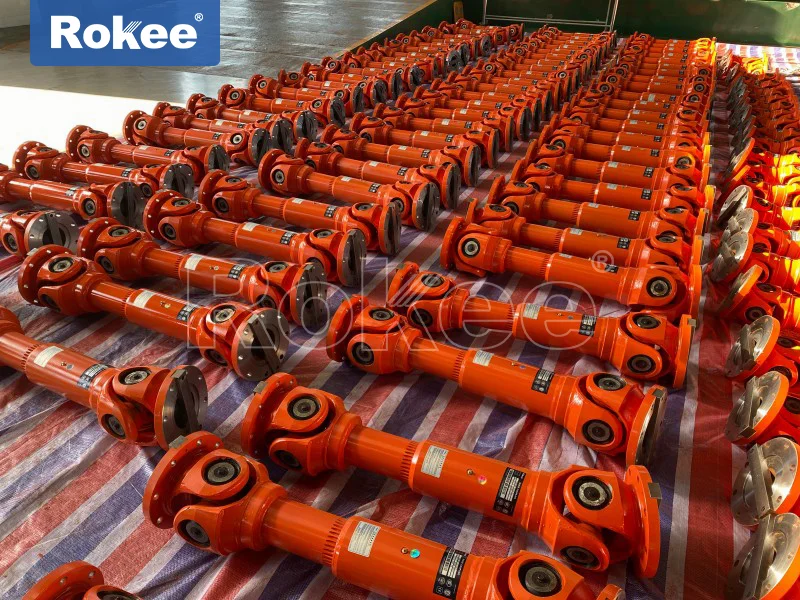
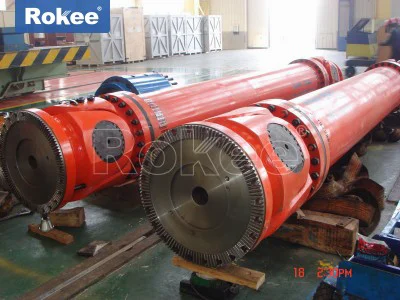
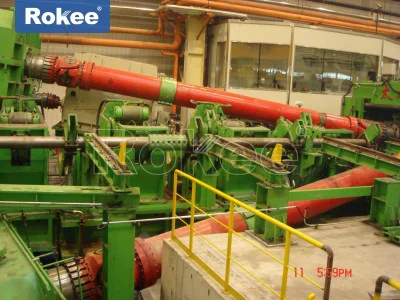
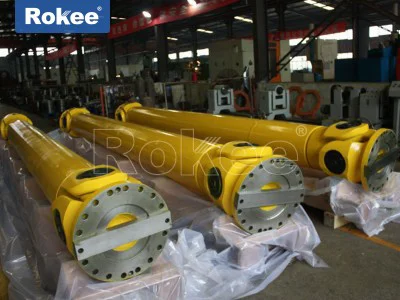
In the modern production process of PU sandwich panels, the cardan shaft coupling serves as a critical mechanical component that connects the power unit to various functional modules, such as the uncoiler, rolling mill, and cutting machine. It is responsible for transmitting torque and accommodating angular and axial deviations between connected shafts, ensuring the stable and efficient operation of the entire production line. However, the installation of cardan shaft couplings involves complex mechanical operations and strict safety requirements; any improper installation not only affects the service life of the coupling itself but also poses serious threats to the safety of operators, the integrity of equipment, and the continuity of production. Therefore, adhering to scientific installation safety specifications and requirements is essential to minimize potential hazards, ensure production safety, and maintain the long-term stable operation of the PU sandwich panel production line. This article focuses on the key links of cardan shaft coupling installation in the PU sandwich panel production line, elaborating on the safety specifications and requirements that should be followed throughout the installation process, from pre-installation preparation to post-installation commissioning and daily maintenance.
Before starting the installation of the cardan shaft coupling, thorough preparation work is the foundation to ensure installation safety and quality. First of all, it is necessary to conduct a comprehensive inspection of the installation site to ensure that the working environment meets the safety requirements. The installation area should be spacious and well-lit, with no obstacles, flammable and explosive materials, or corrosive substances around, so as to provide sufficient operating space for installers and avoid potential safety hazards caused by environmental factors. The ground of the installation site should be flat and firm to prevent the equipment from tipping over during installation and ensure the stability of the installation operation. At the same time, it is necessary to check the power supply and power-off devices of the production line to ensure that the power can be cut off in a timely manner when needed, and the power-off state can be effectively locked to prevent accidental startup of the equipment during the installation process, which may lead to personal injury or equipment damage. In addition, the installation site should be equipped with necessary safety protection facilities, such as emergency stop buttons, warning signs, and fire-fighting equipment, to deal with possible emergencies in a timely manner.
Secondly, the inspection and preparation of the cardan shaft coupling and related components are crucial links to ensure installation safety. Before installation, the cardan shaft coupling should be carefully inspected for any damage, deformation, or wear, such as cracks on the shaft body, damage to the universal joint, or excessive wear of the bearing. If any abnormal situation is found, the coupling should not be installed and used, and it should be replaced or repaired in time to avoid potential safety hazards during operation. At the same time, it is necessary to check the matching degree of the coupling with the connected shafts, including the diameter of the shaft hole, the keyway size, and the fit tolerance, to ensure that the coupling can be closely connected with the shafts without looseness or excessive interference. The connected shafts should also be inspected for straightness, coaxiality, and surface smoothness; any bending, deformation, or surface defects should be corrected in advance, because the deviation of the shafts will cause additional stress on the coupling during operation, leading to vibration, noise, and even damage to the coupling and other components. In addition, all components involved in the installation, such as bolts, nuts, washers, and retaining rings, should be inspected for completeness and quality, and unqualified components should be eliminated to ensure the reliability of the connection during installation.
The preparation of installation tools and personal protective equipment is also an important part of pre-installation safety work. The installation tools should be selected according to the actual installation needs, including torque wrenches, calipers, dial indicators, hoisting equipment, and cleaning tools. All tools should be inspected and calibrated before use to ensure their accuracy and reliability; for example, the torque wrench should be calibrated to ensure that the torque applied during installation meets the specified requirements, and the hoisting equipment should be inspected for the integrity of the lifting rope, hook, and other components to prevent accidents such as falling during hoisting. Installers must wear appropriate personal protective equipment, including safety helmets, protective gloves, safety shoes, and protective glasses, to avoid personal injury caused by accidental collisions, splashes of debris, or contact with rotating components during the installation process. Loose clothes, long hair, and accessories that may be involved in the equipment should not be worn during operation to prevent potential hazards.
After completing the pre-installation preparation work, the installation of the cardan shaft coupling should be carried out in strict accordance with the safety specifications and operating procedures to ensure the safety and correctness of the installation process. The first step of installation is the hoisting and positioning of the coupling. The hoisting of the cardan shaft coupling should be carried out by professional hoisting personnel using qualified hoisting equipment. The hoisting point should be selected correctly to ensure that the coupling is in a horizontal state during hoisting, avoiding tilting or collision. During the hoisting process, the speed should be slow and stable, and no sudden lifting or lowering is allowed. Installers should stand in a safe position, not directly under the hoisting object, and pay close attention to the movement of the coupling to avoid accidents caused by improper operation. After hoisting the coupling to the installation position, it should be temporarily fixed to prevent it from falling or shifting, and then the positioning and alignment work should be carried out.
Alignment is a key link in the installation of the cardan shaft coupling, which directly affects the operation stability and service life of the coupling and the entire transmission system. The alignment of the cardan shaft coupling mainly includes the alignment of the two connected shafts, including coaxial alignment and angular alignment. During the alignment process, professional measuring tools such as dial indicators should be used to detect the coaxiality and angular deviation between the shafts. The allowable deviation range should be determined according to the technical parameters of the coupling and the production line. Generally, the coaxiality deviation should not exceed 0.05mm, and the angular deviation should not exceed 0.01° per meter. If the deviation exceeds the allowable range, adjustment measures should be taken in time, such as adjusting the position of the motor or the equipment base, adding adjustment gaskets, etc., to ensure that the deviation meets the requirements. It should be noted that the adjustment process should be carried out gradually, and repeated measurements and adjustments should be made to avoid excessive adjustment leading to new deviations. In addition, during the alignment process, it is necessary to ensure that the coupling is not subject to external force, so as to avoid deformation of the coupling or the shafts, which may affect the alignment accuracy.
After completing the alignment work, the connection and fixing of the cardan shaft coupling can be carried out. The connection between the coupling and the shafts should be firm and reliable, and the installation method should be selected according to the type of coupling and the fit form. For interference fit connections, heating or cooling methods can be used to expand or shrink the coupling hole, so as to facilitate the installation of the coupling on the shaft. During the heating process, the heating temperature should be strictly controlled to avoid overheating leading to damage to the coupling material. For keyway connections, the key should be installed in place to ensure that the torque can be effectively transmitted, and the gap between the key and the keyway should meet the specified requirements to avoid loosening during operation. After installing the coupling on the shafts, the fixing bolts should be tightened in accordance with the specified torque. The tightening sequence should follow the principle of diagonal symmetry, gradually increasing the torque, and repeated tightening should be carried out to ensure that each bolt is tightened evenly and the torque meets the requirements. It is strictly prohibited to over-tighten or under-tighten the bolts; over-tightening may cause damage to the bolts or the coupling, while under-tightening may lead to looseness of the coupling during operation, resulting in vibration and noise, and even detachment of the coupling, which poses a serious safety hazard.
During the installation process, it is also necessary to pay attention to the installation of the protective device of the cardan shaft coupling. The cardan shaft coupling is a rotating component, and if there is no effective protective device, operators may accidentally touch the rotating coupling during operation, leading to personal injury. Therefore, after the installation of the coupling is completed, a protective cover should be installed in time to cover the coupling completely. The protective cover should be made of materials with sufficient strength and rigidity, which can withstand the impact of the coupling in case of failure and prevent the coupling from flying out. The protective cover should be firmly fixed to the equipment base, and there should be no gaps that may allow the operator's hands or other parts to enter. In addition, the protective cover should be easy to disassemble and assemble to facilitate the maintenance and inspection of the coupling in the later stage. It should be noted that the protective device must be installed in place before the equipment is commissioned, and it is strictly prohibited to start the equipment without installing the protective device.
After the installation of the cardan shaft coupling is completed, a comprehensive inspection and trial operation should be carried out to ensure that the installation is correct and the operation is safe and stable. Before the trial operation, it is necessary to conduct a final inspection of the installation quality, including checking whether the coupling is installed in place, whether the bolts are tightened, whether the protective device is intact, and whether the alignment deviation meets the requirements. At the same time, it is necessary to check the lubrication of the coupling. The cardan shaft coupling needs to be lubricated regularly to reduce friction and wear between components and ensure the smooth operation of the coupling. Before the trial operation, the lubricating oil or grease should be added according to the specified type and amount, and it should be ensured that the lubricating oil or grease fills all the lubrication points to avoid dry friction during operation, which may lead to damage to the coupling. The lubricating oil or grease should be kept clean, free of impurities, and replaced regularly according to the operating conditions.
The trial operation of the cardan shaft coupling should be carried out in stages, starting with no-load trial operation, then gradually increasing the load, and finally carrying out full-load trial operation. During the no-load trial operation, the equipment should be started, and the operation of the coupling should be observed, including whether there is abnormal vibration, noise, or overheating. The rotating speed of the coupling should be checked to ensure that it is consistent with the design speed. If any abnormal situation is found, the equipment should be stopped immediately, the cause should be checked and eliminated, and the trial operation can be continued only after the problem is solved. After the no-load trial operation is normal, the load can be gradually increased. During the load trial operation, the torque, vibration, noise, and temperature of the coupling should be monitored in real time. The temperature of the coupling should not exceed the specified limit, generally not more than 70℃. If the temperature is too high, it may indicate problems such as insufficient lubrication or excessive alignment deviation, which should be handled in time. After the full-load trial operation is stable for a certain period of time, it can be confirmed that the installation of the coupling is qualified and can be put into formal use.
In addition to strictly following the safety specifications during installation and trial operation, daily maintenance and regular inspection of the cardan shaft coupling are also essential to ensure long-term safe operation. The daily maintenance work mainly includes checking the lubrication status of the coupling, regularly adding or replacing lubricating oil or grease, and keeping the coupling clean to avoid the entry of dust, debris, and other impurities, which may affect the operation of the coupling. It is necessary to check the tightness of the bolts regularly. Due to the vibration during the operation of the equipment, the bolts may loosen. If the bolts are found to be loose, they should be tightened in time to prevent accidents. At the same time, the protective device of the coupling should be checked regularly to ensure that it is intact and not damaged. If the protective device is found to be damaged or missing, it should be repaired or replaced immediately.
Regular inspection of the cardan shaft coupling should be carried out according to the operating conditions of the production line. The inspection content includes checking the wear of the coupling components, such as the universal joint, bearing, and shaft body, whether there is cracks, deformation, or other damage, and checking the alignment deviation of the coupling. If any abnormal situation is found, it should be handled in time, such as replacing worn components, adjusting the alignment, etc., to avoid the expansion of the fault, which may lead to equipment failure or safety accidents. In the process of inspection and maintenance, the power of the equipment must be cut off first, and the power-off state should be locked to prevent accidental startup of the equipment, which may cause personal injury to the maintenance personnel. At the same time, maintenance personnel should wear appropriate personal protective equipment and use professional tools to carry out maintenance work to ensure their own safety.
It is also important to strengthen the safety training of operators and maintenance personnel. Operators and maintenance personnel should be familiar with the structure, working principle, and safety specifications of the cardan shaft coupling, master the correct operation methods and maintenance skills, and understand the potential safety hazards and prevention measures during the installation, operation, and maintenance of the coupling. Regular safety training and assessment should be carried out to improve the safety awareness and operational skills of the personnel, so that they can timely find and deal with potential safety hazards during work, and avoid safety accidents caused by improper operation or lack of safety awareness. In addition, a sound safety management system should be established, clarifying the safety responsibilities of each post, and conducting regular safety inspections and hidden danger investigations to ensure that all safety measures are implemented in place.
In the production process of PU sandwich panels, the cardan shaft coupling is in a high-load and high-speed operation state for a long time, and its installation quality and safety management directly affect the stability of the production line and the safety of personnel and equipment. Therefore, it is necessary to attach great importance to the installation safety of the cardan shaft coupling, strictly follow the installation safety specifications and requirements, do a good job in pre-installation preparation, standardized installation operation, post-installation trial operation, and daily maintenance and inspection work. Only in this way can the potential safety hazards be effectively avoided, the service life of the cardan shaft coupling be extended, the stable and efficient operation of the PU sandwich panel production line be ensured, and the safety of operators and the integrity of equipment be protected. At the same time, with the continuous development of PU sandwich panel production technology, the performance requirements of cardan shaft couplings are also constantly improving. It is necessary to continuously sum up experience in the installation and use process, optimize the installation safety specifications and maintenance measures, and adapt to the new production needs, so as to provide a strong guarantee for the safe and sustainable development of the PU sandwich panel industry.