Cross Joint Universal Shaft
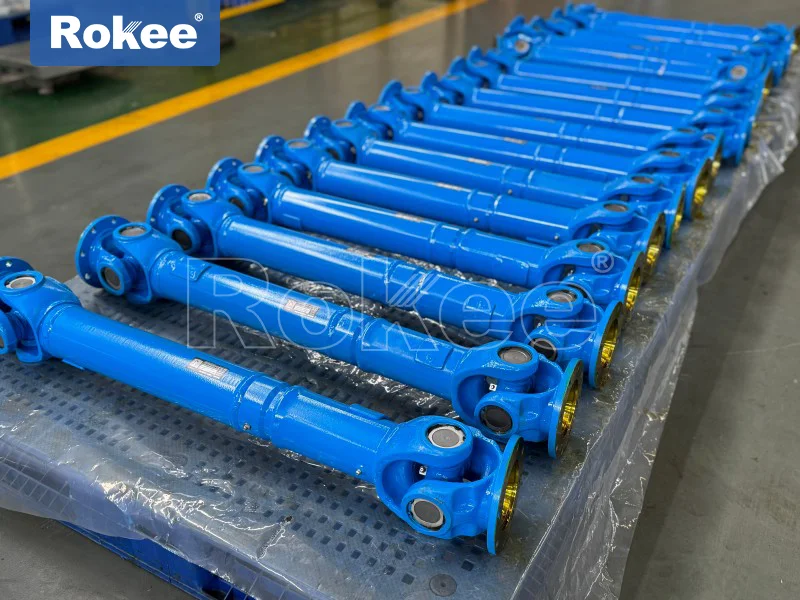
Mechanical transmission systems form the fundamental backbone of modern industrial operation and mobile machinery, enabling the seamless transfer of torque and rotational motion between interconnected mechanical components. Among various transmission components, the cross joint universal shaft stands out as a versatile and reliable mechanical element, uniquely designed to transmit power between two shafts that are not aligned on a single linear axis. This mechanical component effectively addresses the inherent limitations of rigid connection structures, compensating for angular misalignment, axial displacement and spatial offset between connected shafts to maintain continuous and stable power transmission under complex motion conditions. With its simple structural composition, robust mechanical performance and strong environmental adaptability, the cross joint universal shaft has become an indispensable part of transportation equipment, industrial manufacturing machinery and general mechanical transmission systems, laying a solid foundation for the normal operation of diverse mechanical equipment.
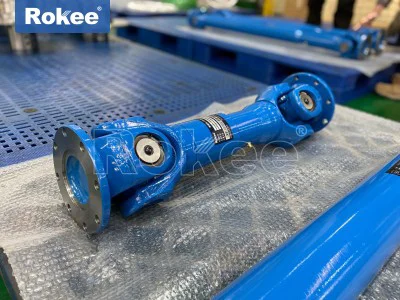
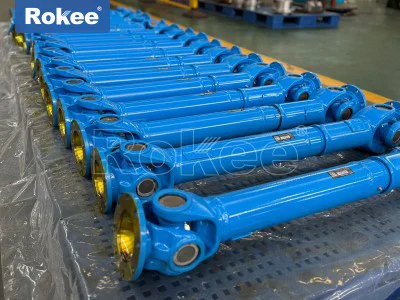
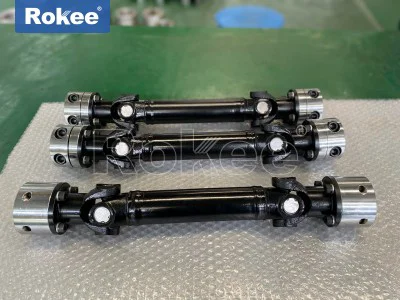
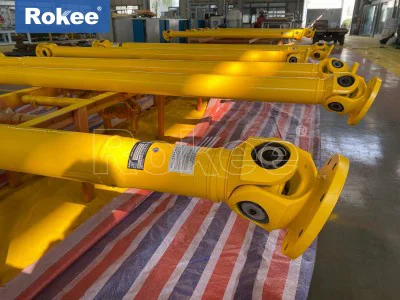
The basic structural composition of a cross joint universal shaft follows a concise and efficient mechanical design logic, with every component tailored to optimize power transmission efficiency and structural durability. The core structure consists of two yoke-shaped joints, a central cross-shaped shaft and sets of needle roller bearings mounted on each journal of the cross shaft. The two yoke joints are respectively fixed to the driving shaft and the driven shaft, serving as the connection medium between the cross shaft and external transmission shafts. The cross shaft, forged from high-strength alloy steel with excellent hardness and wear resistance, features four symmetrically distributed journals that form flexible hinge connections with the inner walls of the yoke joints through bearing assemblies. The needle roller bearings installed at the matching positions effectively reduce direct metal friction between the cross shaft and the yoke joints during rotation, converting sliding friction into rolling friction to minimize mechanical wear and energy loss. In addition to the core components, auxiliary structures such as sealing rings and retaining parts are equipped on the universal shaft. Sealing structures can isolate internal moving parts from external dust, moisture and corrosive substances, while retaining components ensure the stable assembly of bearings and cross shafts to avoid structural loosening during high-speed rotation.
The operating principle of the cross joint universal shaft is derived from the spatial hinge motion characteristics of its cross-shaped structure, enabling adaptive power transmission under angular deflection conditions. When the driving shaft starts to rotate, the rotational torque is transmitted to the cross shaft through the rigidly connected yoke joint. Driven by the driving yoke, the cross shaft undergoes compound motion combining rotation and slight spatial swing, and then transfers the torque to the driven yoke to drive the synchronous rotation of the driven shaft. During the transmission process, even if a certain angular deviation exists between the driving shaft and the driven shaft, the symmetric journal structure of the cross shaft allows the two yoke joints to swing freely around different axes of the cross shaft. This unique motion mechanism enables the universal shaft to maintain continuous power transmission without being restricted by linear alignment. Nevertheless, a single cross joint universal shaft has an inherent mechanical characteristic of non-uniform angular velocity transmission. When the two connected shafts form an angle, the instantaneous rotational speed of the driven shaft fluctuates periodically within a single rotation cycle. The fluctuation range is positively correlated with the tilt angle between the shafts; the larger the angular deviation, the more obvious the speed variation.
To eliminate the adverse effects of instantaneous speed fluctuation, double cross joint combination structures are widely adopted in practical mechanical applications. By connecting two single cross joints with an intermediate shaft, the double-section universal shaft can offset the speed fluctuation generated by the front joint through the motion phase difference of the rear joint. Reasonable structural arrangement ensures that the angular velocity of the final output shaft remains stable and consistent with the input shaft, realizing approximately constant-speed power transmission. This optimized structural design effectively reduces vibration and mechanical impact caused by speed changes, greatly improving the operational stability of the transmission system. The installation layout of the double-section universal shaft follows a standardized mechanical principle: the two yoke joints connected to the intermediate shaft must be placed on the same spatial plane, and the deflection angles of the front and rear universal joints need to be kept equal. This layout requirement is simple but crucial, as any deviation will weaken the speed stabilization effect and even cause additional mechanical vibration and torque loss.
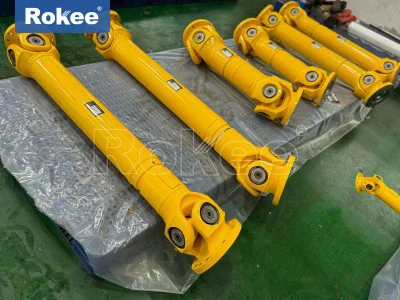
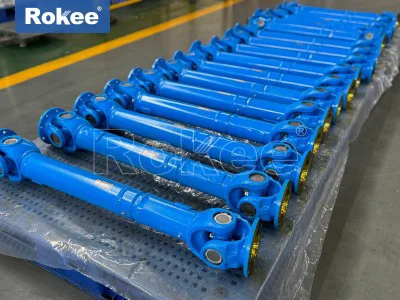
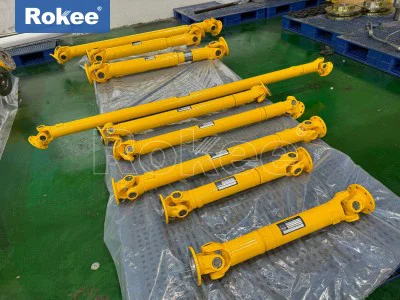
According to structural forms and application scenarios, cross joint universal shafts can be classified into single-section type, double-section type and multi-section extended type. The single-section universal shaft features a compact structure with a small overall size, suitable for working conditions with minor shaft deflection angles and limited installation space. It is commonly applied in small mechanical transmission structures that do not require high rotational stability. The double-section universal shaft, as the most widely used type, balances structural complexity and transmission performance, adapting to medium deflection angles and medium-load power transmission scenarios. The multi-section extended universal shaft is composed of three or more cross joints and multiple intermediate shafts, designed for long-distance power transmission and large-angle spatial deflection working conditions. This type of universal shaft is mostly used in heavy-duty industrial equipment and large transportation machinery, meeting the transmission demands of complex spatial layouts. In addition to structural classification, universal shafts can also be categorized by bearing protection forms into open type and sealed type. Open universal shafts have simple structures and low manufacturing costs, suitable for dry and clean working environments, while sealed universal shafts are equipped with integrated sealing structures to adapt to harsh working conditions such as humidity, dust and chemical corrosion.
Material selection and manufacturing processes determine the service life and mechanical performance of cross joint universal shafts. High-quality alloy steel is the mainstream raw material for core components such as cross shafts and yoke joints. This type of steel undergoes precise smelting and heat treatment processes to obtain high tensile strength, fatigue resistance and surface hardness, which can withstand repeated torque impact and long-term friction wear during continuous operation. The surface of key moving parts is usually treated with carburizing, quenching and fine grinding to form a dense and wear-resistant surface layer, reducing metal fatigue damage caused by cyclic load. Needle roller bearings are made of high-carbon chromium bearing steel with rigorous precision machining to ensure dimensional accuracy and rolling smoothness. The intermediate connecting shaft is mostly made of low-alloy high-strength steel, which maintains structural rigidity while reducing self-weight to avoid additional inertial load during high-speed rotation. In terms of processing technology, advanced forging equipment is used for integral forging of cross shafts and yoke joints to enhance internal metal density and structural toughness, avoiding structural fracture caused by stress concentration. Subsequent finishing processes such as precision turning and drilling ensure the assembly accuracy of matching parts, reducing assembly gaps and friction resistance.
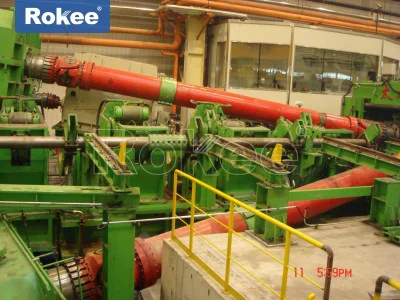
Cross joint universal shafts have extremely diverse application scenarios, covering civilian transportation, industrial production, agricultural machinery and special engineering equipment. In the field of transportation machinery, this component is widely used in rear-wheel drive and mid-engine drive vehicles. It connects the transmission and the drive axle to compensate for the relative displacement caused by chassis vibration and suspension jitter during vehicle driving, ensuring stable power transmission to the wheels. In addition, large transportation tools such as heavy trucks and passenger buses also rely on long-distance combined universal shafts to complete power transmission of the entire transmission system. In industrial production, universal shafts serve as key connecting components for metallurgical rolling mills, mining conveyors and mechanical processing equipment. They adapt to the spatial position deviation of industrial equipment during installation and operation, realizing synchronous operation between power motors and working machinery. Agricultural machinery such as field tractors and harvesting equipment often works in bumpy terrain; the excellent angle compensation performance of cross joint universal shafts ensures that power can be smoothly transmitted to walking and operating components under complex terrain vibration conditions.
In actual operation, the service performance and service life of cross joint universal shafts are affected by multiple external factors. The deflection angle between shafts is one of the core influencing factors. Excessively large tilt angles will intensify internal component friction, increase torque loss and amplify vibration noise, thereby accelerating component wear. Normally, the optimal working deflection angle of a single universal joint is controlled within a small range to maintain efficient transmission. Operating load also has a significant impact on service life; long-term overload operation will cause irreversible deformation of the cross shaft and bearing structures, leading to increased assembly gaps and reduced transmission accuracy. Working environment conditions cannot be ignored either. Long-term exposure to high temperature, humidity or corrosive gas will accelerate the aging of sealing components and the oxidation and corrosion of metal parts, damaging the internal lubrication system. Besides, rotational speed is an important constraint factor. High-speed rotation will generate centrifugal force and frictional heat; if the heat cannot be dissipated in time, it will reduce the viscosity of lubricating grease and weaken the lubrication effect, resulting in dry friction of moving parts.
Reasonable daily maintenance and fault maintenance are essential to keep cross joint universal shafts in good working condition. Lubrication maintenance is the most basic and critical maintenance measure. High-performance lubricating grease needs to be regularly injected into the bearing assembly and hinge gap to form a stable lubricating oil film between friction surfaces, reducing wear and heat generation. The sealing structure should be inspected regularly; aging, deformed or damaged sealing rings need to be replaced in a timely manner to prevent external impurities from entering the internal movement space. During daily inspection, attention should be paid to checking the tightness of connecting fasteners to avoid structural loosening caused by long-term vibration. For universal shafts that have been used for a long time, regular disassembly and inspection of wearing parts such as bearings are required, and severely worn components should be replaced to prevent transmission jitter and abnormal noise. In addition, equipment operators should avoid long-term overload operation and sudden acceleration or deceleration, so as to reduce instantaneous torque impact on the universal shaft and extend its overall service life.
With the continuous progress of mechanical manufacturing technology, the optimization and upgrading of cross joint universal shafts have been advancing steadily. In terms of material optimization, new high-strength wear-resistant alloy materials and composite surface coating technologies are gradually applied to production. These materials can further improve the high-temperature resistance, corrosion resistance and fatigue resistance of components, adapting to more extreme working environments. In structural optimization, lightweight design has become an important development direction. On the premise of ensuring mechanical strength, hollow intermediate shafts and optimized yoke joint structures are adopted to reduce self-weight and rotational inertia, improving transmission response speed and energy utilization efficiency. In terms of processing technology, intelligent precision processing equipment and digital detection technology realize micron-level processing accuracy and quality monitoring, effectively reducing assembly errors and improving the coordination accuracy of moving parts. Meanwhile, integrated modular design simplifies the installation and disassembly process of universal shafts, reducing maintenance difficulty and time cost for mechanical equipment.
Looking into the future, the application scope of cross joint universal shafts will continue to expand with the development of intelligent manufacturing and special machinery industries. In the field of new energy transportation equipment, universal shafts need to adapt to higher transmission efficiency and lower noise requirements, promoting the iterative upgrading of internal structures and lubrication systems. In intelligent industrial production lines, automated mechanical equipment puts forward higher standards for the stability and durability of universal shafts, driving the research and development of intelligent monitoring universal shafts with real-time stress and temperature sensing functions. In addition, with the popularization of environmentally friendly manufacturing concepts, energy-saving and low-consumption structural design will become an important research direction, further reducing mechanical friction loss and improving energy transmission efficiency. Although the basic mechanical principle of cross joint universal shafts has been mature for a long time, continuous technological optimization still endows this traditional mechanical component with new development vitality.
In conclusion, the cross joint universal shaft, as a classic mechanical transmission component, relies on its unique cross hinge structure to realize angle-compensating power transmission, filling the technical gap that rigid connection structures cannot adapt to spatial misalignment transmission. Its simple and reliable structure, mature manufacturing technology and wide application scenarios make it occupy an irreplaceable position in modern mechanical systems. From basic structural composition and operating principles to material processing, application scenarios and daily maintenance, every link affects the comprehensive performance of the universal shaft. With the continuous innovation of material technology, processing technology and structural design, cross joint universal shafts will break through the limitations of traditional performance, adapt to more complex and harsh working conditions, and provide more stable and efficient transmission support for the development of transportation, industry, agriculture and other industries. In the long-term development of mechanical engineering, this time-tested mechanical component will continue to exert its value and evolve continuously with the progress of industrial technology.