Cardan Coupling for Compressed Air
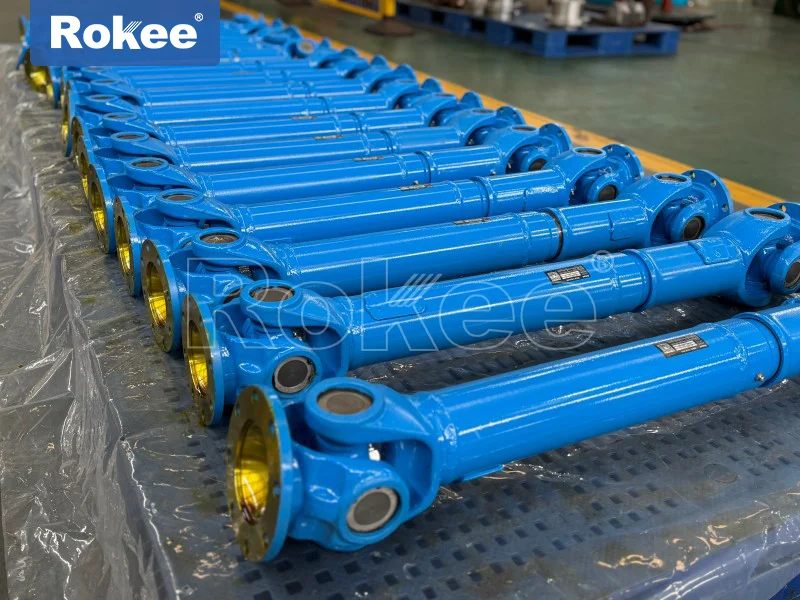
Within the intricate framework of modern industrial pneumatic systems, the seamless transmission of motion and power serves as the foundational guarantee for the stable operation of compressed air equipment. A cardan coupling, also universally recognized as a universal joint, stands out as a pivotal mechanical component tailored to address the alignment deviation and motion transmission challenges in compressed air systems. Distinguished by its unique mechanical structure and exceptional adaptive performance, this coupling enables reliable power conveyance between interconnected equipment even when there are angular displacements and positional offsets between rotating shafts, making it extensively applicable to various medium and heavy-duty compressed air machinery. Unlike rigid connection components that demand precise coaxial alignment, the cardan coupling boasts remarkable angular compensation capability, which effectively accommodates the dynamic positional changes of equipment during the long-term operation of compressed air pipelines and power units, thereby maintaining continuous and efficient mechanical motion transmission throughout the system.
The fundamental operating logic of a cardan coupling for compressed air systems originates from its ingenious spatial mechanical connection mechanism. The core transmission principle relies on the hinged coordination between a cross shaft and fork-shaped joints, which allows two connected rotating shafts to sustain rotational motion under an intersecting axis state. When the power end of a compressed air device generates rotational kinetic energy, the driving fork joint transmits torque to the cross shaft through rolling auxiliary structures, and the cross shaft further transfers the mechanical force to the driven fork joint, ultimately realizing the synchronous rotation of the passive shaft. In the operational process of pneumatic systems, equipment is inevitably affected by environmental temperature changes, mechanical vibration and foundation settlement, leading to minor angular deviations between connecting shafts. The movable hinge structure of the cardan coupling can flexibly adapt to such deviations, with the adaptable angle ranging from small micro-deviations to relatively large angular displacements. This adaptive feature fundamentally avoids the mechanical jamming and transmission stagnation issues caused by shaft misalignment, ensuring the uninterrupted flow of power in compressed air power units.
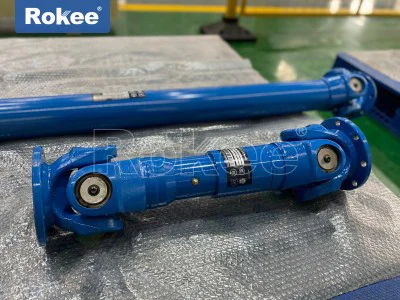
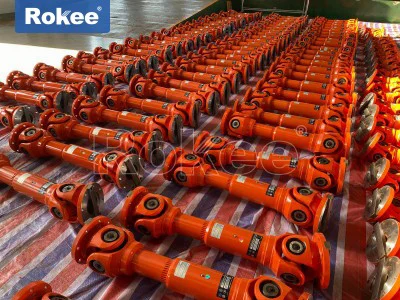
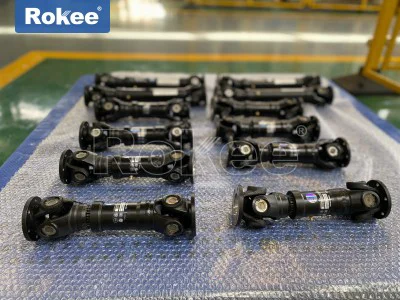
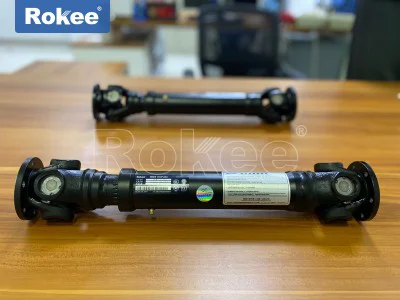
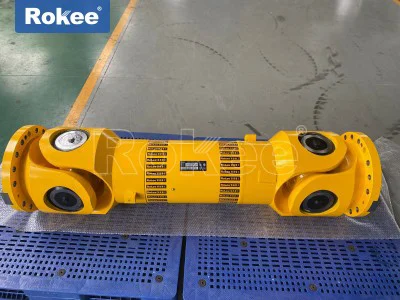
The structural composition of cardan couplings designed for compressed air scenarios follows rigorous mechanical optimization standards, featuring a compact and robust overall layout that adapts to the complex operating environment of pneumatic equipment. The primary structural components include fork-shaped joints, a central cross shaft, rolling bearing assemblies and sealing protective structures. The fork-shaped joints, crafted from high-strength alloy materials, possess excellent rigidity and tensile resistance to withstand the cyclic torque generated during the continuous operation of compressed air compressors and pneumatic transmission devices. The cross shaft, as the core force-bearing component, adopts an integrated forging process to enhance structural uniformity, effectively dispersing concentrated mechanical stress during high-frequency rotation and preventing local structural fatigue damage. Rolling bearings are embedded at the connection positions between the cross shaft and fork joints, which convert sliding friction into rolling friction, reduce mechanical wear during relative rotation, and lower the energy consumption of power transmission. Additionally, targeted sealing structures are installed on the outer layer of the coupling. These structures can block dust, moisture and fine particulate impurities in industrial air from entering the internal moving gaps, avoiding bearing abrasion and transmission failure caused by impurity accumulation, and adapting to the harsh operating conditions of open compressed air production lines.
Compressed air systems impose stringent requirements on the stability, vibration resistance and durability of connecting components, and the inherent performance advantages of cardan couplings precisely match these industrial demands. In terms of vibration suppression, the hinged movable structure of the coupling can absorb part of the mechanical vibration generated by air compression equipment during operation. Most large-scale pneumatic devices produce continuous vibration during air compression and gas transmission, and such vibration is easily transmitted along the connecting shafts to other equipment components, triggering resonance and accelerating the aging of pipelines and auxiliary parts. The flexible connection characteristics of the cardan coupling can isolate vibration transmission between shafts, buffer dynamic mechanical loads, and reduce the fatigue loss of compressed air pipelines and fixed parts. In terms of transmission efficiency, the optimized internal friction structure minimizes mechanical energy loss during torque transmission. Compared with other flexible coupling products, the cardan coupling maintains stable transmission efficiency even under variable angle operating conditions, ensuring that the kinetic energy generated by power equipment is efficiently converted into the operating power of pneumatic components, thereby improving the overall energy utilization rate of the compressed air system.
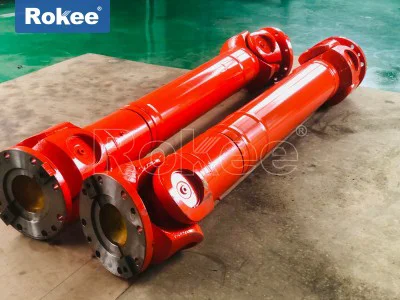
Different types of compressed air equipment have distinct structural layout characteristics, and cardan couplings exhibit strong structural adaptability in diversified application scenarios. Single-section cardan couplings are commonly applied to small and medium-sized pneumatic transmission equipment with limited angular deviation. Their simple structural design facilitates installation and daily inspection, and they can steadily complete torque transmission under low to medium load conditions. For large compressed air units with complex pipeline layouts and large shaft displacement ranges, double-section cardan coupling structures are more suitable. By adding an intermediate connecting shaft between two sets of universal joint structures, the double-section coupling further expands the compensation range of axial angle and positional deviation, effectively resolving the transmission obstacles caused by large-distance installation deviations between compressors and air storage auxiliary equipment. Regardless of the structural type, these couplings retain the characteristics of compact space occupation, which is highly compatible with the compact installation space of integrated compressed air units and does not require additional layout space for mechanical connection components.
In the long-term continuous operation of compressed air systems, the operating stability and service life of mechanical components directly determine the operational cost and safety of the entire system, and cardan couplings demonstrate outstanding long-term operating performance in this regard. The high-strength alloy materials used for key components undergo precise heat treatment processes to enhance surface hardness and internal toughness, enabling them to resist mechanical abrasion and impact damage during frequent rotational motion. Under normal operating conditions, the stable internal matching structure can avoid loose connection and transmission failure caused by long-term torque impact. Moreover, the structural design of the coupling fully considers the maintenance demands of pneumatic equipment. The disassemblable connection mode simplifies the daily cleaning and component replacement work. During the regular maintenance of compressed air systems, staff can quickly detach the coupling structure to inspect internal wear parts, remove accumulated dust and impurities, and replenish lubricating media, effectively extending the comprehensive service life of the coupling and reducing the frequency of equipment shutdown maintenance.
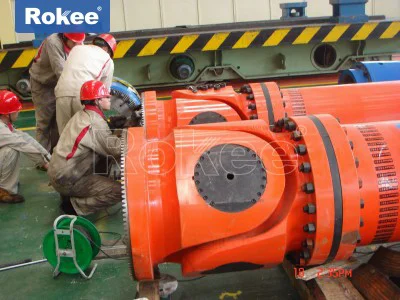
The application scope of cardan couplings in compressed air systems covers multiple industrial production fields, realizing the stable operation of diversified pneumatic equipment. In automated production workshops, they are applied to the power connection of pneumatic transmission pumps, ensuring the continuous delivery of compressed air in assembly line pipelines and maintaining the stable air pressure required for automated processing. In mineral processing and heavy industry, large air compressors need to operate in complex terrain environments, and the positional deviation of equipment bases caused by terrain changes can be adapted by cardan couplings to guarantee the normal operation of high-power pneumatic ventilation and transmission equipment. In food processing and pharmaceutical production industries, where equipment operating stability is strictly required, the low-vibration and low-noise operating characteristics of cardan couplings prevent excessive vibration from affecting the precision of air pressure control in purification pipelines, meeting the high-standard operating requirements of clean pneumatic systems. In addition, in municipal engineering and environmental protection equipment, the couplings are used for the connection of compressed air power components in sewage treatment and dust removal equipment, adapting to variable working conditions such as frequent equipment start-stop and variable load operation.
Despite the superior adaptive performance of cardan couplings in compressed air systems, their operating state is still affected by external working conditions, so standardized usage specifications must be followed in practical application. During the equipment installation stage, staff need to reasonably control the initial angle deviation of the coupling to avoid excessive single-side stress caused by an overlarge initial angle, which may accelerate the wear of internal bearings and cross shafts. In the daily operation process, extreme overload operation should be avoided. Long-term overload torque will lead to irreversible deformation of metal components and damage the structural coordination accuracy. Lubrication management is also a key link in daily maintenance. Stable lubricating media can reduce internal friction heat generation, avoid component aging caused by high temperature, and maintain the flexibility of the hinged structure. Meanwhile, for pneumatic equipment operating in high-humidity and corrosive environments, anti-corrosion treatment should be carried out on the surface of the coupling to prevent metal oxidation and corrosion from affecting connection stability.
With the continuous upgrading of industrial pneumatic system technology, the performance optimization of cardan couplings for compressed air is also advancing in the direction of refinement and high efficiency. Modern industrial production puts forward higher requirements for the energy-saving performance, miniaturization and intelligent monitoring capability of mechanical connecting components. Subsequent optimization of cardan couplings will focus on lightweight material improvement, adopting new composite alloy materials to reduce the self-weight of components while ensuring structural strength, so as to lower the kinetic energy consumption of equipment operation. In terms of structural optimization, the internal friction auxiliary structure will be further polished to reduce transmission loss and improve the energy conversion efficiency of compressed air systems. In addition, combined with modern mechanical monitoring technology, embedded sensing modules can be added to the coupling structure to monitor operating parameters such as rotation torque, vibration amplitude and component wear degree in real time, providing data support for the predictive maintenance of pneumatic equipment.
As an indispensable mechanical connecting component in compressed air systems, the cardan coupling relies on its unique hinged transmission structure, excellent deviation compensation capability and stable environmental adaptability to solve multiple connection difficulties in pneumatic equipment operation. It not only ensures the efficient and continuous transmission of power between rotating shafts, but also buffers the adverse effects of vibration, displacement and temperature changes on the system, improving the overall operational stability and service life of compressed air equipment. With the continuous development of industrial automation and pneumatic transmission technology, cardan couplings will be further optimized in material performance, structural design and intelligent application. They will continue to provide reliable mechanical connection guarantees for various compressed air systems, create more stable operating conditions for industrial pneumatic production, and deliver enduring value to the upgrading and efficient operation of modern industrial systems.