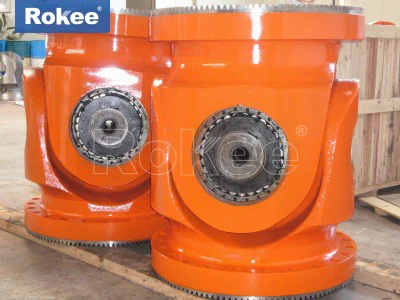
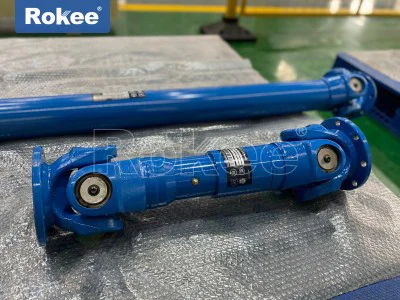
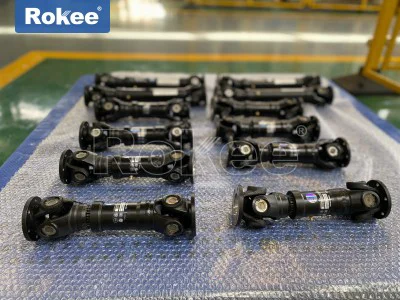
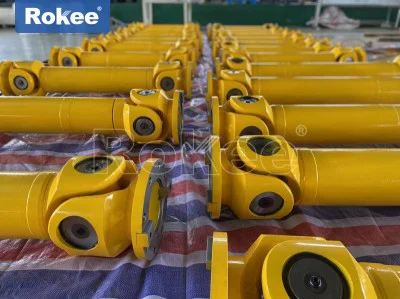
Splined Universal Shaft
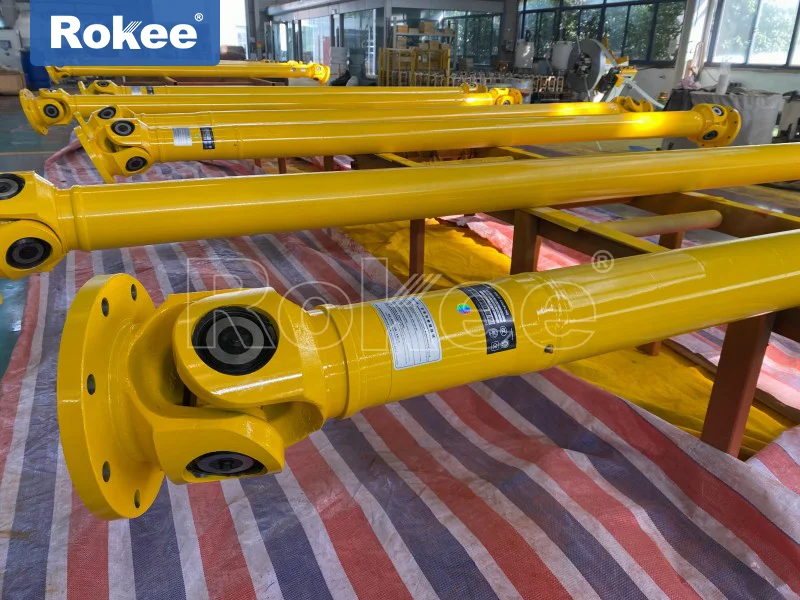
In the complex mechanical transmission systems that underpin modern industrial production and mobile mechanical equipment, the rational connection between transmission components directly determines the stability and efficiency of power delivery. A splined universal shaft stands out as an indispensable mechanical transmission component, uniquely engineered to resolve the technical challenges of power transmission between shafts with angular deflection, axial displacement and spatial position deviation. Unlike ordinary rigid transmission shafts with fixed connection structures, this type of universal shaft integrates spline telescopic structure and universal joint transmission mechanism, achieving flexible power transmission under diverse complex working conditions. Its adaptive structural design enables continuous and stable torque transmission even when the relative position of connected shafts changes dynamically, making it widely applied in heavy industry machinery, transportation equipment, material processing facilities and other mechanical fields. The inherent mechanical advantages of splined universal shafts lay a solid foundation for the continuous operation of various mechanical systems, and their structural rationality and operational durability have become key factors affecting the overall service life of transmission systems.
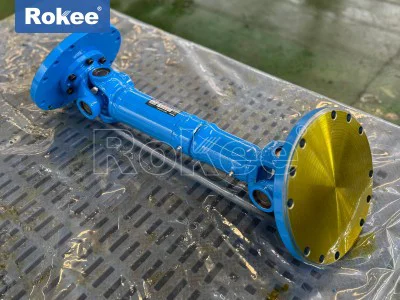
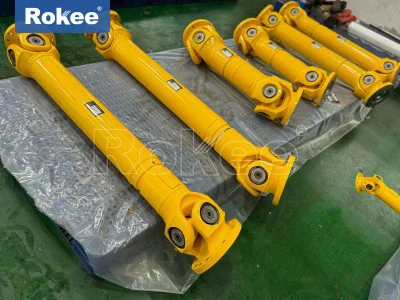
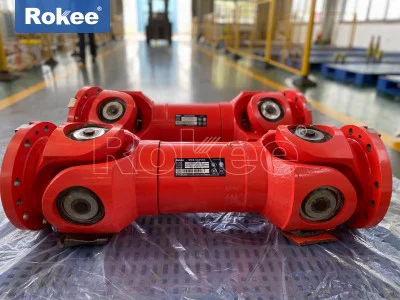
The internal structure of a splined universal shaft follows rigorous mechanical design logic, consisting of multiple core components that cooperate with each other to complete power transmission tasks. The basic composition includes universal joint forks, cross shaft assemblies, rolling needle bearings, spline shafts, spline sleeves and integrated sealing structures, and each component bears distinct mechanical functions in the operating process. The universal joint forks adopt an integral fork-shaped structure, which provides stable connection points for the cross shaft and ensures structural rigidity under high-torque operating conditions. The cross shaft, as the central force-bearing component of the universal joint, is usually made of high-strength alloy materials with uniform stress distribution on each shaft journal, effectively bearing shear force and torsion generated during power transmission. Rolling needle bearings are installed at the matching positions between the cross shaft and the joint forks, minimizing friction resistance during relative rotation while dispersing local pressure to avoid mechanical abrasion caused by long-term friction. The spline pair composed of spline shaft and spline sleeve is the core functional part that distinguishes splined universal shafts from ordinary universal transmission shafts. The evenly distributed spline teeth on the shaft body mesh closely with the inner tooth grooves of the sleeve, which can not only synchronously transmit rotational torque but also realize free axial telescopic displacement within a certain range. The external sealing structures are arranged at the joints of each component to isolate external dust, moisture and corrosive impurities, reducing the abrasion and corrosion of internal precision parts.
The operating principle of the splined universal shaft is based on the mechanical motion characteristics of universal joints and the sliding fit performance of spline structures. During the operation of mechanical equipment, power is initially transmitted from the driving end to the active joint fork, and the driving force is transferred to the cross shaft through the bearing assembly. Relying on the flexible rotational connection of the cross shaft, the passive joint fork can deflect at a certain angle relative to the active end, realizing non-coaxial power transmission. When the connected mechanical components produce axial position changes due to equipment vibration, thermal expansion and contraction or installation errors, the spline shaft can slide linearly along the inner wall of the spline sleeve. This axial compensation capability effectively offsets the displacement deviation between the shafts, avoiding additional mechanical stress caused by position misalignment. In the continuous rotation process, the meshing structure of spline teeth ensures synchronous rotation between the shaft body and the sleeve without rotational sliding, maintaining stable torque transmission efficiency. The combined action of the universal deflection function and spline telescopic function enables the entire transmission shaft to adapt to multi-dimensional position changes, ensuring uninterrupted power output even in complex motion states.
Material selection and processing technology are critical factors that determine the mechanical performance and service life of splined universal shafts. Most high-performance splined universal shafts adopt low-alloy high-strength steel as the raw material for main components. This type of steel has excellent tensile strength, toughness and fatigue resistance, which can withstand frequent torque impact and alternating load in harsh working environments. In the processing stage, key components such as cross shafts and spline shafts undergo precise forging and heat treatment processes. Forging technology optimizes the internal metal fiber structure of the materials, improving the density and structural rigidity of the components. Heat treatment including quenching and tempering enhances the surface hardness and wear resistance of parts while maintaining the internal toughness, preventing brittle fracture under sudden load changes. The spline teeth are processed by precision hobbing and grinding to ensure the smoothness and dimensional accuracy of the tooth surface. This high-precision processing method reduces meshing gaps between spline pairs, lowers friction noise during operation, and avoids torque loss caused by excessive clearance. The surface of vulnerable components is also treated with anti-corrosion and wear-resistant coatings to adapt to humid, dusty and corrosive industrial working environments.
The unique structural design endows splined universal shafts with multiple irreplaceable performance advantages in mechanical transmission. First of all, it has outstanding displacement compensation capability. The universal joint structure allows an angular deflection between the driving shaft and the driven shaft, and the spline telescopic structure realizes axial displacement compensation. The dual compensation function effectively adapts to installation errors and dynamic position changes of equipment. Secondly, the spline meshing structure can disperse torque on multiple tooth surfaces, reducing local pressure of a single tooth, thus improving the overall torque bearing capacity and meeting the power transmission needs of heavy-load mechanical equipment. In addition, the integrated sealing structure can lock internal lubricating grease for a long time, reducing the frequency of lubricant replacement and lowering daily maintenance difficulty. Compared with rigid connecting shafts, splined universal shafts have better vibration damping performance. The flexible connection structure can absorb part of the vibration generated by equipment operation, reduce vibration transmission between components, and protect other precision mechanical parts from vibration damage. Moreover, the modular component design facilitates disassembly, assembly and replacement, improving the convenience of equipment maintenance.
Splined universal shafts have a wide coverage of application scenarios, penetrating various industrial fields that require flexible power transmission. In heavy industrial machinery such as rolling mills and forging equipment, they undertake the power transmission task between power motors and processing execution components. The heavy-load resistance and displacement adaptability of the shafts ensure stable operation of mechanical equipment under high-intensity working conditions. In mining and building material processing machinery, vibration screening equipment often generates violent vibration during operation. Splined universal shafts can adapt to the continuous position deviation of vibrating parts, maintaining the continuity of power transmission and improving the operating efficiency of screening equipment. In transportation machinery including engineering vehicles and special transport equipment, the complex chassis motion state requires transmission components to have strong spatial adaptability. The splined universal shafts connect the power output structure and the walking structure of vehicles, coping with the angle and displacement changes generated during driving and bumping. In addition, they are also applied in printing machinery, rubber and plastic processing equipment, and material handling transmission lines, providing reliable transmission guarantees for various automated production lines.
Despite the stable mechanical performance of splined universal shafts, they are still affected by working environment and operating time during long-term service, resulting in natural wear and potential failure risks. The most common wear part is the matching surface between rolling needle bearings and cross shaft journals. Long-term high-speed rotation and load friction will cause surface abrasion of bearings and shaft journals, increasing rotational resistance and generating abnormal noise. The spline meshing surface is also prone to wear. Impurity abrasion and insufficient lubrication will lead to tooth surface scratching and tooth shape deformation, reducing the telescopic flexibility and torque transmission accuracy of spline pairs. In harsh working environments with high humidity and strong corrosion, the metal surface of components is easy to oxidize and rust, damaging the surface processing precision and shortening the service life. In addition, excessive load beyond the bearing range will cause plastic deformation of spline teeth and cross shafts, resulting in permanent structural damage to the transmission shaft. Unreasonable installation methods, such as excessive deflection angle and unbalanced assembly gap, will also accelerate component fatigue damage and affect the normal operation of the entire transmission system.
Scientific daily maintenance and reasonable use methods are essential to extend the service life of splined universal shafts and maintain stable working performance. In the daily operation of equipment, staff should regularly check the operating state of the transmission shaft, focusing on observing whether there is abnormal vibration, irregular noise and oil leakage. Timely supplementation and replacement of high-quality lubricating grease can form a stable lubricating film on the friction surfaces of bearings and spline pairs, reducing metal direct friction and slowing down wear speed. It is necessary to regularly check the tightness of connecting parts and the integrity of sealing components. Damaged sealing gaskets should be replaced in time to prevent external impurities from entering the internal structure. During equipment installation and debugging, the deflection angle of the universal joint should be controlled within the rated reasonable range to avoid excessive angular stress on components. For mechanical equipment working in high-corrosion environments, regular surface anti-corrosion treatment should be carried out to remove surface attachments and prevent chemical corrosion of metal components. In addition, periodic disassembly and inspection are required for long-term operating transmission shafts, and severely worn parts should be replaced timely to eliminate potential safety hazards.
With the continuous upgrading of modern industrial manufacturing technology, the production and optimization technology of splined universal shafts is also constantly improving. In terms of material research and development, new high-strength composite alloy materials are gradually applied to component processing. These materials have lighter weight, higher fatigue resistance and stronger corrosion resistance, which can further improve the comprehensive performance of transmission shafts. In terms of processing technology, intelligent precision processing equipment optimizes the tooth profile precision and surface smoothness of spline structures, reducing mechanical loss during power transmission. Structural optimization design focuses on lightweight and compact improvement. Under the premise of ensuring load-bearing capacity, the spatial volume of the transmission shaft is reduced to adapt to the compact assembly demand of modern precision machinery. Meanwhile, the intelligent monitoring technology is gradually integrated into the use process of splined universal shafts. By installing sensing components, the operating parameters such as rotation speed, vibration amplitude and temperature of the transmission shaft can be monitored in real time, realizing early warning of abnormal faults and improving the intelligent management level of mechanical equipment.
From the perspective of industrial development, splined universal shafts, as basic general mechanical components, play an important supporting role in the stable operation of the industrial chain. Although they belong to small accessory parts in mechanical equipment, their transmission performance directly affects the operating efficiency, stability and safety of the entire mechanical system. The diversified structural adaptability enables them to meet the transmission demands of different industries and different working conditions, and their low maintenance cost and high durability bring stable economic benefits to industrial production. In the future, with the continuous development of intelligent manufacturing, heavy-duty industrial equipment and new energy transportation machinery, the market demand for high-performance splined universal shafts will continue to grow. The industry will further focus on technological innovation in material optimization, structural upgrading and intelligent monitoring, so as to develop transmission products with higher bearing capacity, lower energy consumption and longer service life. Through continuous technological iteration and performance improvement, splined universal shafts will maintain irreplaceable application value in the field of mechanical transmission, and provide more reliable basic component support for the high-quality development of modern manufacturing industry.