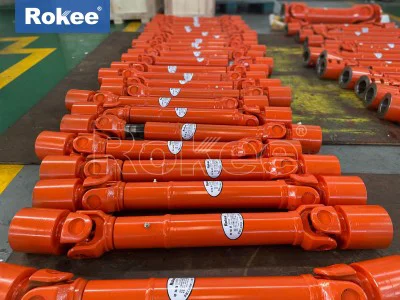
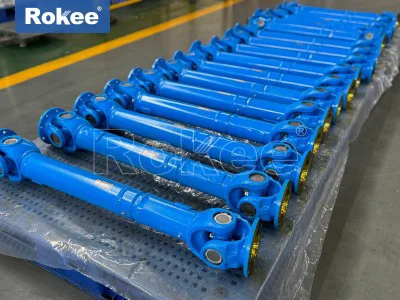
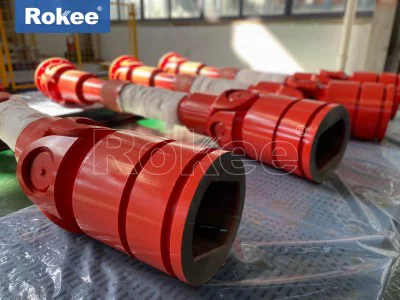
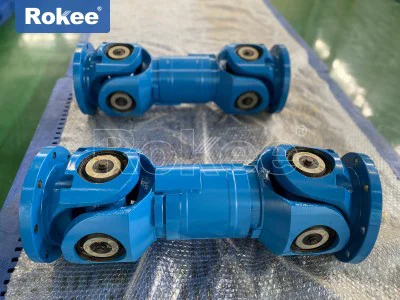
High Speed Cardan Shaft Coupling
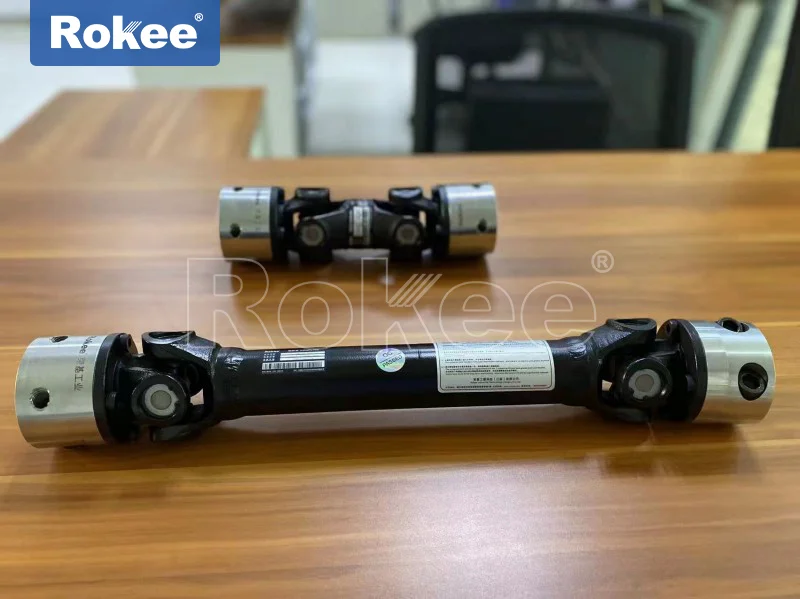
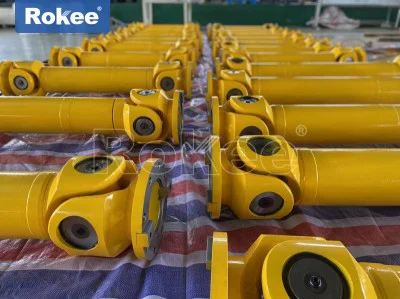
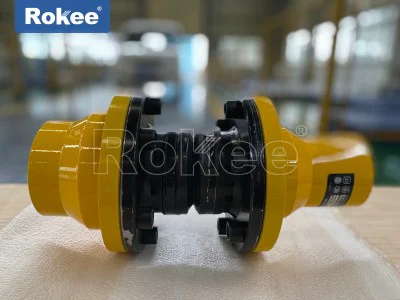
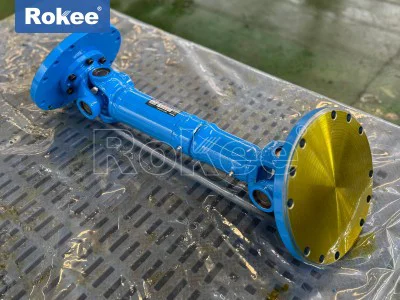
High speed cardan shaft coupling is a key component in industrial transmission systems, which can achieve large angle, non concentric shaft power transmission under high-speed operating conditions. Adopting precision dynamic balancing technology to ensure low vibration even under conditions of thousands of revolutions per minute. The material balances wear resistance and fatigue resistance. Needle roller bearings or ball cage structures reduce friction losses and increase the upper limit of rotational speed. Supports multiple interfaces such as expansion splines and flanges, suitable for high-speed scenarios such as machine tool spindles and wind turbine gearboxes.
Maintenance and optimization
Regular lubrication: Use high-temperature grease (such as lithium based grease) and replenish it every 500 hours.
Installation calibration: Ensure that the angle between the two axes is ≤ 15 ° to avoid additional bending moments during high-speed operation.
In the complex and dynamic field of mechanical power transmission, high speed cardan shaft couplings stand out as indispensable components, designed to address the critical challenge of transferring rotational motion and torque between misaligned shafts while maintaining high operational speeds. Unlike conventional couplings that struggle with angular, axial, or radial deviations, these specialized couplings are engineered to accommodate such misalignments without compromising transmission efficiency, stability, or durability. Their unique design and versatile performance make them essential across a wide range of industrial, automotive, aerospace, and precision engineering applications, where reliable high-speed power transfer is non-negotiable. To fully understand the value and functionality of high speed cardan shaft couplings, it is necessary to explore their intricate structure, key performance characteristics, diverse types, and the varied applications that rely on their capabilities.
The structure of a high speed cardan shaft coupling is a carefully engineered assembly of components working in harmony to achieve two core objectives: efficient torque transmission and flexible compensation for shaft misalignment. At the heart of every high speed cardan shaft coupling lies the universal joint, which serves as the articulating mechanism that allows for angular deflection between connected shafts. The universal joint typically consists of a cross-shaped component, known as the cross shaft or spider, with four trunnions at each end, each fitted with precision bearings—most commonly needle roller bearings or sliding bearings—that reduce friction and enable smooth rotation. These bearings are enclosed within yoke assemblies, which are fork-shaped connectors attached to the driving and driven shafts. The yokes are designed to pivot around the trunnions of the cross shaft, allowing the coupling to accommodate angular misalignments ranging from a few degrees up to 45 degrees, depending on the specific design and application requirements. In addition to the universal joint and yokes, high speed cardan shaft couplings often include a shaft body, which connects the two universal joints in multi-joint designs, and connection mechanisms such as splines or flanges to secure the coupling to the driving and driven shafts. Spline connections are particularly common in high speed applications as they allow for axial displacement compensation, enabling the coupling to adapt to changes in shaft length caused by thermal expansion or vibration during high-speed operation. To ensure optimal performance at high speeds, the entire structure is designed with symmetry and precision, minimizing mass eccentricity that could lead to centrifugal forces, vibration, and premature wear. Many high speed cardan shaft couplings feature a hollow shaft design, which reduces overall weight while maintaining structural rigidity, further enhancing dynamic balance and reducing rotational inertia.
The performance of high speed cardan shaft couplings is defined by a set of critical characteristics that determine their suitability for high-speed applications, where even minor deficiencies can lead to catastrophic equipment failure. One of the most important performance metrics is dynamic balance, which is essential for minimizing vibration at high rotational speeds. At high speeds, even small mass imbalances can generate significant centrifugal forces, which not only reduce transmission efficiency but also cause excessive vibration, noise, and wear on the coupling itself and the connected equipment. To address this, high speed cardan shaft couplings undergo rigorous dynamic balance testing and correction during manufacturing, with many meeting strict balance grades such as G2.5 or higher, ensuring that vibration levels remain within acceptable limits even at speeds exceeding 5000 revolutions per minute (rpm). Another key performance characteristic is torque capacity, which refers to the maximum amount of torque the coupling can transmit without deformation or failure. High speed cardan shaft couplings are engineered to handle a wide range of torque requirements, from small torques in precision machinery to extremely high torques in heavy industrial equipment, with torque capacities often reaching thousands of Newton-meters. Transmission efficiency is also a critical performance factor, as high speed applications demand minimal power loss to ensure energy efficiency and reduce operational costs. These couplings typically achieve transmission efficiencies of 98% or higher, thanks to the use of low-friction bearings and precision manufacturing techniques that minimize mechanical losses. Angular, axial, and radial compensation capabilities are equally important, as they allow the coupling to adapt to misalignments that are common in real-world applications due to installation errors, equipment vibration, or thermal expansion. The ability to compensate for these misalignments without sacrificing performance ensures that the coupling can operate reliably in harsh and dynamic environments. Additionally, high speed cardan shaft couplings are designed to withstand high temperatures, corrosion, and wear, with materials and surface treatments selected to enhance durability and extend service life. For example, critical components such as the cross shaft and yokes are often made from high-strength alloys like 40Cr or 30CrNiMo, which are heat-treated through processes like carburizing or quenching to improve surface hardness and fatigue resistance.
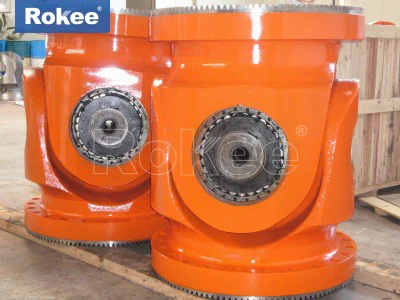
High speed cardan shaft couplings come in a variety of types, each designed to meet specific application requirements based on factors such as speed, torque, misalignment range, and installation space. The most common type is the cross shaft cardan coupling, which features a single or double cross shaft design. Single cross shaft couplings are simple in structure, cost-effective, and suitable for applications with moderate angular misalignments (typically up to 15 degrees) and moderate speeds. However, they suffer from a limitation known as unequal speed transmission, where the driven shaft’s angular velocity fluctuates periodically as the driving shaft rotates. This fluctuation can cause vibration and noise in high-speed applications, making single cross shaft couplings less suitable for precision or high-speed scenarios. To address this issue, double cross shaft couplings are used, which incorporate two cross shafts connected by an intermediate shaft. The intermediate shaft is positioned such that the angles of the two cross shafts are equal and opposite, canceling out the speed fluctuation and achieving constant velocity transmission. This makes double cross shaft couplings ideal for high-speed, high-precision applications where smooth, consistent power transfer is essential. Another popular type is the ball cage cardan coupling, which is specifically designed for high-speed and high-precision applications. Unlike cross shaft couplings, ball cage couplings use a spherical outer shell, a star-shaped inner race, and a set of steel balls held in place by a cage. The steel balls run along precision-machined raceways in the outer shell and inner race, ensuring that the driving and driven shafts maintain constant velocity regardless of angular misalignment. This design eliminates speed fluctuation entirely, reduces friction, and allows for higher rotational speeds, making ball cage couplings suitable for applications such as precision machine tools, industrial robots, and automotive drive systems. Other types of high speed cardan shaft couplings include ball hinge couplings, which use a ball-and-socket joint to provide greater radial load capacity and are suitable for space-constrained applications; three-pin and three-fork couplings, which feature a compact design and larger swing angles for medium-speed, heavy-duty applications; and sliding bearing cross shaft couplings, which use sliding bearings instead of rolling bearings to withstand harsh environments with high dust, debris, or corrosion. Each type of coupling is optimized for specific performance criteria, ensuring that there is a suitable solution for nearly every high-speed power transmission application.
The applications of high speed cardan shaft couplings are diverse and span across numerous industries, reflecting their versatility and reliability in high-speed power transmission. In the automotive industry, these couplings play a crucial role in both passenger and commercial vehicles, particularly in drive systems where misalignment between the gearbox and drive axle is common. For example, front-wheel-drive vehicles often use ball cage cardan couplings to transmit power from the transaxle to the front wheels, accommodating the large angular misalignments caused by steering. High-performance and racing vehicles also rely on high speed cardan shaft couplings to handle the high torques and speeds generated by powerful engines, ensuring efficient power transfer to the wheels. In the aerospace industry, high speed cardan shaft couplings are used in aircraft engines, helicopter rotor systems, and auxiliary power units, where they must operate reliably at extremely high speeds and in harsh environments, including high temperatures and pressure changes. These couplings are often made from lightweight, high-strength materials such as titanium or carbon fiber composites to reduce weight and improve fuel efficiency while maintaining structural integrity. The industrial machinery sector is another major user of high speed cardan shaft couplings, with applications in metallurgical equipment, such as rolling mills, where they transmit power to the rolls while accommodating misalignments caused by thermal expansion and roll adjustment. Cranes and lifting equipment also use these couplings to connect the hydraulic motor to the winch or hoist, allowing for flexible movement and reliable torque transmission. Precision manufacturing equipment, such as CNC machine tools and industrial robots, relies on high speed cardan shaft couplings to ensure accurate and smooth motion control, with ball cage couplings being particularly popular due to their constant velocity transmission and low vibration. In the renewable energy sector, wind turbines use high speed cardan shaft couplings to connect the gearbox to the generator, accommodating misalignments and transmitting the high torques generated by the turbine blades. Even in marine applications, high speed cardan shaft couplings are used in ship propulsion systems, where they must withstand corrosive saltwater environments and transmit power from the engine to the propeller while accommodating misalignments caused by hull flexing. Additionally, high speed cardan shaft couplings find applications in small-scale precision equipment, such as medical devices and laboratory instruments, where they provide reliable, low-vibration power transmission at high speeds.
The design and development of high speed cardan shaft couplings continue to evolve in response to the growing demands of modern industries, which require higher speeds, greater torque capacities, improved efficiency, and enhanced durability. Advances in materials science have led to the use of new alloys and composites that offer superior strength-to-weight ratios, corrosion resistance, and fatigue life, allowing couplings to operate in increasingly harsh and demanding environments. Precision manufacturing techniques, such as CNC machining, laser cutting, and 3D printing, have improved the accuracy and consistency of coupling components, reducing mass imbalances and enhancing dynamic performance. Additionally, the integration of advanced monitoring technologies, such as vibration sensors and condition monitoring systems, allows for real-time tracking of coupling performance, enabling predictive maintenance and reducing downtime. As industries continue to move toward high-speed, high-precision, and energy-efficient operations, the role of high speed cardan shaft couplings will become even more critical. Their ability to transmit torque efficiently while accommodating misalignments makes them irreplaceable in many applications, and ongoing innovations will further expand their capabilities and applications. Whether in automotive, aerospace, industrial, or precision engineering, high speed cardan shaft couplings remain a cornerstone of modern power transmission systems, ensuring that machinery and equipment operate reliably, efficiently, and safely at high speeds.
In summary, high speed cardan shaft couplings are sophisticated mechanical components that combine precise structural design, exceptional performance characteristics, and diverse types to meet the demands of high-speed power transmission across a wide range of applications. Their structure, centered around the universal joint and complemented by yokes, shafts, and connection mechanisms, enables them to compensate for angular, axial, and radial misalignments while transmitting torque efficiently. Key performance attributes such as dynamic balance, high torque capacity, excellent transmission efficiency, and durability make them suitable for high-speed operations, where reliability and performance are paramount. The various types of couplings, from cross shaft and ball cage designs to specialized ball hinge and three-pin configurations, ensure that there is a solution tailored to every application need. From automotive and aerospace to industrial machinery and precision manufacturing, high speed cardan shaft couplings play an essential role in powering modern technology, and their continued evolution will drive innovation in power transmission for years to come.