Single Diaphragm Couplings
Single diaphragm coupling as a precision mechanical transmission component, plays a crucial role in modern industrial equipment. This type of coupling is widely used in various transmission systems that require high precision and reliability due to its unique structural design and excellent performance characteristics.
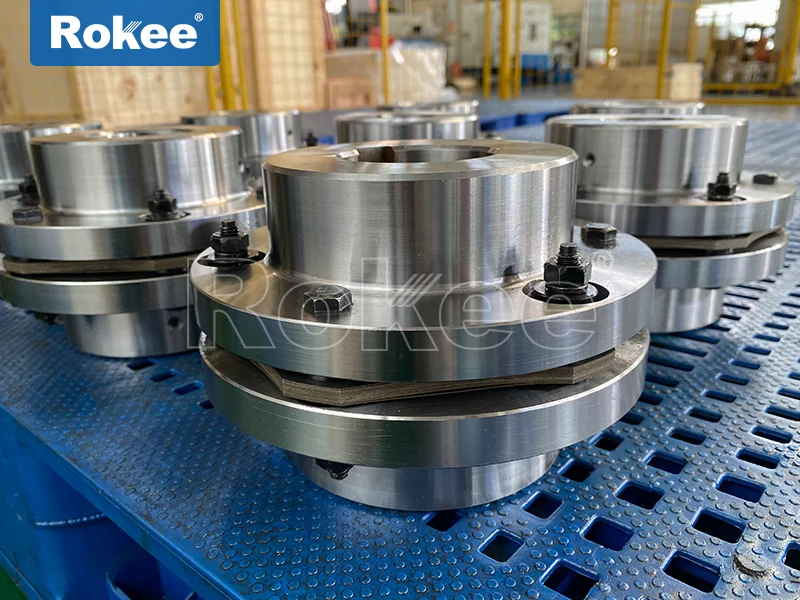
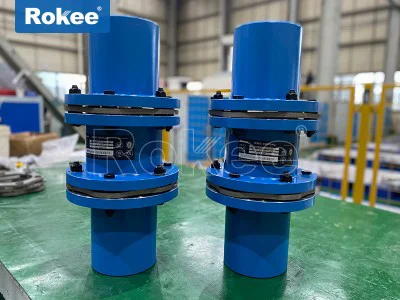
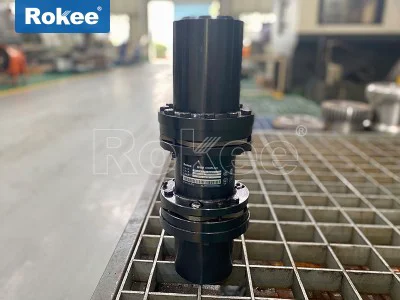
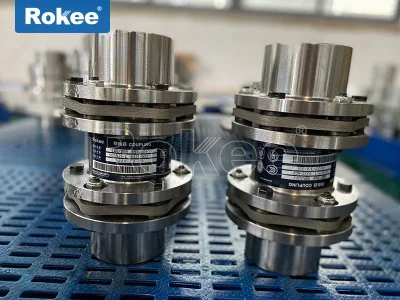
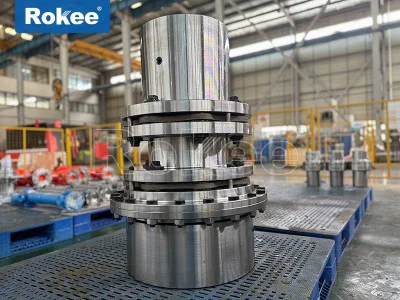
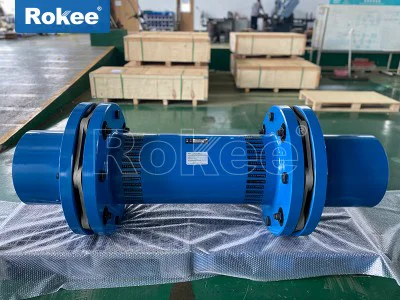
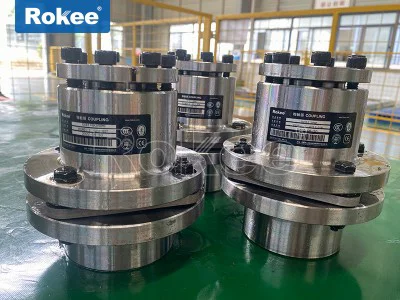
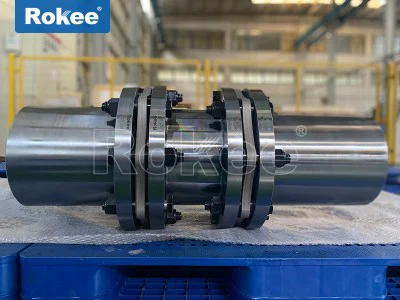
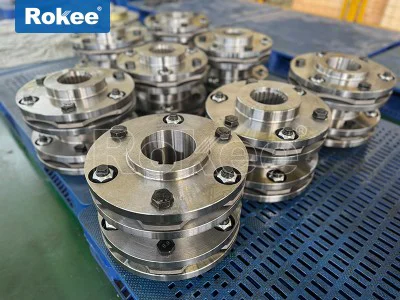
A single diaphragm coupling is a metal elastic element flexible coupling, whose core structure consists of a precision designed metal diaphragm and two shaft sleeves. The membrane is usually made of high-strength stainless steel sheet and connected to the two halves of the coupling through high-strength bolts in a staggered manner. This structural design enables the single diaphragm coupling to achieve efficient power transmission without the need for lubrication.
Diaphragm material: 304 stainless steel, 316 stainless steel or high-strength alloy steel, with a thickness usually between 0.2-1.0mm
Connection method: Bolt interlocking fixation ensures even torque transmission
Shaft sleeve design: usually made of aluminum alloy or steel material, with surface treated by anodizing or coating to improve corrosion resistance
The working principle of a single diaphragm coupling is based on the elastic deformation ability of the metal diaphragm. When the driving shaft rotates, torque is transmitted to the diaphragm through the bolt group, and then transmitted to the driven shaft through the diaphragm. During the transmission process, if there is installation deviation (axial, radial, or angular) between the two shafts, the diaphragm will produce corresponding elastic deformation to compensate for these deviations, thereby reducing the additional load on the bearings and shaft system.
Compared with double diaphragm couplings, single diaphragm couplings are simpler and more compact in structure, but due to only one diaphragm component, their ability to compensate for deviations is relatively weak. Single diaphragm couplings are more suitable for applications with high precision requirements and small deviations, while double diaphragm couplings can better handle larger shaft system deviations.
The single diaphragm coupling has a series of outstanding performance characteristics, making it the preferred transmission connection solution in many industrial applications:
High precision transmission: The single diaphragm coupling can transmit motion and torque without any gaps, with extremely high transmission accuracy and no slip during operation, making it particularly suitable for servo systems and precision mechanical transmissions.
Powerful deviation compensation capability: Although not as good as double diaphragm couplings, single diaphragm couplings can still effectively compensate for axial, radial, and angular deviations. Typical compensation values can reach axial ± 0.5mm, radial ± 0.3mm, and angular ± 0.5 °.
Maintenance free design: Due to the absence of relative sliding parts and lubrication, single diaphragm couplings require almost no daily maintenance, reducing downtime and maintenance costs.
Excellent dynamic performance: The diaphragm coupling has high torsional rigidity and good damping characteristics, which can effectively suppress vibration and impact, and improve the dynamic performance of the entire transmission system.
Environmental adaptability: It can work stably within a temperature range of -80 ° C to+300 ° C, is corrosion-resistant and oil resistant, and is suitable for harsh working conditions.
High transmission efficiency: With a transmission efficiency of up to 99.86% and minimal energy loss, it is particularly suitable for medium and high-speed high-power transmission systems.
Lightweight design: Compared to traditional forms such as gear couplings, single diaphragm couplings have a simple structure, light weight, and small volume, which is beneficial for reducing rotational inertia.
It is worth mentioning that although the torsional stiffness of the single diaphragm coupling is high, it is slightly lower than that of the bellows coupling. This characteristic makes it perform well in applications that require a certain degree of flexibility but cannot sacrifice transmission accuracy, such as the feed system of CNC machine tools and joint transmission of robots.
Single diaphragm couplings have been widely used in many industrial fields due to their excellent performance characteristics
Industrial automation equipment
In automated production lines and industrial robots, single diaphragm couplings are commonly used to connect servo motors with actuators such as ball screws and pulleys. Its high precision and fast response characteristics ensure positioning accuracy and repeat positioning accuracy:
Joint transmission of assembly robots
Precision positioning mechanism for automatic assembly line
Precision motion platform for semiconductor manufacturing equipment
Measurement and cutting devices for packaging machineryFluid Machinery
Various fluid machinery such as pumps, compressors, and fans widely use single diaphragm couplings to connect power sources and working machines:
Chemical pump: corrosion-resistant characteristics suitable for transporting corrosive media such as acids and alkalis
Boiler feed pump: high temperature resistance and adaptability to high temperature and high pressure working conditions
Centrifugal compressor: High speed capability meets high-speed transmission requirements
Ventilation fan: vibration reduction characteristics to reduce noise and vibration transmissionEnergy and power generation equipment
In the field of power generation and energy, single diaphragm couplings are used for shaft connections of various key equipment:
Transmission of auxiliary equipment for steam turbine generator set
Backup drive for yaw and pitch system of wind turbine generator set
Auxiliary power transmission of gas turbine
Backup transmission system for nuclear power plant main pumpTransportation equipment
Single membrane couplings also have important applications in the field of transportation:
High speed power transmission system for ships
Transmission of auxiliary equipment for railway locomotives
Transmission of aircraft auxiliary power unit
Power transmission system for special vehiclesSpecial environmental applications
Due to its corrosion resistance, high temperature resistance and other characteristics, single diaphragm couplings are also suitable for:
Mechanical equipment for offshore platforms
Oil drilling and production equipment
Mixing equipment for chemical production lines
Transmission system of high-temperature furnace
In servo system applications, single diaphragm couplings are particularly favored. For example, in the feed system of a CNC machine tool, it can accurately convert the rotational motion of the servo motor into linear motion of the worktable, while compensating for small deviations caused by thermal deformation or installation errors, ensuring machining accuracy.
By following the correct installation procedures and maintenance plan, single diaphragm couplings can provide reliable service for several years or even more than ten years. It is worth noting that although the single diaphragm coupling is designed to be maintenance free, regular inspections are still an effective means of early detection of problems and avoiding unexpected shutdowns.
In the realm of mechanical power transmission, flexible couplings play an indispensable role in bridging rotating shafts, mitigating misalignment stresses, and ensuring smooth torque delivery across diverse industrial systems. Among these critical components, the single diaphragm coupling stands out as a streamlined, high-performance solution that balances simplicity, durability, and functional versatility. Unlike elastomeric couplings that rely on rubber or plastic elements for flexibility, or gear couplings that depend on meshed teeth for torque transfer, the single diaphragm coupling utilizes a thin, precision-engineered metal diaphragm as its core flexible member, eliminating the need for lubrication, reducing maintenance burdens, and delivering consistent performance in demanding operating environments.
At its core, the single diaphragm coupling features a minimalist yet robust structural configuration, engineered to transmit torque while accommodating shaft misalignments without compromising transmission accuracy. The fundamental assembly consists of two rigid hub components, typically machined from high-strength alloy steel or stainless steel, which are securely mounted onto the driving and driven shafts respectively. Positioned between these two hubs is the single flexible diaphragm, a thin, circular metal disc crafted from premium-grade spring steel or other high-tensile alloys with exceptional fatigue resistance and elastic deformation capabilities. The diaphragm is rigidly fastened to each hub via precision fasteners, such as high-strength bolts or rivets, creating a direct, backlash-free torque transmission path between the shafts. This design eschews complex moving parts, sliding surfaces, or flexible inserts, resulting in a compact, lightweight assembly with minimal axial footprint—an essential benefit for machinery with limited installation space. The single diaphragm acts as the sole flexible element, bending and flexing in response to angular, axial, and limited radial misalignments between the connected shafts, absorbing mechanical stresses and preventing harmful loads from transferring to the shaft bearings, gearboxes, or other sensitive drive components. Unlike multi-diaphragm couplings that incorporate multiple flexible discs for enhanced misalignment capacity, the single diaphragm variant maintains a straightforward structure, optimizing stiffness-to-weight ratio and simplifying both manufacturing and installation processes.
The performance characteristics of single diaphragm couplings are defined by their structural simplicity and high-quality material selection, making them ideal for precision-driven and high-demand applications. One of the most prominent performance advantages is zero backlash operation, a critical trait for precision machinery where positional accuracy and motion repeatability are non-negotiable. The rigid metal-to-metal connection between the hubs and diaphragm eliminates any play or clearance in the transmission system, ensuring synchronous rotation of the driving and driven shafts even under rapid speed changes or reversible loading conditions. This zero-backlash feature also enhances the overall dynamic response of the drive system, reducing lag and improving control precision in automated and servo-driven equipment. Additionally, single diaphragm couplings exhibit exceptional torsional stiffness, enabling efficient torque transmission with minimal wind-up or distortion, even at moderate to high rotational speeds. This torsional rigidity ensures that power is transferred reliably without energy loss, making the couplings suitable for applications requiring consistent torque delivery, such as pumps, fans, and precision machining tools.
Another key performance attribute is the ability to compensate for multiple types of shaft misalignment, a common challenge in mechanical systems caused by manufacturing tolerances, thermal expansion, installation errors, or operational vibration. Single diaphragm couplings effectively accommodate angular misalignment, where the two shafts intersect at a small angle, by flexing the diaphragm to match the angular offset without inducing excessive stress. They also handle axial misalignment, which occurs when the shafts shift longitudinally relative to one another, through the axial flexibility of the thin metal diaphragm, absorbing thermal growth or mechanical movement without damaging the coupling or connected equipment. While radial misalignment compensation is more limited compared to multi-diaphragm or elastomeric couplings, the single diaphragm design still manages minor radial offsets, making it suitable for systems with well-aligned shafts or minimal radial displacement. Furthermore, these couplings boast excellent high-speed performance, as their balanced, low-inertia design minimizes centrifugal forces and vibration at elevated RPMs, reducing wear and extending service life. The absence of lubrication requirements is a major operational benefit, eliminating the risk of lubricant leakage, contamination, or scheduled maintenance for lubrication tasks, which is particularly valuable in clean, sealed, or hard-to-access equipment setups. Single diaphragm couplings also demonstrate strong resistance to environmental stressors, including temperature extremes, moisture, dust, and mild chemical exposure, thanks to the durable metal construction that outperforms elastomeric components in harsh conditions.
In terms of durability and service life, single diaphragm couplings offer superior fatigue resistance compared to many flexible coupling alternatives. The precision-machined diaphragm is engineered to withstand millions of flexing cycles without cracking, deforming, or losing elastic properties, ensuring long-term reliability even in continuous-duty applications. The lack of sliding or wearing parts eliminates abrasive wear, a common failure mode in gear or chain couplings, further prolonging the operational lifespan. While the single diaphragm design has a lower torque capacity relative to multi-diaphragm or heavy-duty couplings, it is optimized for medium to light torque loads, striking a perfect balance between performance and compactness. It is important to note that overloading or excessive misalignment beyond the design limits can lead to diaphragm failure, but proper selection and installation based on application requirements mitigate this risk effectively. Overall, the performance profile of single diaphragm couplings positions them as a cost-effective, low-maintenance solution for a broad spectrum of mechanical drive systems, prioritizing precision, reliability, and operational efficiency.
Single diaphragm couplings are categorized into distinct types based on structural variations, mounting configurations, and design specializations, each tailored to address specific application needs and installation constraints. The primary classification revolves around hub design, diaphragm integration, and shaft attachment methods, with each variant offering unique functional benefits. The most common type is the standard clamp-style single diaphragm coupling, featuring hubs with radial clamping screws that secure the coupling to the shafts via frictional force. This design allows for easy installation and removal without damaging the shaft surface, making it ideal for applications requiring frequent assembly or disassembly, such as test equipment, small industrial machinery, and laboratory setups. The clamp-style hubs ensure a tight, concentric fit on the shaft, minimizing runout and maintaining transmission precision, while the single diaphragm remains centrally positioned to maximize misalignment compensation.
A second prevalent type is the set-screw single diaphragm coupling, which utilizes set screws to lock the hubs onto the shaft, typically with a keyway or knurled shaft surface for enhanced torque transmission. This design provides a more permanent, rigid connection between the hub and shaft, suitable for high-torque, steady-load applications where shaft slippage is unacceptable. The set-screw configuration is often preferred in heavy-duty industrial equipment, such as conveyor systems, small compressors, and industrial fans, where consistent torque delivery and stable shaft coupling are paramount. While installation is straightforward, care must be taken to avoid shaft damage during set-screw tightening, making this type more suitable for fixed, long-term installations rather than modular or reconfigurable systems.
Additional specialized types include the compact single diaphragm coupling, engineered with an ultra-short axial length to fit extremely space-constrained machinery, such as miniature automation devices, portable equipment, and precision instruments. This variant retains all the core performance features of standard single diaphragm couplings but minimizes overall dimensions without sacrificing torque capacity or misalignment tolerance. Another specialized variant is the reverse-mount single diaphragm coupling, featuring a unique hub design that allows for reverse shaft mounting, ideal for applications where shaft end clearance is limited or where equipment layout restricts standard coupling installation. This design adapts to unconventional shaft orientations, expanding the usability of single diaphragm couplings in custom machinery and bespoke mechanical systems. There are also single diaphragm couplings designed for high-speed operation, with precision-balanced hubs and ultra-thin, high-flexibility diaphragms to minimize inertia and vibration at elevated rotational speeds, catering to applications such as small turbines, high-speed spindles, and centrifugal pumps.
Furthermore, single diaphragm couplings can be differentiated by material composition, with variants crafted from carbon steel for general industrial use, stainless steel for corrosion-resistant applications in harsh or hygienic environments, and aluminum alloy for lightweight, low-inertia setups in precision automation. Each material choice aligns with specific operational demands: carbon steel offers high strength and cost efficiency, stainless steel provides resistance to rust, chemicals, and moisture, and aluminum alloy reduces system inertia for high-speed, responsive motion control. These material and design variations ensure that there is a single diaphragm coupling type suitable for nearly every light to medium-duty power transmission scenario, regardless of environmental conditions, space limitations, or performance requirements.
The combination of compact design, zero-backlash precision, low maintenance, and reliable misalignment compensation makes single diaphragm couplings a staple across a vast array of industrial and commercial applications, spanning precision manufacturing, automation, energy, process industries, and specialized machinery. In the realm of precision machinery and automation, these couplings are extensively used in CNC machine tools, including lathes, milling machines, and grinding equipment, where zero backlash and high torsional rigidity are critical for maintaining machining accuracy and surface finish quality. They are also widely integrated into servo motor and stepper motor drive systems, connecting motors to ball screws, linear guides, and rotary encoders, ensuring precise motion control for robotic arms, automated assembly lines, and semiconductor manufacturing equipment. The lightweight, low-inertia design of aluminum single diaphragm couplings is particularly advantageous here, enhancing the dynamic performance of high-speed automation systems and reducing energy consumption.
In general industrial machinery, single diaphragm couplings serve as reliable connecting components for pumps, fans, blowers, and small compressors, where they absorb minor shaft misalignments and reduce vibration, extending the service life of bearings and motor components. Their maintenance-free operation is highly beneficial in industrial plants where continuous operation is essential, minimizing downtime and maintenance costs associated with lubrication or part replacement. In the HVAC and refrigeration sector, these couplings are used in fan motors and pump drives, delivering quiet, efficient power transmission while accommodating thermal expansion in ductwork and piping systems. For material handling equipment, such as small conveyors, feeders, and packaging machinery, single diaphragm couplings provide durable, backlash-free torque transfer, ensuring smooth and consistent operation in high-volume production environments.
The process industry, including food and beverage, pharmaceuticals, and light chemical processing, relies on stainless steel single diaphragm couplings for their corrosion resistance and hygienic properties. These couplings do not require lubrication, eliminating the risk of product contamination, and can withstand frequent washdowns and exposure to mild chemicals, making them suitable for sanitary processing environments. In energy and power generation applications, single diaphragm couplings are used in small generator sets, turbine auxiliary systems, and pump drives for power distribution equipment, where high reliability and resistance to temperature fluctuations are essential. They also find use in renewable energy systems, such as small wind turbine generators and solar tracking mechanisms, providing durable, maintenance-free power transmission in outdoor, remote installations.
Beyond industrial and automation sectors, single diaphragm couplings are employed in specialized equipment, including medical devices, laboratory instrumentation, and aerospace auxiliary systems. In medical machinery, such as diagnostic equipment and precision surgical tools, their zero-backlash precision and clean, lubrication-free design meet strict performance and hygiene standards. Laboratory devices, including centrifuges, stirrers, and testing machines, benefit from the coupling's accurate torque transmission and ability to minimize vibration, ensuring reliable test results. In aerospace and defense, lightweight, high-strength single diaphragm couplings are used in auxiliary power units, control systems, and ground support equipment, where durability, low weight, and consistent performance are critical for mission-critical operations.
As mechanical engineering continues to evolve toward more compact, efficient, and maintenance-free systems, the demand for single diaphragm couplings is poised to grow, driven by their unique blend of simplicity, performance, and versatility. While they may not be suitable for heavy-duty, high-torque applications or extreme misalignment scenarios that require multi-diaphragm or specialized flexible couplings, their dominance in light to medium-duty precision transmission is unrivaled. The key to maximizing the performance of single diaphragm couplings lies in proper selection, matching torque capacity, misalignment tolerance, and material to the specific application requirements, alongside precise installation to ensure optimal shaft alignment. By understanding the structural nuances, performance capabilities, type variations, and application suitability of single diaphragm couplings, engineers and equipment designers can make informed decisions to enhance the reliability, efficiency, and longevity of mechanical drive systems across all industries. In essence, the single diaphragm coupling represents a masterclass in engineering simplicity, proving that the most effective solutions often combine minimal design with maximum functionality to meet the diverse needs of modern power transmission.