Lamina Couplings
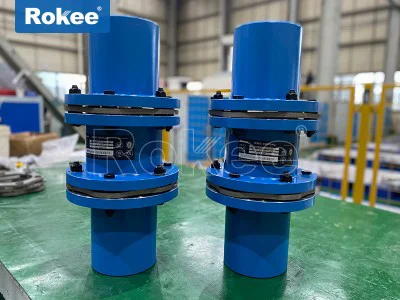
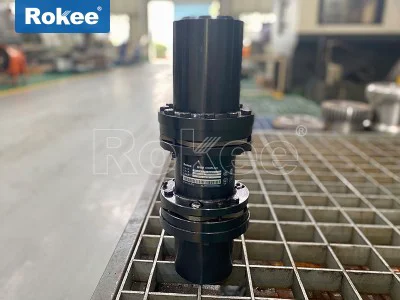
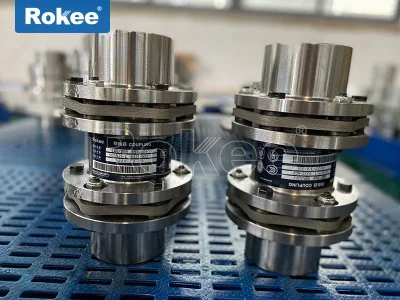
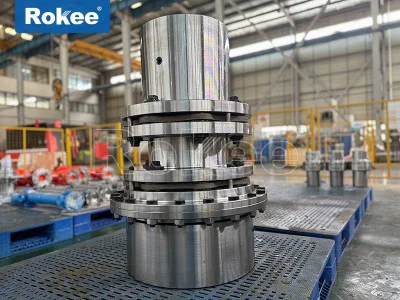
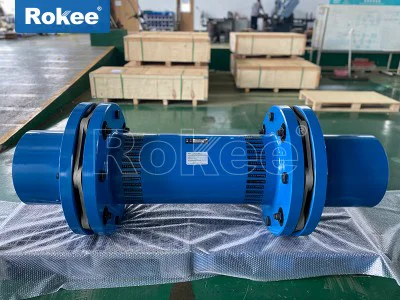
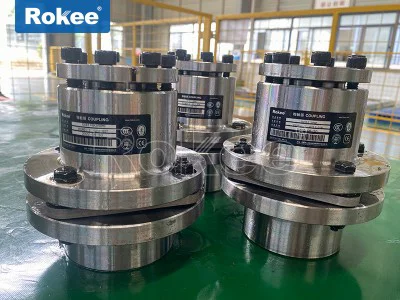
A lamina coupling is a flexible coupling with metal elastic elements, which compensates for the relative displacement between two shafts by the elastic deformation of multiple layers of metal thin plates (laminated plates). This type of coupling represents the development direction of modern coupling technology, especially suitable for transmission systems that require high torque transmission and large deviation compensation.
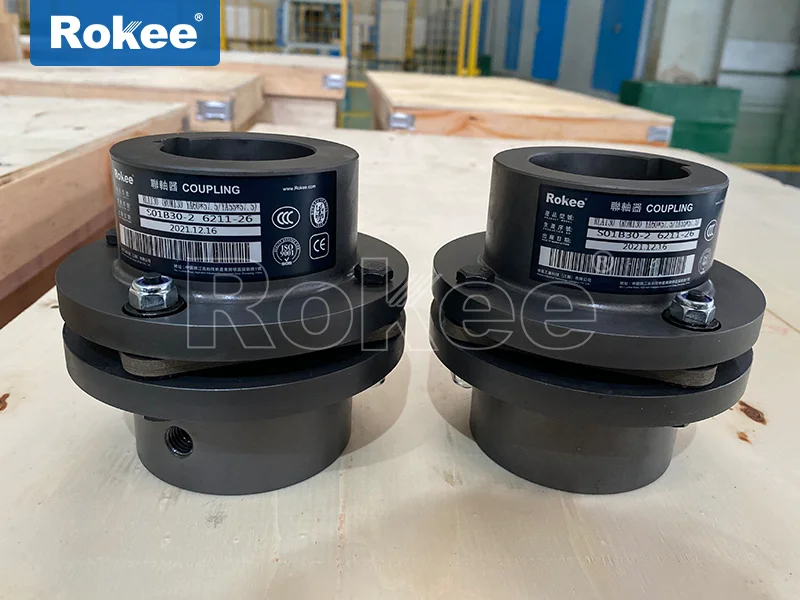
The working principle of lamina couplings is based on the theory of metal elastic deformation. When the driving shaft transmits torque, the torque is first transmitted to the laminated assembly through bolts, and then transmitted to the driven shaft through the elastic deformation of the laminated assembly. During this process, the elastic deformation of the laminated structure can effectively compensate for possible axial, radial, and angular deviations between the two axes, while absorbing some vibration and impact energy.
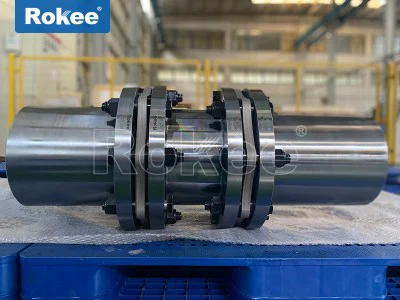
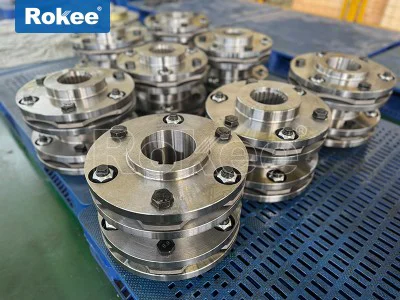
The core structure of lamina couplings is relatively simple but intricately designed:
Stacking group: composed of multiple layers of metal thin plates stacked together, it is the elastic deformation element and core component of the coupling. According to design requirements, laminations can be divided into two basic forms: linkage type and integral type. The number, shape, and thickness of laminations directly affect the compensation capability and torque transmission performance of the coupling.
Shaft sleeve/flange: usually two, connecting the driving shaft and the driven shaft respectively. The shaft sleeve material is generally high-strength alloy steel, which is fixedly connected to the shaft end through keyway, clamping mechanism or expansion sleeve.
Connecting bolts: High strength bolts tightly connect the laminated assembly with the shaft sleeve, forming an integral transmission structure. The pre tightening force and fitting accuracy of bolts have a decisive impact on the performance of couplings.
The lamina coupling achieves displacement compensation and torque transmission through the elastic deformation of the laminated plates:
Torque transmission: When the driving shaft rotates, the torque is transmitted to the laminated group through the flange, and then transmitted to the driven shaft through the other flange. Stacks mainly bear tensile and compressive stresses when transmitting torque.
Displacement compensation:
Axial displacement: Stacks absorb axial deviation through their own elastic bending deformation
Radial displacement: Stacking produces conical deformation to adapt to radial offset
Angular displacement: The laminated group presents an "S" - shaped bending to compensate for angular deviationVibration reduction characteristics: Metal laminations have certain damping properties, which can absorb and buffer vibrations and impacts in the transmission system, and reduce bearing loads.
The reason why lamina couplings can be widely used in many industrial fields is due to a series of outstanding performance characteristics:
High torque transmission capacity: Under the same size, the load-bearing capacity is 15% -20% higher than that of ordinary couplings, and the maximum torque transmission capacity can reach tens of thousands of Newton meters, especially suitable for heavy machinery transmission.
Excellent compensation performance: The angular compensation capability can reach ± 1.5 ° to ± 2 °, and the radial compensation capability is 0.5-1.3mm. It can simultaneously compensate for multiple composite deviations, especially suitable for installation in difficult alignment situations.
Environmental adaptability: With a wide working temperature range (-50 ℃ to+300 ℃), it can operate stably in harsh environments such as oil, water, acid and alkali corrosive media, and can operate safely under impact and vibration conditions.
Maintenance free design: The entire transmission process has no relative sliding parts, does not require lubrication and sealing structures, and basically achieves maintenance free operation, greatly reducing the cost of use.
Safe and reliable: compact structure, high strength, long service life. In case of overload, the laminations will break first, providing overload protection and avoiding damage to more expensive equipment components.
Classify by stacking shape
Connecting rod lamina coupling:
The laminated structure is a multi link structure, usually with 4, 6, 8, or 10 link arms
Has better flexibility and higher fatigue life
Suitable for high torque transmission and complex displacement compensationWhole piece lamina coupling:
The laminated structure is a complete circular structure with a specially shaped opening in the middle
Higher torsional stiffness, suitable for high-precision transmission
Compensation ability is relatively small but more uniform
Classified by connection method
Keyway connection type: The connection between the shaft and the coupling is achieved through keys and keyways, which transmits large torque but requires high installation accuracy.
Clamping connection type: directly clamping the shaft surface with bolts, easy to install and without keyway stress concentration problems, suitable for small and medium torque transmission.
Expansion sleeve connection type: achieved keyless connection through conical expansion sleeve, without damage to the shaft, easy to install and disassemble, suitable for frequent replacement occasions.
Special purpose couplings
Stacked coupling for heavy machinery: using thickened laminations and special alloy materials, it can transmit torque up to millions of Newton meters and is suitable for heavy equipment such as mining and metallurgy.
High speed lamina coupling: specially designed for high-speed applications, with a maximum speed of over 10000rpm. After precision dynamic balance testing, the residual unbalance is minimal.
Corrosion resistant lamina coupling: made of stainless steel material and specially treated surface, suitable for corrosive environments such as chemical and marine industries.
Due to its excellent performance characteristics, lamina couplings have been widely used in many fields of modern industry
Metallurgical industry: Heavy equipment such as rolling mills, continuous casting machines, straightening machines, etc., whose high temperature resistance can withstand the thermal radiation during the rolling process.
Mining machinery: crushers, ball mills, lifting equipment, etc. In underground environments with high dust and poor maintenance conditions, the maintenance free feature is particularly valuable.
Petrochemical industry: various chemical pumps, compressors, mixing devices, etc., with corrosion resistance, are particularly suitable for handling acidic and alkaline media.
Electric energy: key equipment such as generator sets, steam turbines, boiler feed pumps, etc., capable of transmitting high power (up to tens of thousands of kilowatts) and adapting to high temperature and high pressure environments.
Ship and Ocean Engineering: Propulsion systems, servo systems, etc., with excellent performance of stainless steel laminations resistant to seawater corrosion.
General industrial equipment:
Large scale water pump system: especially high-power water pumps and chemical pumps
Heavy duty ventilation equipment: used for connecting fans and motors to reduce vibration transmission
Construction machinery: Transmission systems for heavy equipment such as excavators and cranes
As a key component in modern industrial transmission systems, the technological development of lamina couplings will continue to progress around improving reliability, extending lifespan, and enhancing adaptability. With the development of materials science and manufacturing technology, lamina couplings will evolve towards higher torque density, smarter monitoring, and longer service life in the future.
In the realm of modern mechanical power transmission, lamina couplings stand out as precision-engineered flexible coupling solutions, distinguished by their all-metal construction, adaptive flexibility, and reliable torque transmission capabilities. Unlike conventional coupling designs that rely on lubricated moving parts or elastomeric elements, lamina couplings operate through the controlled elastic deformation of stacked thin metal laminas, enabling them to bridge driving and driven shafts while compensating for misalignments, dampening minor vibrations, and maintaining consistent power delivery across diverse operating conditions. This unique operational mechanism underpins their exceptional structural performance, while variations in lamina configuration, assembly design, and material selection give rise to distinct coupling types tailored to specific industrial demands, making them indispensable components in countless rotating machinery systems worldwide.
At the core of every lamina coupling lies a meticulously crafted assembly of thin, high-strength metal laminas, typically fashioned from alloy steel or stainless steel, stacked in precise layers to form a flexible yet robust transmission module. These laminas are securely fastened to rigid hubs or flanges at either end of the coupling via high-precision bolts, creating a seamless torque transfer path that eliminates backlash and ensures synchronous rotation between connected shafts. The structural performance of lamina couplings is defined by several key attributes that set them apart from other coupling variants, starting with exceptional torsional stiffness paired with targeted flexibility. Unlike rigid couplings that cannot accommodate shaft misalignment, lamina couplings exhibit controlled elasticity in axial, radial, and angular directions, allowing them to compensate for common installation errors, thermal expansion-induced shifts, and operational vibrations without compromising torque transmission accuracy. This balance of stiffness and flexibility prevents excessive stress on shaft bearings, gearboxes, and motor components, extending the service life of entire drive systems and reducing maintenance requirements over time.
Another hallmark performance trait of lamina couplings is their maintenance-free, dry-running operation. Unlike gear couplings or chain couplings that demand regular lubrication to prevent wear, friction, and corrosion, lamina couplings have no relative sliding surfaces between moving parts. The elastic deformation of the metal laminas occurs without friction or material degradation, eliminating the need for lubrication systems, sealing components, and routine upkeep related to lubricant replenishment or replacement. This feature not only reduces operational downtime and long-term maintenance costs but also makes them suitable for harsh operating environments where lubricants would degrade rapidly, such as high-temperature settings, dusty industrial spaces, or corrosive atmospheres. Additionally, lamina couplings boast excellent environmental resilience, withstanding extreme temperature fluctuations, exposure to moisture, chemicals, and abrasive particles, and maintaining structural integrity under sustained heavy loads. Their high fatigue resistance ensures consistent performance even in high-cycle, continuous-operation applications, avoiding premature failure and enhancing overall system reliability.
Lamina couplings also deliver superior precision and efficiency in power transmission, characterized by zero backlash and near-perfect rotational synchronization. This precision is critical for applications requiring accurate speed control, positional accuracy, and smooth torque delivery, as it eliminates lag or play between driving and driven shafts that could compromise product quality, operational accuracy, or system safety. The all-metal construction contributes to high transmission efficiency, typically exceeding 99% in most operating scenarios, minimizing energy loss through friction or deflection and optimizing the overall energy consumption of the drive system. Furthermore, lamina couplings offer inherent overload protection: in the event of an extreme torque surge or catastrophic misalignment, the thin metal laminas will deform or fail gradually, acting as a mechanical fuse to safeguard more expensive and critical components such as motors, pumps, and gearboxes from costly damage. This fail-safe design adds an extra layer of security to industrial drive systems, preventing costly downtime and extensive repairs following unexpected operational anomalies.
The diverse range of lamina coupling types is primarily categorized based on lamina structure, assembly configuration, and functional design, each engineered to prioritize specific performance metrics for targeted applications. The most fundamental classification distinguishes between single lamina sets and dual lamina set couplings, also referred to as single diaphragm and double diaphragm couplings. Single lamina set couplings feature a single stack of laminas connecting the two hubs, offering a compact, lightweight design ideal for applications with limited installation space, moderate torque loads, and minimal shaft misalignment. These couplings excel in high-speed, low-load scenarios, providing precise torque transmission and moderate axial and angular compensation, making them a popular choice for small to medium-sized pumps, fans, and precision machinery where space efficiency is paramount. Their simplified construction also translates to streamlined installation and alignment processes, reducing setup time and labor costs for less demanding drive systems.
Dual lamina set couplings, by contrast, incorporate two separate lamina stacks separated by a spacer or intermediate shaft, significantly enhancing the coupling’s misalignment compensation capabilities. This dual-lamina design enables greater angular, radial, and axial displacement tolerance, making it suitable for applications with significant shaft misalignment, long shaft spans, or high vibrational loads. The intermediate spacer can be customized in length to accommodate varying shaft separations, adding versatility to drive system design and enabling use in equipment where driving and driven components are positioned far apart. Dual lamina set couplings retain the high torsional stiffness and zero-backlash performance of single-set designs while expanding operational flexibility, making them the preferred choice for heavy-duty, high-load applications where robust misalignment compensation is non-negotiable.
Lamina couplings are further classified by lamina geometry and profile, with two dominant designs: integral ring laminas and segmented link laminas. Integral ring lamina couplings feature a single-piece, circular lamina stack with precision-machined contoured openings, delivering uniform stress distribution, high torsional rigidity, and exceptional dynamic balance. This design prioritizes precision and high-speed performance, minimizing vibration and noise during operation and making it ideal for high-speed rotating machinery such as turbines, compressors, and high-precision machining equipment. The uniform flexibility of integral ring laminas ensures consistent deformation under load, reducing stress concentrations and extending fatigue life in demanding high-speed environments. Segmented link lamina couplings, on the other hand, feature laminas shaped with multiple radial link arms, typically four, six, or eight per lamina, creating a more flexible structure with enhanced misalignment compensation and shock absorption capabilities. This design offers greater elasticity and higher fatigue resistance under heavy, fluctuating loads, making it well-suited for high-torque, low-to-medium speed applications such as rolling mills, crushers, and heavy conveyor systems. The segmented link design distributes stress across multiple arms, resisting deformation under extreme torque and enhancing durability in rugged industrial settings.
Additional specialized lamina coupling types cater to niche operational requirements, including high-temperature variants, corrosion-resistant models, and high-torque heavy-duty designs. High-temperature lamina couplings utilize heat-resistant alloy laminas and hub materials to maintain structural integrity and performance in extreme thermal environments, such as metal processing facilities, boiler systems, and industrial furnaces, where standard couplings would warp, soften, or degrade. Corrosion-resistant lamina couplings, constructed entirely from stainless steel or other corrosion-proof alloys, are engineered for use in chemical processing plants, marine applications, and wastewater treatment facilities, where exposure to corrosive chemicals, saltwater, or acidic vapors would compromise the lifespan of carbon steel components. High-torque heavy-duty lamina couplings feature thicker laminas, reinforced hubs, and heavy-duty fastening systems to transmit extremely high torque loads, meeting the demands of large-scale industrial machinery such as mining equipment, marine propulsion systems, and power generation turbines.
The versatile performance characteristics and diverse typology of lamina couplings enable their deployment across a vast spectrum of industrial sectors, each leveraging specific coupling attributes to address unique operational challenges. In the energy and power generation industry, lamina couplings are widely integrated into gas turbines, steam turbines, generator sets, and boiler feed pumps, where their high-speed capability, precision performance, and high-temperature resistance ensure reliable power transmission in critical, high-stress environments. Their maintenance-free design is particularly valuable in power plants, where operational continuity is essential and downtime carries significant financial costs, as it minimizes unplanned maintenance and maximizes equipment uptime.
In the petrochemical and chemical processing sector, lamina couplings serve as vital components in pumps, compressors, mixers, and agitators, where corrosion resistance, leak-free operation, and compatibility with harsh chemical environments are paramount. The absence of lubricants eliminates the risk of lubricant contamination in sensitive chemical processes, while the all-metal, sealed construction resists degradation from corrosive fluids and fumes, ensuring consistent performance and preventing costly process disruptions. Similarly, in marine and offshore engineering, corrosion-resistant lamina couplings are employed in ship propulsion systems, auxiliary machinery, and offshore drilling equipment, withstanding the corrosive effects of saltwater, high humidity, and harsh marine conditions while providing reliable torque transmission and misalignment compensation for vessel-based rotating machinery.
The metallurgical and mining industries rely heavily on heavy-duty segmented link lamina couplings for equipment such as rolling mills, continuous casting machines, crushers, ball mills, and conveyor systems. These couplings deliver the high torque capacity, shock absorption, and rugged durability required to handle the heavy loads, abrasive materials, and extreme operational stresses inherent to metal production and mineral processing. Their ability to compensate for significant shaft misalignment is critical in these rugged environments, where machinery vibration, foundation shifting, and thermal expansion are common, and equipment reliability directly impacts production output.
In general manufacturing and industrial machinery, lamina couplings find widespread use in a multitude of applications, including centrifugal pumps, industrial fans, blowers, machine tools, and material handling equipment. Single lamina set couplings are favored for small to medium-sized precision machinery, where compact size and high accuracy are essential, while dual lamina set couplings are deployed in larger fans, pumps, and conveyor systems requiring enhanced misalignment compensation. The precision and zero-backlash performance of lamina couplings also make them ideal for automated manufacturing equipment, robotic systems, and precision assembly lines, where accurate motion control and positional precision are critical to maintaining product quality and production efficiency.
Beyond these core sectors, lamina couplings are increasingly adopted in emerging industrial fields such as renewable energy, where they are used in wind turbine gearboxes, solar tracking systems, and other renewable energy equipment, leveraging their high reliability, low maintenance, and environmental resilience to support sustainable power generation. Their adaptability to diverse operating conditions, combined with their long service life and minimal maintenance requirements, continues to expand their reach into new applications, solidifying their status as a versatile and cost-effective solution for modern mechanical power transmission.
In summary, lamina couplings represent a pinnacle of flexible coupling engineering, blending robust structural performance, tailored design variations, and broad industrial applicability to meet the evolving demands of modern machinery. Their unique combination of torsional stiffness, controlled flexibility, maintenance-free operation, and environmental resilience addresses key pain points in power transmission systems, from misalignment compensation and vibration dampening to long-term durability and operational efficiency. The diverse array of lamina coupling types, each optimized for specific load capacities, speeds, misalignment tolerances, and environmental conditions, ensures that a suitable lamina coupling exists for nearly every rotating machinery application. As industrial technology continues to advance toward higher efficiency, greater reliability, and more sustainable operation, lamina couplings will remain a foundational component in mechanical power transmission, adapting to new challenges and continuing to deliver consistent, high-performance service across global industrial landscapes.