Water Turbine Cardan Shaft
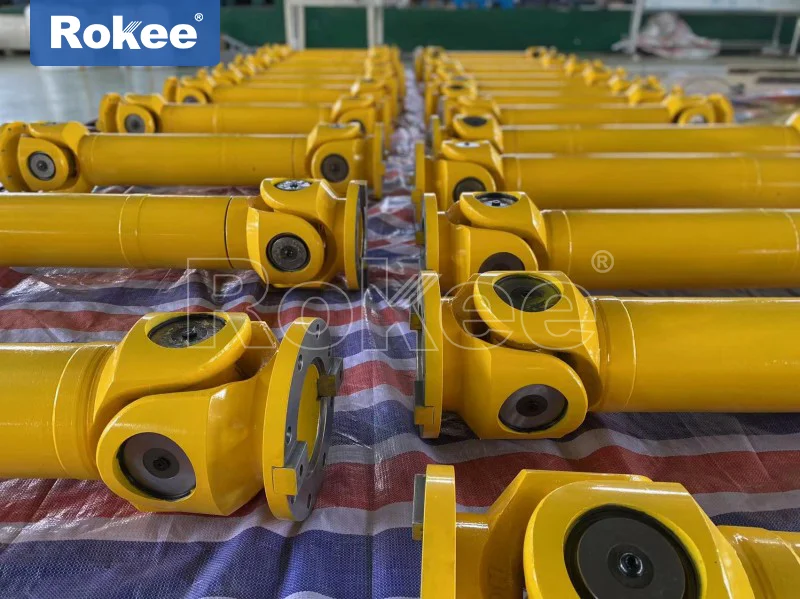
The water turbine cardan shaft serves as an indispensable power transmission component in hydropower generation systems, undertaking the core task of transmitting rotational torque and mechanical motion between the turbine runner and power generation equipment. Unlike rigid transmission shafts that require precise axis alignment, this specialized universal transmission structure is uniquely designed to adapt to the complex and variable operating conditions of hydropower units, solving the technical pain points of unstable power transmission and component wear caused by shaft misalignment, mechanical vibration, and hydraulic fluctuation in water turbine operation. As a key connecting medium for mechanical energy conversion in hydropower stations, its operating stability, structural durability and transmission efficiency directly determine the overall operational reliability and power generation efficiency of the entire hydropower unit, playing a fundamental supporting role in the safe and stable operation of hydropower equipment.
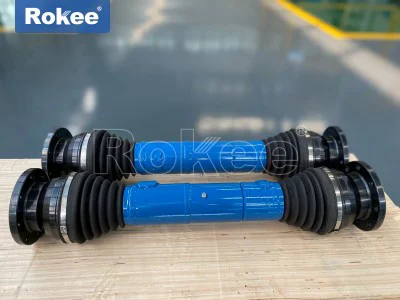
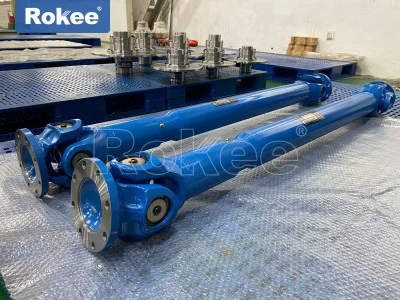
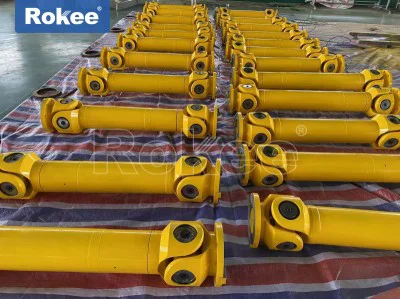
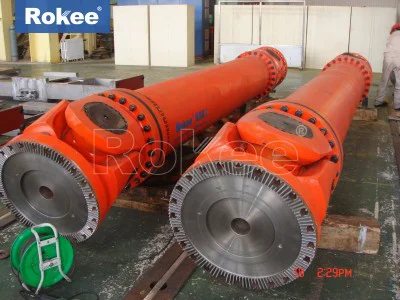
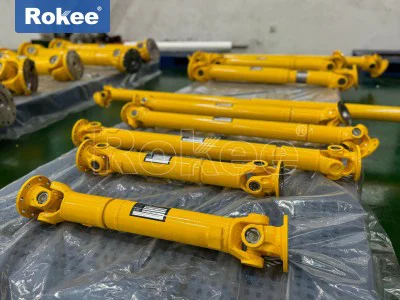
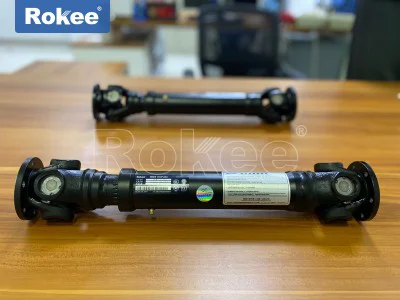
The basic structure of the water turbine cardan shaft follows the classic universal transmission configuration, consisting of symmetrically arranged universal joint assemblies at both ends, a middle telescopic shaft body, cross shaft connecting parts, bearing sets and fixed connecting forks. Each component cooperates precisely to form a flexible and efficient power transmission system. The universal joint is the core functional unit of the entire structure, composed of upper and lower fork bodies and cross shaft connectors, which can realize multi-angle deflection and rotation compensation within a certain range. The middle shaft body adopts an integrated or telescopic structural design, which can adapt to the axial distance change between the turbine and the generator during equipment operation, installation and thermal expansion and contraction. The precision matching bearings installed inside the universal joint effectively reduce friction resistance during high-speed rotation, ensure flexible rotation of the joint parts, and avoid transmission jamming and energy loss caused by rigid friction. The overall structural layout abandons the limitation of fixed-axis transmission, enabling the equipment to maintain continuous and stable power output under complex displacement and angle deviation conditions.
The working principle of the water turbine cardan shaft is based on the geometric motion characteristics of universal joint deflection and torque synchronous transmission. In the operating state of the hydropower unit, the water flow impacts the turbine runner to drive the rotation of the main shaft, and the rotational torque is transmitted to the cardan shaft through the connecting fork. When there is angular deviation, axial displacement or radial offset between the turbine main shaft and the generator input shaft due to equipment installation errors, foundation settlement, hydraulic vibration and other factors, the universal joint assemblies at both ends of the cardan shaft can automatically adjust the deflection angle through the flexible rotation of the cross shaft. This structural feature enables the driving end and the driven end to maintain synchronous rotational motion without being restricted by coaxial accuracy, realizing non-rigid synchronous transmission of torque. In the whole transmission process, the telescopic structure of the middle shaft body can buffer the axial stress generated by equipment operation and temperature change, and the bearing system balances the radial and axial loads generated by high-speed rotation, ensuring that the torque transmission is uniform and continuous, and avoiding power fluctuation and mechanical impact caused by shaft position deviation.
Hydropower generation scenarios put forward extremely harsh operating requirements for transmission components, and the unique performance advantages of cardan shafts make them the preferred transmission solution for various horizontal water turbine units. Different from vertical turbine units that rely on gravity to maintain structural stability, horizontal tubular turbines, pit turbines and horizontal impulse turbines are prone to frequent axis deviation and mechanical vibration during operation due to the influence of water flow impact and unit self-weight. The cardan shaft can effectively adapt to the angle deviation formed in these working conditions, and its allowable deflection angle range can fully cover the dynamic displacement changes generated during the operation of hydropower units. At the same time, the hydraulic instability of the water flow will produce periodic alternating loads on the turbine runner, and the flexible structure of the cardan shaft can effectively absorb and buffer these alternating loads, reduce the rigid impact on the generator set, and protect the precision components of the power generation equipment from fatigue damage. This excellent vibration damping and deviation compensation performance makes the cardan shaft play an irreplaceable role in stabilizing the operating state of hydropower units.
In terms of material selection and manufacturing process, water turbine cardan shafts adopt high-strength alloy materials with excellent mechanical properties and environmental adaptability. Long-term operation in hydropower environments requires components to have strong fatigue resistance, impact resistance and corrosion resistance, so the base materials are strictly screened to ensure stable mechanical strength under long-term alternating load operation. The key load-bearing parts such as cross shafts and joint forks are processed through precision forging and heat treatment processes to optimize the internal metal structure, eliminate processing defects, and improve the overall rigidity and wear resistance of the components. The surface of the shaft body is treated with anti-corrosion and wear-resistant processes to adapt to the humid and multi-water-vapor operating environment of hydropower stations, prevent surface oxidation, rust and abrasive wear, and extend the service life of the equipment. The bearing parts adopt high-precision wear-resistant matching structures, which can maintain low friction and high stability under long-term high-speed rotation, effectively reducing mechanical energy loss and improving the overall power transmission efficiency.
The operational performance of the water turbine cardan shaft directly affects the power generation quality and equipment safety of hydropower stations. In the actual power generation process, stable torque transmission can ensure the uniform and consistent rotation speed of the generator, avoid frequency and voltage fluctuation of power output caused by unstable transmission, and improve the quality of grid-connected power generation. The efficient vibration damping and buffer performance can reduce the mechanical vibration amplitude of the unit, reduce the noise generated by equipment operation, and create a stable operating environment for the entire hydropower unit. In addition, the good fault tolerance of the cardan shaft can effectively avoid equipment failure shutdown caused by minor axis deviation and vibration, improve the continuous operation capacity of hydropower equipment, and reduce the downtime loss of power generation. For small and medium-sized hydropower stations with limited installation conditions and large foundation deformation, the strong adaptability of cardan shafts can make up for the deficiencies of equipment installation accuracy and foundation stability, ensuring the long-term stable operation of the unit.
Rational daily maintenance and regular inspection are crucial to maintain the excellent performance of water turbine cardan shafts and extend their service life. In the daily operation and maintenance process, the key inspection contents include the operating flexibility of universal joints, the wear degree of bearing components, the tightness of connecting fasteners and the surface state of the shaft body. It is necessary to regularly check whether there is abnormal noise, vibration and jamming during the rotation of the shaft body, and timely eliminate the hidden troubles of unsmooth component operation. Regular lubrication maintenance should be carried out on the bearing and cross shaft moving parts to ensure sufficient lubricating oil film between the friction pairs, reduce wear and heat generation during operation, and avoid component aging and failure caused by dry friction. For the telescopic part of the shaft body, it is necessary to keep the surface clean to prevent sediment, dust and other impurities from entering the matching gap, which may affect the telescopic adjustment function. At the same time, the deflection state and axial displacement of the cardan shaft during unit operation should be regularly monitored to ensure that the operating angle is within the reasonable design range and avoid accelerated fatigue damage caused by long-term overload deflection operation.
Common operational faults of water turbine cardan shafts are mostly related to component wear, insufficient lubrication and excessive deflection. Long-term high-load operation will cause gradual wear of bearing parts and cross shaft matching surfaces, resulting in increased rotation clearance, abnormal vibration and noise of the shaft body, and even unstable torque transmission in severe cases. Insufficient lubrication or deterioration of lubricating grease will intensify friction and wear, generate excessive operating temperature, and cause thermal deformation of components to affect transmission accuracy. Long-term operation beyond the allowable deflection angle will lead to fatigue cracks on the surface of the joint fork and shaft body, reducing the structural strength of the equipment. Timely detection and maintenance of these minor faults can effectively avoid the expansion of faults, prevent major equipment failures such as shaft body fracture and transmission failure, and ensure the safe and continuous operation of hydropower units.
With the continuous development of hydropower technology towards high efficiency, intelligence and low energy consumption, the design and manufacturing technology of water turbine cardan shafts is also constantly optimized and upgraded. Modern design concepts pay more attention to the integration of lightweight structure, high load-bearing performance and intelligent monitoring function. Through finite element simulation analysis, the structural stress distribution of the cardan shaft under different working conditions is optimized, the structural size is reasonably simplified on the premise of ensuring load-bearing capacity, the self-weight of the equipment is reduced, and the transmission efficiency is further improved. At the same time, with the application of intelligent sensing technology, real-time monitoring of operating parameters such as rotation speed, vibration amplitude, deflection angle and operating temperature of the cardan shaft can be realized, which facilitates operation and maintenance personnel to grasp the equipment operating state in real time, realize early warning of potential faults, and improve the refined management level of hydropower equipment operation and maintenance.
As a core transmission component connecting hydraulic mechanical energy and electrical energy conversion, the water turbine cardan shaft has extremely high application value in the field of hydropower generation. It not only solves the technical problems of power transmission under complex working conditions of hydropower units, but also provides a solid guarantee for the stable operation and efficient power generation of hydropower equipment. In the context of the global vigorous development of clean energy, hydropower, as a mature and stable renewable energy source, undertakes an important power supply task. The performance optimization and reliable operation of cardan shaft components are of great significance to improving the overall operation efficiency of hydropower stations, reducing equipment maintenance costs, and promoting the stable development of the clean energy industry. In the future, with the continuous progress of material technology and mechanical design technology, the comprehensive performance of water turbine cardan shafts will be further improved, adapting to more diverse and harsh hydropower operating conditions, and providing more reliable technical support for the efficient utilization of hydropower resources.