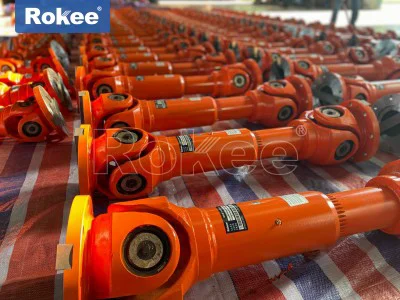
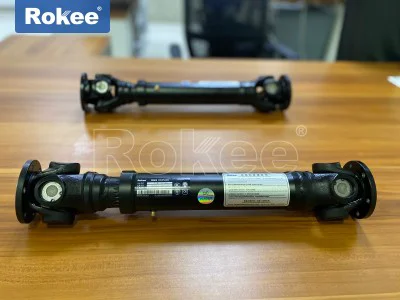
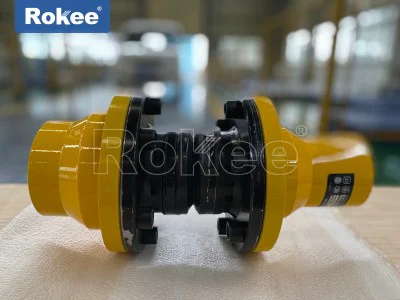
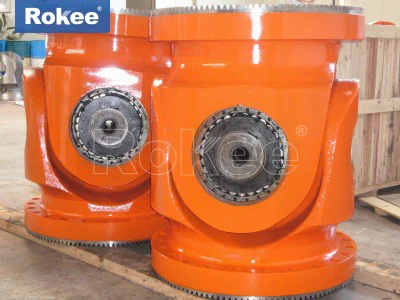
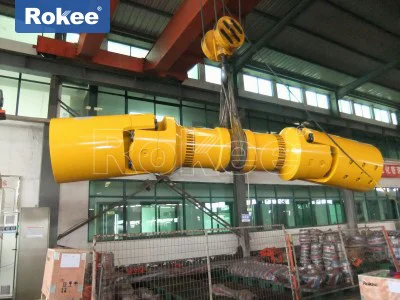
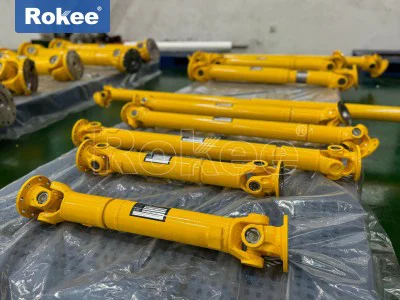
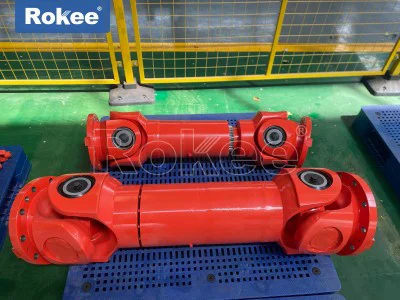
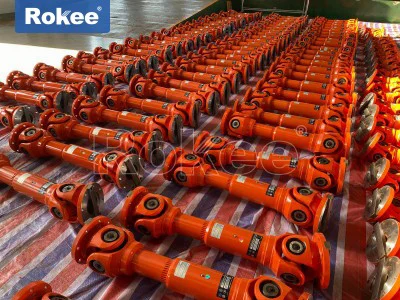
High Speed Universal Shaft
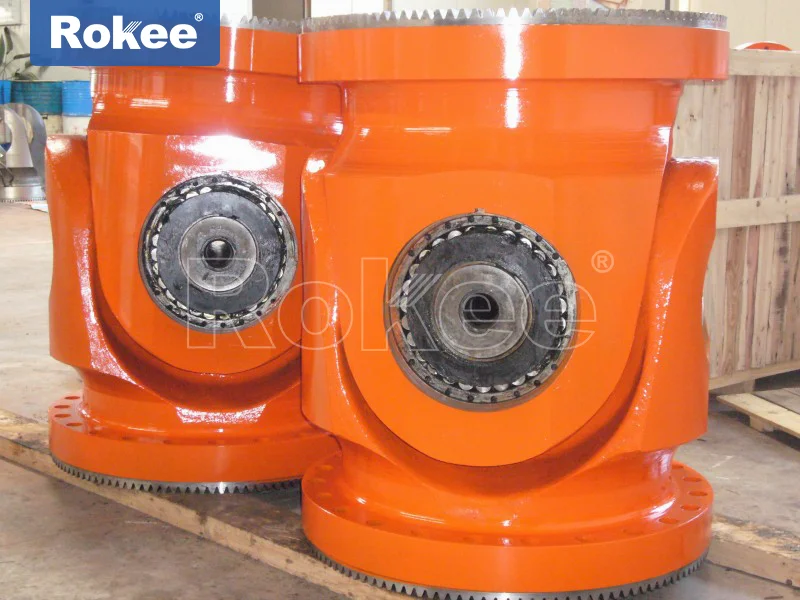
High speed universal shafts typically include the following key components:
Cross shaft: As the core component of the universal joint, the cross shaft is usually made of high-strength alloy steel, with four shaft necks distributed in a cross shape, responsible for the main torque transmission task.
Universal joint fork: includes an active fork and a passive fork, which are respectively connected to the input shaft and output shaft, and the fork mouth is matched with the cross shaft neck.
Needle roller bearing: installed between the cross shaft neck and the universal joint fork hole, reducing friction and withstanding centrifugal force generated by high-speed rotation.
Sealing system: High quality oil seals or rubber seals are used to prevent lubricant leakage and contamination from entering, which is particularly important for high-speed working conditions.
The working principle is based on the hinge characteristics of the cross axis. When the driving shaft rotates, it drives the driven shaft to rotate through the cross shaft, while allowing a certain angle between the two shafts. Under high-speed conditions, the dynamic balance and lubrication status of various components of the universal joint directly affect its working performance and service life.
A significant feature of high-speed universal joints is their dynamic balancing performance. When rotating at high speeds, any imbalance can cause severe vibration, so such universal shafts are usually subjected to precise dynamic balancing correction, and sometimes balance plates are added to eliminate residual unbalance. After dynamic balancing, the universal joint will be marked with assembly positions on the components to ensure that it can be reassembled in its original orientation after disassembly and maintain a balanced state.
Material selection is crucial for high-speed universal shafts. Cross shafts are usually made of alloy infiltrated carbon steel such as 20CrMnTi and 20Cr, with a surface hardness of HRC58-64 and good toughness at the core. Universal joint forks are often forged from medium carbon steel or alloy steel, such as 45 grade steel, 40Cr, etc. GCr15 bearing steel is commonly used in the manufacture of needle rollers and has high fatigue resistance.
When selecting a high-speed universal joint, the following parameters should be considered:
Speed range: working speed and critical speed;
Torque demand: rated torque and peak torque;
Axial angle: static angle and dynamic variation range;
Environmental conditions: temperature, humidity, corrosiveness, etc;
Space limitations: installation size and weight constraints;
Life expectancy: maintenance cycle and replacement cost.