Shim Couplings
A shim coupling is a mechanical device that connects two shafts and transmits power and motion through multiple layers of metal elastic elements (laminated groups), belonging to the category of metal elastic element couplings in flexible couplings.
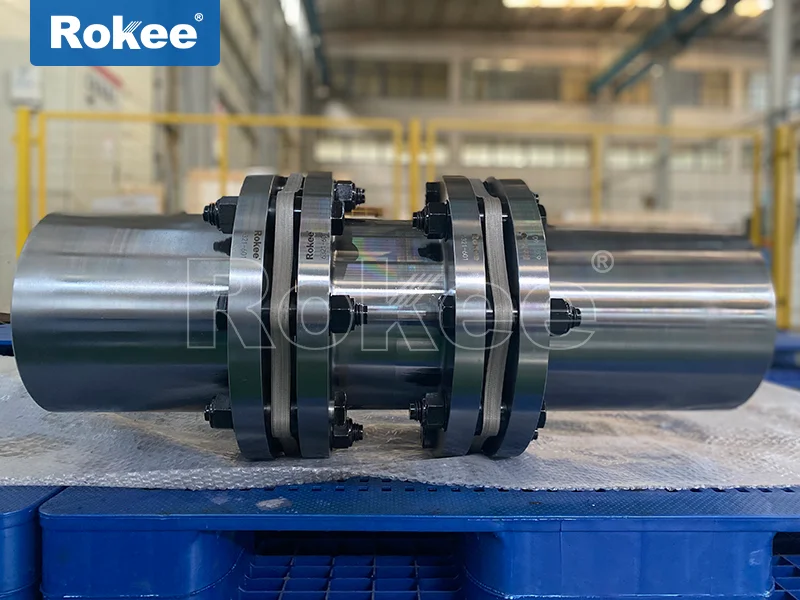
The core design concept is to utilize the elastic deformation ability of thin metal sheets to compensate for the relative displacement between connecting shafts, while effectively transmitting torque. This type of coupling is widely used in modern industrial equipment, especially for precision transmission systems that require high torque transmission, high-speed operation, and need to compensate for shaft system deviations.
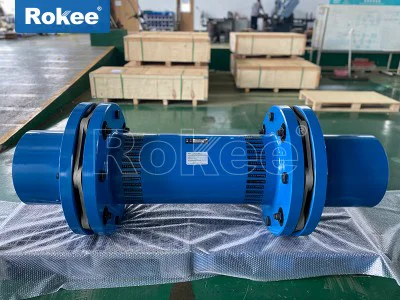
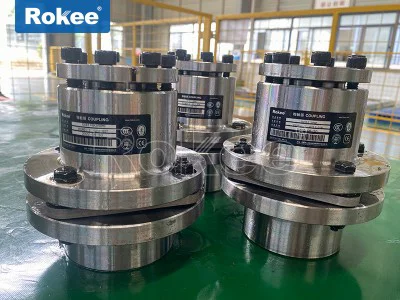
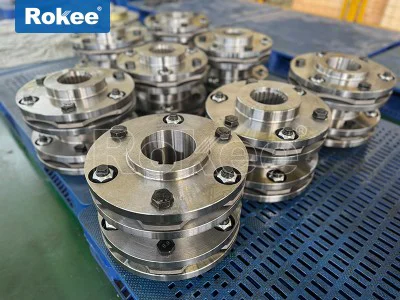
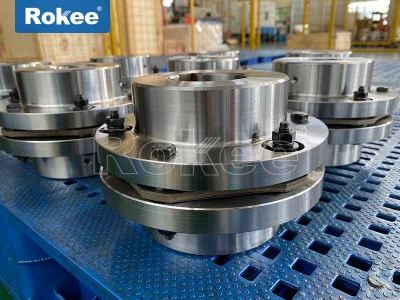
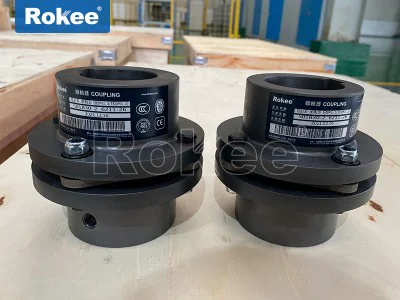
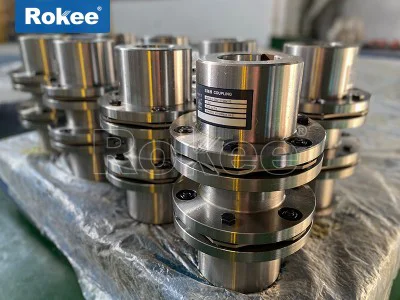
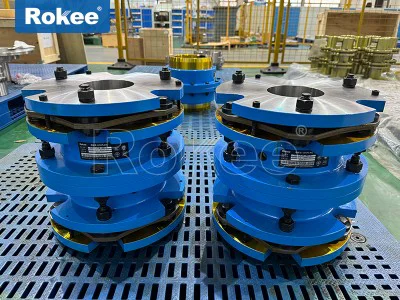
From a structural perspective, a typical shim coupling consists of several key components: first, two half couplings are installed on the master and slave shafts that need to be connected; Next is the laminated group, which is composed of multiple precision shaped metal sheets (usually stainless steel or high-strength alloy steel) stacked together, forming elastic elements through a specific arrangement; Furthermore, there are connecting bolts used to secure the laminated assembly onto the half coupling; Some designs also include auxiliary components such as intermediate shafts, bushings, washers, etc. to enhance performance. The shape design of the laminated structure is diverse, including circular, polygonal, and concave arc shapes. The connecting holes have different configurations such as 4-hole, 6-hole, or 8-hole, which directly affect the performance parameters of the coupling.
The working principle of shim couplings is based on metal elasticity: when the driving shaft rotates, torque is transmitted to the laminated assembly through bolt connections, and the laminated assembly produces small elastic deformations to transmit force and motion to the driven shaft. When there is relative displacement (axial, radial, or angular) between the two axes, the laminations absorb these deviations through their own bending deformation, avoiding rigid impact. This design enables the shim coupling to efficiently transmit power and adapt to a certain degree of shaft misalignment, solving the limitations of traditional rigid couplings in requiring high installation accuracy.
Compared with traditional flange direct connection methods, shim couplings have significant advantages. Flange connections require extremely high machining and installation accuracy, poor vibration resistance, and do not allow for angular or axial displacement. The shim coupling has a simple structure, easy disassembly and assembly, high transmission efficiency, no need for lubrication and no noise, safe and reliable use, and long service life. It can compensate for angular displacement of no more than 1 ° and axial displacement of no more than 2.5mm, with a wide range of power transmission and speed adaptation, making it an ideal choice in modern industrial transmission systems.
The core working mechanism of shim couplings is based on elastic deformation mechanics, and achieves dual functions of torque transmission and deviation compensation through precision designed metal laminated groups. During the operation of the coupling, the rotational power input from the driving shaft is transmitted to the laminated component through the bolt group. The metal laminated component undergoes slight torsional deformation under the action of torque, and this elastic deformation smoothly transmits the rotational motion to the driven shaft. It is worth noting that the deformation of the laminate is directly related to its material properties, geometric shape, and thickness. Well designed laminates can provide necessary flexibility to absorb system vibrations and impacts while ensuring sufficient torsional stiffness.
In terms of compensating for shaft deviation, shim couplings demonstrate excellent performance. When there is axial displacement between two axes, the laminated group can produce compression or tensile deformation in the axial direction like a spring; When facing radial deviation, the laminations adapt to the offset of the axis through the bending deformation of the edges; For angular misalignment, the lamination achieves angle compensation through uneven bending deformation. This three-dimensional compensation capability enables shim couplings to effectively solve installation errors and shaft deformation problems that are difficult to completely avoid in engineering practice.
From the perspective of mechanical properties, the performance indicators of shim couplings mainly include stiffness, strength, and fatigue life. The torsional stiffness is a key parameter of shim couplings, representing the ability of the coupling to resist torsional deformation. The calculation formula is C=T/φ, where T is the torque and φ is the torsion angle. The stiffness characteristics of shim couplings can be designed as linear or nonlinear according to application requirements. Generally speaking, increasing the number of laminations or reducing the distance between laminations can improve the overall stiffness of the coupling. It is worth noting that the elasticity of the shim coupling is directly proportional to the third power of the distance between the laminated holes, and the larger the distance between the holes, the better the elastic performance. In terms of strength, the load-bearing capacity of shim couplings depends on the tensile strength of the laminated material and the structural design of the laminated group. When transmitting large torque, it is advisable to use laminated plates with more holes, and the diameter of the laminated plates should also be correspondingly increased.
Fatigue life is another important performance indicator of shim couplings. Due to the alternating stress experienced by the laminations during operation, material fatigue becomes the main factor affecting their service life. High quality shim couplings are made of high-strength stainless steel or alloy steel, and undergo special heat treatment and surface treatment processes to improve fatigue strength. The design adopts a multi layered structure, so even if one or several stacked pieces break, it will not affect the normal transmission function of the coupling. This redundant design greatly improves the reliability of the system. Manufacturers optimize the design of flexible components to achieve significantly different torque capacities and bending characteristics under specific diameter membranes. In shim couplings, the thinner each membrane, the better the flexibility, achieving greater compensation capability under the same diameter; The thicker the thickness, the greater the stiffness, and the same diameter can transmit greater torque.
In terms of dynamic performance, shim couplings can effectively change the natural frequency of the shaft system, avoiding harmful vibrations in the system. Its damping characteristics help to mitigate impacts, making it particularly suitable for transmission systems with frequent start-up or load changes. Compared with gear couplings, shim couplings have no relative sliding parts, so they do not require lubrication and are easy to maintain; Compared with rubber elastic couplings, metal shim couplings have more stable performance and are not affected by temperature and aging, making them suitable for harsh working conditions. These excellent mechanical properties make shim couplings an ideal choice for high-speed, heavy-duty, and high-precision transmission systems.
In the realm of mechanical power transmission, shim couplings stand as a pivotal category of flexible shaft couplings, engineered to bridge two rotating shafts while efficiently transferring torque, accommodating misalignment, and dampening mechanical vibrations across diverse industrial operating conditions. Unlike rigid couplings that demand flawless shaft alignment and offer zero tolerance for positional deviations, shim couplings leverage the elastic properties of precision-engineered metal laminates to deliver a balanced blend of torsional stiffness and flexible adaptability, making them indispensable in modern machinery where perfect shaft alignment is often unattainable due to manufacturing tolerances, thermal expansion, operational wear, or dynamic load shifts. At their core, shim couplings are defined by a streamlined, robust structural design that prioritizes reliability, low maintenance, and long service life, with no reliance on lubrication or complex moving parts, setting them apart from other flexible coupling variants such as gear couplings or elastomeric couplings. This fundamental structural simplicity, paired with exceptional mechanical resilience, has cemented their status as a go-to solution for medium to high-speed, heavy-duty, and precision-critical power transmission systems across countless industrial sectors.
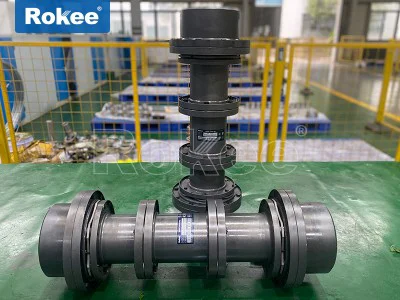
The structural composition of a standard shim coupling is characterized by a handful of key, interdependent components that work in unison to fulfill its functional objectives, with no redundant parts to compromise operational efficiency. The primary elements include two rigid hub halves, a stacked laminate shim pack (the core flexible element), and a set of high-strength fastening bolts designed to secure the laminate assembly to the hubs. Each hub half is precision-machined to fit snugly onto the driving and driven shafts, typically featuring a keyway or clamping mechanism to ensure a tight, slip-free connection that prevents torque loss during operation. The shim pack, the heart of the coupling, consists of multiple thin, flat metal sheets—most commonly high-grade stainless steel or high-strength alloy steel—stacked in precise layers to form a unified flexible unit. These laminates are precision-stamped with contoured profiles, ranging from basic circular and straight-sided designs to scalloped and multi-lobed configurations, each tailored to optimize flexibility, stress distribution, and load-bearing capacity. The fastening bolts pass through aligned holes in both the hubs and the laminate pack, creating a rigid torque-transmission path while allowing the laminates to bend and flex slightly in response to shaft misalignment and dynamic loads. Some specialized shim coupling designs incorporate an intermediate spacer shaft between two separate laminate packs, extending the coupling’s overall length to accommodate greater axial separation between driving and driven shafts, a modification that enhances versatility in long-distance power transmission setups. Notably, the absence of gears, sliding surfaces, or elastomeric materials in the core structure eliminates common failure points such as wear, lubrication degradation, and material aging, contributing to the coupling’s exceptional durability and minimal maintenance requirements.
Performance is the defining attribute of shim couplings, with a suite of mechanical properties that make them suitable for demanding operational environments, and these performance traits are directly shaped by their structural design and material selection. One of the most critical performance metrics is torque transmission capacity, which varies based on the number of laminates in the shim pack, the thickness of individual shims, the material tensile strength, and the overall coupling diameter. Shim couplings exhibit high torsional stiffness, meaning they resist twisting deformation under load, ensuring precise power transfer with minimal backlash—an essential feature for precision machinery where positional accuracy is paramount. Despite this stiffness, they retain remarkable flexibility to compensate for three primary types of shaft misalignment: angular, parallel radial, and axial. Angular misalignment, where the two shaft axes intersect at a slight angle, is accommodated by the bending of the laminate layers, with standard designs capable of handling moderate angular offsets without inducing excessive stress. Parallel radial misalignment, a lateral shift between the two shaft axes, is absorbed by the combined flexure of the shim pack, preventing harmful radial forces from transferring to shaft bearings and adjacent equipment. Axial misalignment, caused by thermal expansion or shaft end-play, is managed through the slight axial compression and extension of the laminate stack, avoiding rigid axial loading that could damage machinery components. Beyond misalignment compensation, shim couplings deliver effective vibration damping and shock absorption capabilities, mitigating the transmission of resonant vibrations and sudden load spikes between driving and driven units. This damping effect protects sensitive components like bearings, seals, and gearboxes from premature fatigue failure, extending the overall service life of the entire power transmission system.
Additional performance advantages include resistance to extreme environmental conditions, a benefit derived from the all-metal construction of high-quality shim couplings. Unlike elastomeric couplings that degrade in high temperatures, corrosive atmospheres, or oily environments, shim couplings maintain consistent performance across a wide temperature range, withstand exposure to chemicals, oils, and moisture, and remain unaffected by abrasive particulates commonly found in industrial settings. They also operate with zero rotational backlash, a critical characteristic for applications requiring smooth, precise motion control, such as pump systems, compressor drives, and generator sets. Fatigue resistance is another standout performance feature; the multi-layer laminate design distributes cyclic stress across multiple shims, preventing crack propagation and ensuring prolonged service life even under continuous, high-cycle operational loads. In the event of a single shim failure, the remaining laminates continue to transmit torque, providing a level of redundancy that prevents sudden catastrophic equipment breakdown and allows for scheduled maintenance rather than emergency repairs. Furthermore, shim couplings offer high operational speed capabilities, with designs optimized to handle moderate to ultra-high rotational speeds, making them suitable for turbine drives, high-speed fans, and other high-RPM machinery where low-mass, balanced components are essential to avoid centrifugal stress and vibration issues.
Shim couplings are categorized into distinct types based on structural variations, laminate design, and intended operational use, each engineered to address specific application requirements and operational constraints. The most fundamental classification distinguishes between single-flex shim couplings and double-flex shim couplings, a division rooted in the number of laminate packs integrated into the assembly. Single-flex shim couplings feature a single laminate shim pack connecting the two hub halves, offering a compact, space-efficient design ideal for applications with minimal shaft misalignment and limited installation space. These couplings excel in scenarios where axial and angular misalignment are minor, and they are prized for their high torsional rigidity and cost-effectiveness in light to medium-duty operations. Double-flex shim couplings, by contrast, incorporate two separate laminate packs with an intermediate spacer hub or shaft between them, significantly enhancing misalignment compensation capacity. This dual-flex design enables the coupling to handle greater parallel radial misalignment, angular offset, and axial separation, making it the preferred choice for heavy-duty, high-load applications where shaft positioning is prone to significant dynamic shifts. Double-flex variants are also better suited for long-distance shaft connections, as the intermediate spacer eliminates the need for overly long, rigid hubs that can introduce bending stress.
Beyond the single-flex and double-flex classification, shim couplings are further differentiated by the profile and configuration of the laminate shims, with three primary profile types dominating industrial use: straight-sided shims, scalloped shims, and circular shims. Straight-sided shim couplings feature laminates with flat, linear edges between bolt holes, offering a balance of stiffness and flexibility suitable for general-purpose applications with moderate misalignment and steady torque loads. This profile provides robust torque transmission and uniform stress distribution, making it a versatile choice for standard industrial machinery. Scalloped shim couplings feature laminates with curved, notched edges between bolt holes, a design that reduces stress concentration and enhances flexibility, allowing for greater misalignment compensation and lower internal stresses under dynamic loads. The scalloped profile minimizes bending stress at critical laminate points, improving fatigue life and making these couplings ideal for applications with frequent start-stop cycles, variable torque loads, and significant shaft misalignment. Circular shim couplings, the most traditional profile, feature fully round laminates with smooth edges, offering high torsional stiffness and simplicity in manufacturing; they are commonly used in low to moderate-speed applications with minimal misalignment and consistent, steady torque requirements. Additionally, shim couplings are categorized by mounting and installation style, including flange-mounted designs for heavy equipment integration, quick-installation non-flange designs for simplified assembly, and high-speed optimized designs with balanced, low-mass construction to meet the demands of ultra-high-RPM operation. Each type is engineered to fine-tune the coupling’s performance characteristics, ensuring a tailored fit for specific operational parameters rather than a one-size-fits-all solution.
The versatility of shim couplings, driven by their structural resilience, performance adaptability, and diverse type variations, translates to an extensive range of industrial applications across virtually every sector that relies on mechanical power transmission. One of the most prevalent uses is in fluid handling systems, including centrifugal pumps, process pumps, hydraulic pumps, and vacuum pumps. In these applications, shim couplings ensure reliable torque transfer between motor and pump shafts, compensate for misalignment caused by pipe stress, thermal expansion, and base plate deflection, and dampen vibration to prevent cavitation and pump damage—critical for maintaining consistent fluid flow and operational efficiency in water treatment, chemical processing, oil and gas production, and manufacturing facilities. They are also widely employed in compressor systems, including reciprocating compressors, centrifugal compressors, and screw compressors, where their high torque capacity, vibration damping, and misalignment tolerance support stable, efficient compression operations in industrial manufacturing, refrigeration, and gas processing applications.
In the power generation sector, shim couplings play a vital role in turbine drives, generator sets, and wind turbine power trains, where high-speed operation, thermal stability, and fatigue resistance are non-negotiable. Their all-metal construction withstands the high temperatures and dynamic loads of gas and steam turbines, while their precision torque transmission ensures efficient power conversion in generator systems, minimizing energy loss and maximizing operational reliability. For wind turbines, shim couplings accommodate the significant shaft misalignment caused by wind-induced structural movement and thermal expansion, enduring harsh outdoor environments with minimal maintenance. Heavy industrial machinery, including fans, blowers, conveyors, mixers, and extruders, also relies heavily on shim couplings. In high-speed fans and blowers, they reduce vibration and noise, improving operational smoothness and extending equipment life; in conveyors and material handling systems, they handle heavy, fluctuating loads and compensate for misalignment in long drive shafts; in mixers and extruders for food, chemical, and plastic processing, they resist corrosive materials and maintain performance in demanding production environments.
Additional key applications include marine and offshore equipment, where shim couplings withstand saltwater exposure, vibration, and shaft misalignment in shipboard propulsion systems, pump drives, and auxiliary machinery; metalworking and machining equipment, where zero backlash and precise torque transfer support accurate cutting, milling, and grinding operations; and automotive and aerospace manufacturing, where high-performance shim couplings are integrated into test benches, assembly lines, and specialized production machinery requiring precision motion control. Even in general industrial manufacturing, from textile machinery and printing presses to paper processing equipment and mining machinery, shim couplings deliver consistent performance, reducing downtime and maintenance costs while enhancing overall equipment productivity. Their widespread adoption stems not only from their functional superiority but also from their scalability—available in a broad range of sizes and torque ratings to suit everything from small, precision instruments to large, heavy-duty industrial plants.
In summary, shim couplings represent a pinnacle of flexible power transmission design, merging straightforward structural engineering with exceptional performance capabilities to address the core challenges of shaft connection in industrial machinery. Their structural integrity, characterized by durable all-metal construction and minimal moving parts, ensures long-term reliability and low maintenance, while their diverse performance traits—including high torque capacity, misalignment compensation, vibration damping, and environmental resistance—make them adaptable to the most demanding operational conditions. The array of shim coupling types, from single-flex to double-flex and straight-sided to scalloped, allows for precise customization to match specific application needs, ensuring optimal performance across every industrial sector. As machinery continues to evolve toward higher speeds, heavier loads, and greater operational efficiency, shim couplings will remain an essential component, providing the robust, flexible, and reliable shaft connection required to keep critical industrial systems running smoothly, efficiently, and safely over extended service lives.