Metal Membrane Couplings
As a key component in modern mechanical transmission systems, metal membrane couplings occupy an important position in the industrial field with their excellent performance and wide applicability.
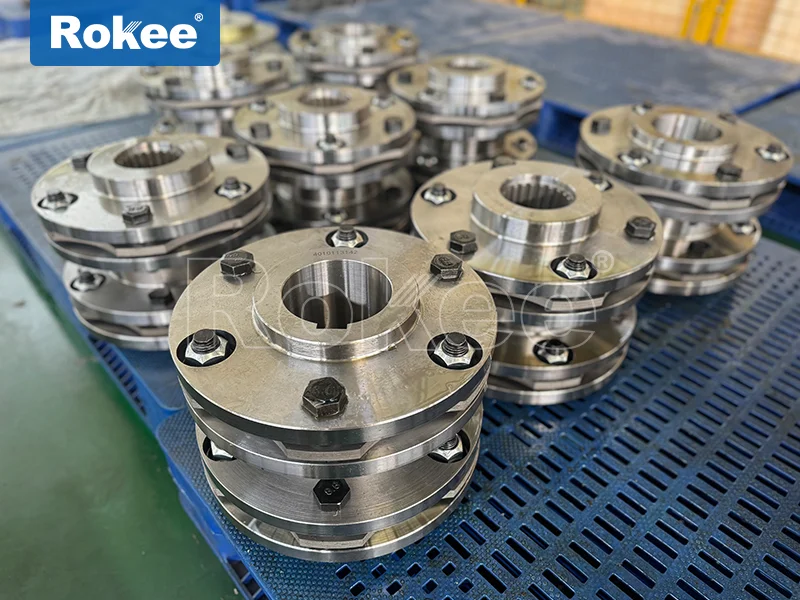
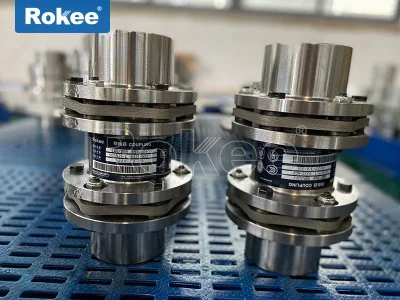
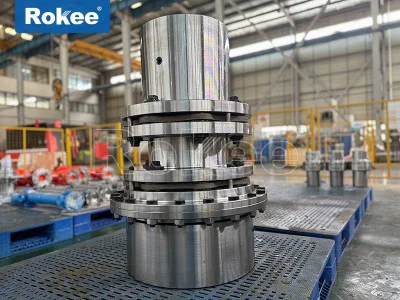
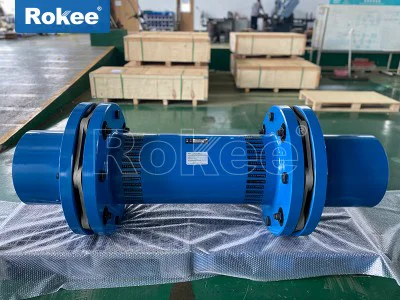
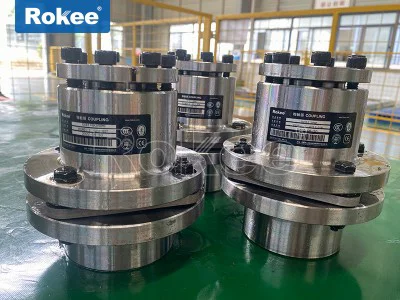
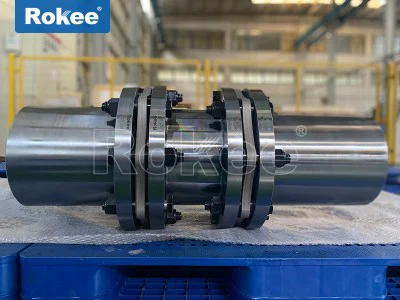
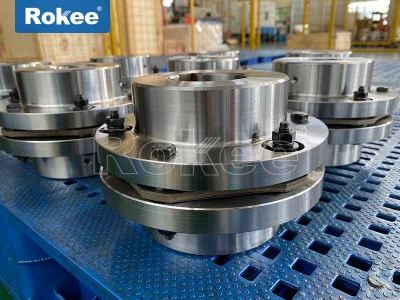
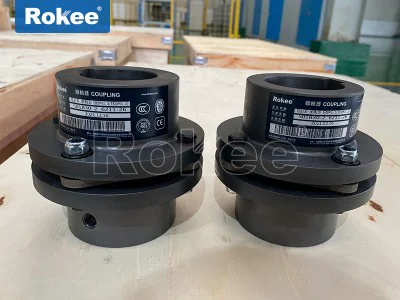
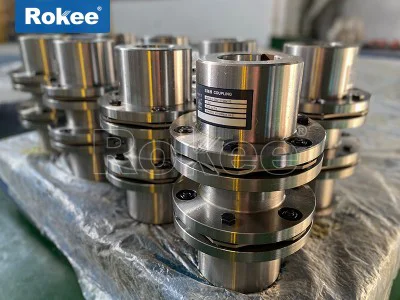
Metal membrane coupling is a high-performance flexible coupling with metal elastic elements, which compensates for the relative displacement between the two shafts connected by the elastic deformation of the metal diaphragm. This type of coupling is composed of several sets of stainless steel thin plates connected to the two halves of the coupling in a staggered manner with bolts. Each set of membranes is composed of several stacked pieces, which can be divided into connecting rod type and integral pieces of different shapes.
Compared with traditional couplings, metal membrane couplings have significant advantages such as compact structure, high strength, and long service life. It does not require lubrication, has no rotational clearance, and is not affected by temperature and oil stains. It also has the characteristics of acid resistance, alkali resistance, and corrosion resistance, making it particularly suitable for working environments with high temperature, high speed, and corrosive media. While transmitting torque and motion, it can effectively compensate for axial, radial, and angular offsets caused by manufacturing errors, installation errors, load deformation, and temperature rise changes.
The core structure of the metal membrane coupling is relatively simple but exquisitely designed:
Diaphragm group: composed of multiple layers of stainless steel thin plates stacked together, it is the elastic deformation element and core component of the coupling. According to design requirements, the diaphragm can be divided into two basic forms: linkage type and integral type. The quantity, shape, and thickness of the membrane directly affect the compensation capability and torque transmission performance of the coupling.
Shaft sleeve/flange: usually two, connecting the driving shaft and the driven shaft respectively. The shaft sleeve material is generally high-strength alloy steel or aluminum alloy, which is fixedly connected to the shaft end through keyway, clamping mechanism or expansion sleeve.
Connecting bolts: High strength bolts tightly connect the diaphragm group with the shaft sleeve, forming an integrated transmission structure. The pre tightening force and fitting accuracy of bolts have a decisive impact on the performance of couplings.
The metal membrane coupling achieves displacement compensation and torque transmission through the elastic deformation of the diaphragm:
Torque transmission: When the driving shaft rotates, the torque is transmitted to the diaphragm group through the flange, and then transmitted to the driven shaft through the other flange. The diaphragm mainly bears tensile and compressive stresses when transmitting torque.
Displacement compensation:
Axial displacement: The diaphragm absorbs axial deviation through its own elastic bending deformation
Radial displacement: The diaphragm undergoes conical deformation to adapt to radial displacement
Angular displacement: The membrane group presents an "S" - shaped bending to compensate for angular deviationVibration reduction characteristics: Metal diaphragms have certain damping properties, which can absorb and buffer vibrations and impacts in the transmission system, and reduce bearing loads.
It is worth noting that the compensation mechanism of single diaphragm and double membrane couplings is different. Single membrane couplings are not suitable for large eccentricities due to the complex bending of the diaphragm required; The double membrane coupling can bend in different directions at the same time, with stronger compensation capability, and can usually withstand deviations of up to 1.5 degrees.
Metal membrane couplings have a series of outstanding performance characteristics, making them the preferred choice in many application scenarios:
Excellent compensation capability: Compared with gear couplings, the angular displacement compensation capability can be doubled, the reaction force is small during radial displacement, and the flexibility is large. Typical parameters are axial displacement ± 0.5mm, radial displacement ± 0.2mm, and angular displacement ± 0.5 °.
Efficient transmission: With a transmission efficiency of up to 99.86% and minimal energy loss, it is particularly suitable for medium and high-speed high-power transmission systems.
Environmental adaptability: With a wide working temperature range (-80 ℃ to+300 ℃), it can operate stably in harsh environments such as oil, water, acid and alkali corrosive media, and can operate safely under impact and vibration conditions.
Maintenance free design: No need for lubrication and regular maintenance, saving operating costs. No wear parts, long service life.
Precision transmission: No backlash, can accurately transmit speed, operate without slip, and can be used for the transmission of precision machinery such as servo systems.
Safe and reliable: The structure is simple and compact, and the all metal structure has high strength. When overloaded, the diaphragm will break first, protecting other components of the equipment.
Metal membrane couplings can be classified into multiple types based on their structural form and application requirements, each with specific performance characteristics and applicable scenarios.
Classified by structure
Single membrane coupling:
The structure is the simplest, consisting of a set of membranes and two shaft sleeves
Suitable for situations where high precision is required and displacement compensation is not necessary
Typical models: JM type, DJM type, etcDouble membrane coupling:
Composed of two sets of membranes and an intermediate, it has stronger compensation capability
Can compensate for multiple composite displacements simultaneously, suitable for situations with poor centering accuracy
Typical models: JMI, JMII, SJM, etcMulti membrane coupling:
Having three or more sets of membranes for special high demand applications
Can withstand greater torque and more complex displacement
Classified by connection method
Keyway type: transmits torque through key connections, such as JM and JMI series
Clamping type: fixed by clamping sleeve, easy to install, such as TJM series
Expansion sleeve type: Connected through expansion sleeves, transmitting high torque without keys, such as the ZJM series
Flange type: connected by flange bolts, used for high-power transmission, such as MJF type
In the realm of modern mechanical power transmission, metal membrane couplings stand out as a pivotal and high-performance flexible coupling type, engineered to address the inherent challenges of shaft misalignment, torque transmission, and operational stability across diverse industrial settings. Unlike conventional coupling designs that rely on elastomeric materials or gear meshing for flexibility, metal membrane couplings utilize the elastic deformation of precision-engineered metal thin films to achieve torque transfer and displacement compensation, merging structural simplicity with exceptional mechanical performance. This design philosophy has positioned them as a preferred choice for applications demanding precision, durability, and low maintenance, filling a critical niche in both light-duty precision machinery and heavy-duty industrial transmission systems. By delving into their intrinsic structural composition, core performance attributes, classification criteria, and real-world operational uses, a comprehensive understanding of their value and versatility in mechanical engineering can be gained, highlighting why they have become an indispensable component in contemporary power transmission frameworks.
At its core, the metal membrane coupling features a streamlined yet meticulously designed structure, composed of three primary functional components that work in synergy to deliver reliable performance: the metal membrane group, the hub or shaft sleeve assembly, and high-strength connecting fasteners. The metal membrane group serves as the heart of the coupling, typically fabricated from multiple layers of thin, high-strength alloy sheets—most commonly stainless steel grades renowned for their excellent fatigue resistance, tensile strength, and elastic recovery properties. These thin membranes are stacked in a precise configuration, with their thickness, quantity, and geometric profile tailored to balance torque capacity, misalignment compensation, and operational flexibility. Unlike single-layer membranes, multi-layer stacked designs distribute stress evenly across the membrane surface, mitigating localized fatigue failure and extending the service life of the coupling under cyclic loading conditions. The geometric form of the membranes varies, with common designs including linkage-style profiles and integrated single-piece profiles, each optimized for specific load and misalignment scenarios; linkage-style membranes offer enhanced angular flexibility, while integrated profiles deliver superior torsional rigidity for high-precision transmission.
The hub or shaft sleeve assembly forms the connection interface between the coupling and the driving and driven shafts, engineered to securely grip the shaft ends while efficiently transferring torque from the driving mechanism to the load. Constructed from high-strength alloy steel or lightweight aluminum alloy, the hubs are machined to tight tolerances to ensure a precise fit with the shaft, eliminating radial runout and backlash that could compromise transmission accuracy. The connection between the hubs and shafts is designed for versatility, accommodating various mounting preferences without sacrificing performance, while the interface between the hubs and the metal membrane group is precision-machined to create a rigid, gap-free bond that ensures seamless torque transfer. Completing the structure are high-strength connecting bolts or fasteners, which clamp the membrane group firmly between the two hubs, creating a unified transmission unit. The pre-tightening force of these fasteners is critical, as it ensures uniform contact between the membranes and hubs, prevents relative slippage during operation, and maintains the coupling’s structural integrity under dynamic loads, shock, and vibration. Optional intermediate shafts may be integrated into the structure for long-distance power transmission applications, bridging the gap between widely spaced driving and driven shafts while retaining the core flexible membrane functionality.
The performance characteristics of metal membrane couplings are a direct result of their specialized structural design, setting them apart from other flexible coupling variants and making them suitable for extreme and demanding operating environments. One of the most prominent performance advantages is their exceptional misalignment compensation capability, which allows the coupling to accommodate axial, radial, and angular displacements simultaneously without compromising torque transmission efficiency. Axial displacement is absorbed through the elastic stretching and compression of the metal membranes, radial displacement is addressed via conical deformation of the membrane stack, and angular displacement is compensated by the S-shaped bending of the membranes; this multi-directional flexibility effectively offsets misalignment caused by manufacturing tolerances, installation errors, thermal expansion, mechanical wear, or load-induced shaft deflection. Unlike gear couplings that generate high reaction forces under misalignment, metal membrane couplings exert minimal radial and axial loads on adjacent bearings, reducing wear on supporting components and extending the overall service life of the transmission system.
Metal membrane couplings also boast near-perfect transmission efficiency, typically exceeding 99% even under continuous high-speed operation, making them highly energy-efficient for power transmission systems. This zero-backlash design ensures precise rotational synchronization between the driving and driven shafts, eliminating lost motion and enabling accurate speed and torque transmission—an essential trait for precision machinery applications where positional accuracy is non-negotiable. Another key performance benefit is their maintenance-free operational nature, a stark contrast to elastomeric couplings that require periodic replacement of worn rubber components or gear couplings that demand regular lubrication to prevent friction and wear. The all-metal construction of membrane couplings eliminates the need for lubrication, as there are no sliding or meshing surfaces to generate friction, reducing downtime and operational costs while ensuring consistent performance over extended service intervals. Additionally, these couplings exhibit outstanding environmental adaptability, withstanding a wide range of operating temperatures, resisting corrosion from oils, chemicals, moisture, and abrasive particles, and remaining stable in harsh industrial environments where other coupling materials would degrade rapidly. Their robust metal construction also delivers excellent shock and vibration damping properties, absorbing transient loads and reducing mechanical noise, further protecting connected equipment from damage and enhancing overall system stability.
In terms of load-bearing capacity, metal membrane couplings are engineered to handle a broad spectrum of torque and rotational speed requirements, from low-speed, high-torque heavy industrial applications to high-speed, low-torque precision equipment. The fatigue resistance of the metal membranes ensures reliable performance under cyclic loading conditions, a common occurrence in reciprocating or variable-speed machinery, while the fail-safe design of the membrane group provides an added layer of system protection; in the event of extreme overload or catastrophic misalignment, the metal membranes will deform or fracture first, acting as a mechanical fuse to prevent damage to more costly driving and driven components, such as motors, gearboxes, or pumps.
Metal membrane couplings are classified into distinct categories based on structural configuration, connection methodology, and application-specific design requirements, with each type tailored to excel in particular operational scenarios, offering a customized solution for diverse transmission needs. The primary classification is based on the number and arrangement of membrane groups, which directly impacts misalignment compensation capacity and torque handling capabilities. Single membrane couplings represent the most basic configuration, featuring a single set of metal membranes sandwiched between two hubs. This design offers a compact footprint, high torsional rigidity, and exceptional precision, making it ideal for applications with minimal shaft misalignment and a focus on positional accuracy, such as precision instrumentation, small-scale servo systems, and light-duty machine tools where space is limited and transmission precision is paramount. While their misalignment compensation is relatively modest compared to multi-membrane designs, they excel in maintaining zero backlash and consistent rotational performance under steady operating conditions.
Double membrane couplings, equipped with two separate membrane groups linked by an intermediate spacer or hub segment, represent the most widely used variant in general industrial applications. The dual-membrane design significantly enhances misalignment compensation capabilities, allowing the coupling to handle larger angular, radial, and axial displacements simultaneously without sacrificing torque transmission efficiency. This flexibility makes them suitable for scenarios where shaft alignment is challenging to maintain, such as industrial pumps, fans, compressors, and medium-duty gear drives, where thermal expansion or mechanical vibration can induce substantial shaft misalignment. The intermediate spacer also isolates the two membrane groups, reducing stress concentration and improving overall fatigue resistance, striking an optimal balance between flexibility, rigidity, and durability for mainstream industrial use.
Multi-membrane couplings, featuring three or more membrane groups arranged in series, are engineered for heavy-duty, high-load applications that demand exceptional torque capacity and extreme misalignment compensation. These couplings are built with reinforced membrane stacks and robust hub structures, capable of handling high rotational speeds and heavy torsional loads while accommodating severe shaft misalignment common in large-scale industrial machinery. Their enhanced structural strength and flexibility make them suitable for heavy process equipment, large-scale power transmission systems, and marine propulsion drives, where reliability under extreme operating conditions is critical. Beyond membrane count, metal membrane couplings are also categorized by shaft connection style, with keyed hubs that transmit torque via traditional keyway engagement for high-torque applications, clamping-style hubs that provide a uniform, keyless grip for quick installation and reduced shaft wear, and expansion sleeve hubs that deliver exceptional torque transfer without keyways, ideal for high-load, high-precision systems where shaft integrity is a priority. Flange-connected variants are also available for large-diameter shafts and heavy-duty industrial setups, offering a secure, high-strength connection for maximum power transfer.
The unique combination of structural efficiency, performance versatility, and operational reliability has led to the widespread adoption of metal membrane couplings across a vast array of industrial sectors, each leveraging their specific advantages to optimize system performance. In the field of precision manufacturing and automation, they are a staple in high-precision machine tools, robotic arms, semiconductor manufacturing equipment, and servo-driven systems, where their zero-backlash design and precise torque transmission ensure micron-level positional accuracy, critical for producing intricate components and maintaining production consistency. The maintenance-free nature also minimizes downtime in high-volume production environments, where operational continuity is essential for meeting production targets and reducing costs.
In the energy and power generation industry, metal membrane couplings play a vital role in both conventional and renewable energy systems, including wind turbine drive trains, generator sets, water pump systems, and industrial boiler auxiliary equipment. Their ability to withstand high temperatures, resist corrosion, and handle dynamic loads makes them ideal for the harsh operating conditions of power plants, while their high efficiency reduces energy loss in power transmission, boosting overall system energy utilization. In wind energy applications, they accommodate the significant shaft misalignment caused by wind-induced vibration and structural deflection, ensuring reliable power transfer from the rotor to the generator under fluctuating load conditions.
The petrochemical and chemical processing industries rely heavily on metal membrane couplings for critical equipment such as centrifugal pumps, compressors, mixers, and conveyor systems, where exposure to corrosive chemicals, oils, and high temperatures is commonplace. The all-metal, corrosion-resistant construction eliminates the risk of material degradation and contamination, ensuring safe and reliable operation in hazardous and corrosive environments, while their maintenance-free design reduces the need for frequent inspections and replacements in hard-to-access processing units. In marine and shipbuilding applications, they are used in propulsion systems, auxiliary machinery drives, and deck equipment, offering excellent resistance to saltwater corrosion, vibration damping, and reliable performance under the dynamic loads of marine operations, ensuring the stability and longevity of marine power transmission systems.
Beyond these core sectors, metal membrane couplings find utility in aerospace support equipment, automotive test systems, food and beverage processing machinery, and mining equipment, adapting to the unique demands of each industry with specialized design variations. Their ability to balance precision, flexibility, and durability makes them a versatile solution for nearly any mechanical power transmission application where traditional couplings fall short in performance or longevity. As industrial technology continues to advance toward higher speeds, greater precision, and more sustainable operation, the role of metal membrane couplings is set to expand further, with ongoing refinements in membrane materials, structural design, and manufacturing processes enhancing their performance and expanding their application potential.
In summary, metal membrane couplings represent a pinnacle of flexible coupling engineering, blending a simple, robust structure with exceptional performance characteristics that address the most pressing challenges of modern mechanical power transmission. Their core design, centered on elastic metal membrane deformation, enables efficient torque transfer, multi-directional misalignment compensation, and maintenance-free operation, while diverse structural classifications ensure a tailored solution for every application scenario. From precision micro-mechanisms to heavy industrial power systems, these couplings deliver consistent, reliable performance, enhancing equipment longevity, reducing operational costs, and improving overall transmission efficiency. As industries continue to prioritize performance, sustainability, and reliability, metal membrane couplings will remain an essential component in the design of efficient, resilient mechanical transmission systems, embodying the perfect fusion of structural ingenuity and functional excellence in mechanical engineering.