Universal Cross Joint Couplings
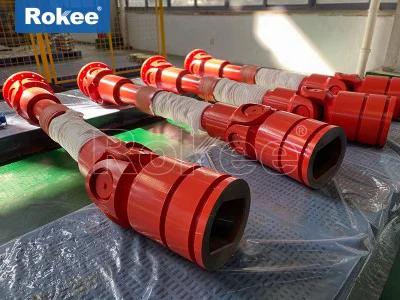
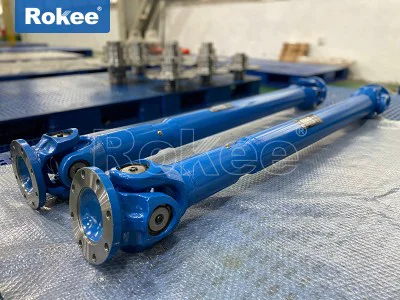
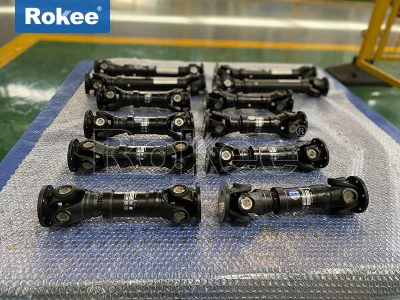
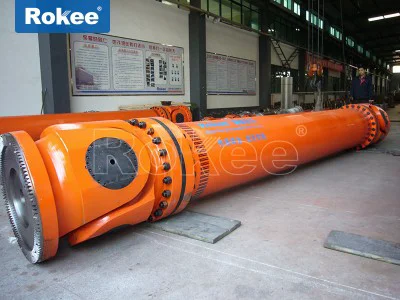
Universal cross joint coupling is the core mechanical device for transmitting torque and rotational motion in industrial equipment, widely used in fields such as metallurgy, heavy machinery, petrochemicals, engineering machinery, and rail transit.
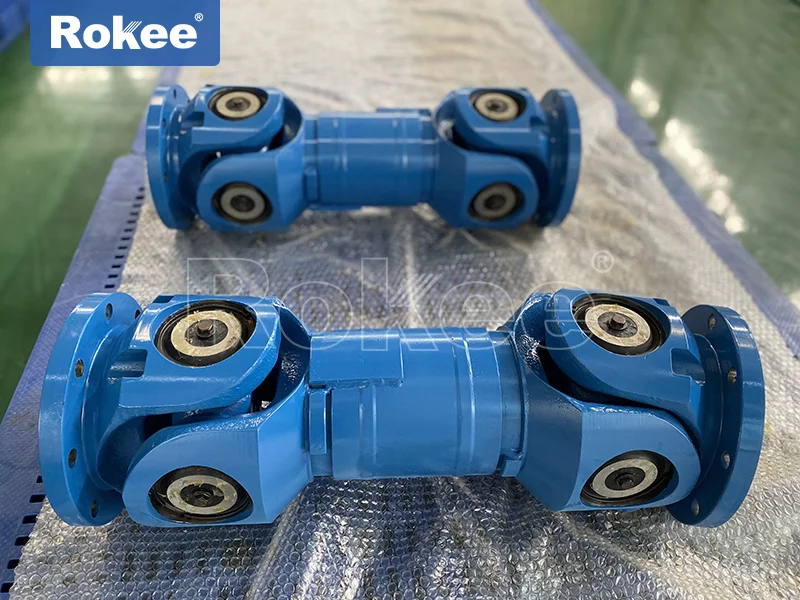
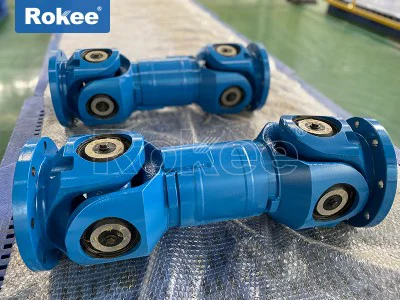
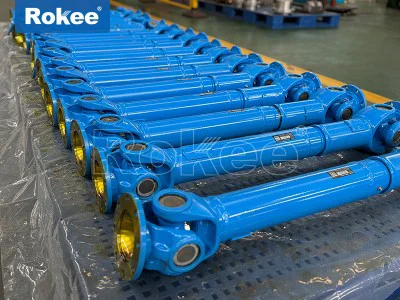
The universal cross joint coupling can achieve equal angular velocity continuous rotation in the presence of an angle (5 ° -45 °) between the two axes or non coaxial working conditions, and provide angular compensation capability of more than 25 ° and axial displacement adaptability. The core design of the universal cross joint coupling is based on the cross shaft structure, mainly consisting of two fork joints, one cross shaft, and four needle roller bearings. This structure allows the coupling to compensate for angular deviation and axial displacement between the two shafts while transmitting torque.
key component
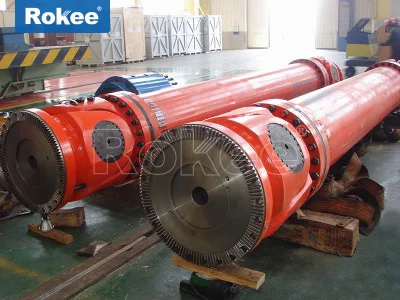
Fork shaped joint: It is usually designed as a whole or a split type. The SWP type uses a split fork head suitable for heavy-duty equipment with a rotation diameter of 1200mm, while the SWC type uses an integral fork head that can cover a rotation diameter of 1600mm and a torque transmission distance of more than 30 meters.
Cross shaft: As the core transmission component, it bears the main torque and bending stress, usually made of alloy steel material and treated with carburizing and quenching to improve wear resistance.
Needle roller bearings: high-precision needle roller bearings are used to reduce friction, and some high-end models use special coating technology to extend their service life.
The universal cross joint coupling has three unique properties:
Angle compensation capability: standard models can reach 25 °, special designs can reach 45 °
Axial displacement compensation: achieve axial movement of ± 10mm to ± 50mm through spline structure
Speed adaptability: Conventional models can operate at speeds ranging from 1000-5000rpm, while precision balancing models can reach speeds above 10000rpm
Classified by structure
Cross axis type: the most common type, with strong load-bearing capacity, suitable for heavy-duty applications
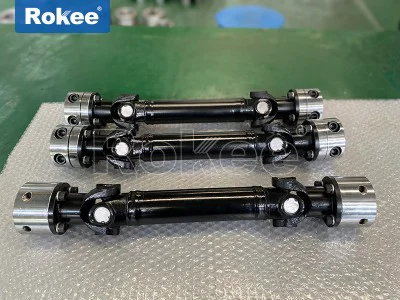
Cage type: with good constant speed transmission performance, used in high-precision situations
Ball fork type: compact structure, used in space limited situations
Three pin type: large angle compensation capability, up to 45 °
Special design model
SWP type: Split fork design for easy maintenance
SWC type: integral fork head, with stronger load-bearing capacity
SWC-WD type: Non retractable short design, saving space
SWC-BH type: heavy-duty design, used for agricultural machinery such as tractors
The widespread application of cross universal couplings stems from their excellent compensation capability and reliability:
Metallurgical machinery: rolling mills, continuous casting machines, etc., capable of withstanding high torque and impact loads
Construction machinery: excavators, cranes, etc., suitable for complex working conditions
Petrochemical industry: pumps, compressors, etc. require long-term maintenance free operation
Rail Transit: EMU Transmission System, High Speed Requirements
Precision machinery: CNC machine tools, robots, etc., requiring high transmission accuracy
In the metallurgical industry, SWC type couplings can cover a turning diameter of 1600mm and a torque transmission distance of over 30 meters, making them the preferred choice for steel rolling machinery and heavy transportation equipment. In the field of construction machinery, its axial displacement adaptability enables the equipment to cope with shaft deformation caused by rugged terrain.
Choosing a suitable universal cross joint coupling requires consideration of multiple key parameters:
Torque demand: Calculate normal operating torque and peak torque
Speed range: Consider the maximum operating speed and critical speed
Deviation compensation: Evaluate the required angular, radial, and axial compensation amounts
Environmental factors: temperature, humidity, corrosive media, etc
Space limitations: Determine available installation space and connection methods
For heavy-duty applications such as rolling mills, priority should be given to heavy-duty designs such as SWC-BH type; Precision applications such as CNC machine tools are more suitable for ball cage constant velocity universal couplings.
As a key component of industrial transmission systems, the performance of cross universal couplings directly affects the reliability and efficiency of the entire equipment. With the advancement of materials science and manufacturing technology, the new generation of products continues to improve in terms of load-bearing capacity, transmission accuracy, and service life, providing more reliable power transmission solutions for modern industrial equipment. The correct selection, installation, and maintenance are the key to fully leveraging its performance advantages and are also areas that equipment management personnel need to focus on.
Universal cross joint coupling, also widely referred to as Cardan coupling in mechanical engineering circles, stands as one of the most fundamental and indispensable power transmission components in modern mechanical systems. It is engineered to address a core challenge in shaft-driven machinery: the reliable transfer of torque and rotational motion between two shafts that are not perfectly aligned, whether due to angular misalignment, axial displacement, or radial offset during operation. Unlike rigid couplings that demand precise shaft coaxiality and fail to accommodate any form of misalignment, the universal cross joint coupling introduces a flexible, articulated design that maintains continuous power flow even when the connected shafts form a measurable angle. This unique adaptability has cemented its role across countless industrial sectors, from heavy-duty manufacturing and construction equipment to precision machinery, automotive systems, and agricultural machinery. Every aspect of its design, from the arrangement of core components to the selection of materials and structural variations, is tailored to balance load-bearing capacity, transmission efficiency, durability, and misalignment compensation, making it a versatile solution for both low-speed, high-torque applications and moderate-speed, precision-driven operations.
At the heart of the universal cross joint coupling lies a straightforward yet robust structural configuration that enables its exceptional functional performance. The standard assembly consists of four primary interconnected components: two yoke joints (also called fork joints), a central cross-shaped shaft (commonly known as a spider), four sets of bearing assemblies, and auxiliary fastening elements. The two yoke joints serve as the connection points between the coupling and the driving and driven shafts, each featuring a forked end designed to interlock with the cross shaft. These yokes are typically machined from high-strength alloy steel to withstand torsional stress, bending loads, and repeated impact forces, with surface treatments such as carburizing, quenching, and tempering applied to enhance hardness, wear resistance, and fatigue life. The cross shaft, the central load-bearing core of the coupling, features four perpendicular journal ends that fit precisely into the bearing assemblies housed within the yoke forks. Crafted from hardened alloy steel with superior tensile strength and toughness, the cross shaft is engineered to distribute torque evenly across all four bearing points, preventing localized stress concentration that could lead to premature failure. The bearing assemblies, most commonly needle roller bearings in standard designs, are mounted on each journal of the cross shaft to minimize friction between the rotating cross shaft and the stationary yoke joints. Needle roller bearings are preferred for their compact size, high load-carrying capacity relative to their dimensions, and ability to handle both radial and slight thrust loads, which aligns perfectly with the coupling’s operational demands. In some heavy-duty or high-wear variants, plain sliding bearings or tapered roller bearings may be used instead, offering enhanced durability under extreme load conditions. Auxiliary components such as retaining rings, sealing washers, and lubrication fittings complete the structure, ensuring the bearings remain properly secured, protected from contaminants like dust, moisture, and debris, and supplied with consistent lubrication to reduce friction and extend service life. This modular, articulated structure allows the two yoke joints to pivot freely relative to one another around the cross shaft, creating the angular flexibility that defines the universal cross joint coupling’s core functionality.
The performance attributes of universal cross joint couplings are directly shaped by their structural design and material composition, with key characteristics that set them apart from other flexible coupling types. Foremost among these is angular misalignment compensation, the defining feature of the product. Standard models can reliably accommodate shaft angles ranging from 5 degrees to 25 degrees, while specialized heavy-duty or compact designs can extend this range up to 45 degrees, making them suitable for applications where shaft alignment shifts dynamically during use. Beyond angular compensation, many variants feature integrated spline connections between the yoke joints and intermediate shaft sections, enabling axial displacement compensation ranging from ±10mm to ±50mm. This capability is critical for machinery where thermal expansion, mechanical vibration, or operational movement causes slight shifts in shaft position, eliminating the risk of binding or excessive stress on connected components like gearboxes, motors, and bearings. Transmission efficiency is another standout performance metric, with well-designed universal cross joint couplings achieving efficiency rates of 98% to 99.8% under optimal operating conditions. This high efficiency minimizes energy loss during power transfer, reducing heat generation and lowering operational costs for industrial systems. Load-bearing capacity varies widely based on size and structural design, with small-scale precision models handling light to moderate torque loads and large heavy-duty variants capable of transmitting extremely high torque values required in heavy machinery. The couplings also exhibit strong resistance to shock loads and vibration, absorbing sudden spikes in torque that often occur in equipment like crushers, rolling mills, and construction machinery, thereby protecting upstream and downstream mechanical components from damage. Additionally, these couplings offer reliable operational stability across a broad speed range: standard industrial models perform consistently at speeds between 1000 and 5000 RPM, while precision-balanced variants with optimized bearing and cross shaft designs can operate safely at speeds exceeding 10,000 RPM, catering to high-speed precision machinery applications. It is important to note that performance is tempered by operating conditions; at larger shaft angles, rotational speed must be moderated to avoid excessive vibration, uneven torque transmission, and accelerated wear on bearings and cross shaft journals, a consideration that guides proper selection and application in real-world systems.
Universal cross joint couplings are categorized into distinct types based on structural design, load capacity, operational purpose, and compensation capabilities, each tailored to specific application scenarios and performance requirements. The most prevalent classification is based on core structural configuration, with the traditional cross shaft type (basic Cardan coupling) being the most widely used across industries. This basic type features the standard two-yoke, cross-shaft assembly, offering simplicity, high load-bearing capacity, and ease of maintenance, making it ideal for heavy-duty, low-to-moderate speed applications. A key limitation of single cross shaft couplings is non-constant velocity transmission at significant shaft angles, leading to minor speed fluctuations; to overcome this, paired cross shaft couplings are often employed in series to achieve near-constant velocity rotation, a common modification in automotive and precision machinery systems. Another major category is the constant velocity universal cross joint coupling, which incorporates refined structural design elements such as ball cages or optimized yoke and cross shaft geometry to eliminate speed variation even at large misalignment angles. These constant velocity variants deliver smoother, quieter operation and are preferred for high-speed, precision-critical applications where rotational uniformity is essential. Structural variations also include telescopic and non-telescopic designs: telescopic models feature a splined intermediate shaft that adjusts length to compensate for axial displacement and installation tolerances, while non-telescopic designs offer greater rigidity and higher torque capacity for fixed-shaft applications. Fork joint design further differentiates couplings, with integral fork heads providing maximum strength and rigidity for extreme heavy-duty use, and split fork heads enabling easier disassembly, maintenance, and bearing replacement without removing the entire coupling from the shaft system. Size and load capacity classifications range from miniature precision couplings for small-scale instrumentation and light-duty machinery to large-scale heavy-duty couplings for industrial processing equipment, with each size grade engineered to match specific torque, speed, and misalignment requirements. Additionally, specialized variants are designed for harsh operating environments, including corrosion-resistant models for marine and chemical processing applications, high-temperature resistant variants for metalworking and furnace equipment, and sealed, dust-tight designs for agricultural and construction machinery operating in dirty, abrasive conditions. Each type is optimized to prioritize specific performance traits—whether maximum torque, high-speed stability, compact size, or environmental resistance—ensuring there is a suitable universal cross joint coupling for nearly every mechanical transmission need.
The versatility and reliable performance of universal cross joint couplings have led to their widespread adoption across an extensive range of industrial and commercial applications, wherever flexible shaft power transmission is required. In the heavy industrial sector, these couplings are a staple in metallurgical machinery, including rolling mills, continuous casting machines, and metal processing equipment, where they endure extreme torque loads, shock vibrations, and harsh operating conditions while maintaining consistent power transfer. They are equally integral to construction machinery such as excavators, cranes, bulldozers, and concrete mixers, accommodating the significant shaft misalignment caused by rugged terrain, mechanical movement, and heavy load fluctuations. In the automotive and transportation industry, universal cross joint couplings are essential components of drive shafts, steering systems, and transmission assemblies, enabling power transfer between engine and wheels even as suspension movement creates constant shifts in shaft alignment. Agricultural machinery, including tractors, harvesters, and tillers, relies heavily on these couplings for their ability to withstand dusty, muddy environments and compensate for misalignment caused by uneven field surfaces and heavy implement loads. The manufacturing and precision engineering sector utilizes both standard and constant velocity variants in CNC machine tools, robotic arms, conveyor systems, and packaging equipment, where precise torque transmission and moderate misalignment compensation are critical for operational accuracy. In the petrochemical and energy industries, universal cross joint couplings are employed in pumps, compressors, fans, and generator sets, providing reliable power transmission in remote or harsh operating environments with minimal maintenance requirements. Marine and offshore equipment uses corrosion-resistant variants to drive propellers, winches, and auxiliary machinery, adapting to shaft movement caused by wave motion and hull flexing. Even in smaller-scale applications, such as woodworking machinery, textile equipment, and medical devices, compact universal cross joint couplings deliver the flexibility and precision needed for smooth, efficient operation. The broad utility of these couplings stems not only from their core functional advantages but also from their adaptability to diverse operational demands, proving indispensable in both simple mechanical setups and complex, high-performance industrial systems.
Proper selection, installation, and routine maintenance are crucial to maximizing the performance and service life of universal cross joint couplings, ensuring they operate reliably under intended conditions. When selecting a coupling, engineers must evaluate multiple key parameters: the required torque transmission capacity (including both steady-state and peak shock loads), operating speed range, magnitude of angular, axial, and radial misalignment, available installation space, and environmental conditions such as temperature, humidity, and presence of corrosive substances. Matching the coupling’s specifications to the application’s unique demands prevents overloading, premature wear, and catastrophic failure. Installation requires careful alignment of connected shafts to minimize excessive misalignment beyond the coupling’s rated capacity, secure fastening of yoke joints to shaft ends, and proper lubrication of bearing assemblies to reduce friction during initial operation. Routine maintenance typically involves regular inspection of bearing condition, lubrication levels, and component wear, as well as timely replacement of worn bearings or seals to prevent damage to the cross shaft and yoke joints. While universal cross joint couplings are designed for durability, neglecting maintenance can lead to increased friction, vibration, noise, and eventual component failure. As manufacturing and materials technology continues to advance, modern universal cross joint couplings are evolving with enhanced performance features: improved alloy materials for greater strength and wear resistance, precision machining for tighter tolerances and smoother operation, advanced sealing systems for extended maintenance intervals, and optimized designs for higher misalignment compensation and greater efficiency. These ongoing innovations further expand the capabilities of universal cross joint couplings, ensuring they remain a vital, future-proof component in the ever-evolving landscape of mechanical engineering and power transmission systems. From heavy industrial machinery to precision consumer devices, the universal cross joint coupling remains a testament to the power of simple, robust engineering, solving fundamental mechanical challenges and enabling the seamless operation of countless technologies that shape daily life and industrial progress.