Cardan Shaft Distributor
In the intricate framework of modern mechanical transmission systems, cardan shafts stand out as fundamental mechanical components that enable flexible power transmission between misaligned rotating shafts. These mechanical elements rely on ingenious universal joint structures to transmit torque steadily while tolerating angular deviations, axial displacements and spatial position changes between connected equipment. As industrial production continues to evolve toward high load, high stability and complex operating conditions, the demand for reliable cardan shaft supply chains has grown consistently, making professional cardan shaft distributors an indispensable link connecting component manufacturers and end-users across diverse industrial sectors. Distributors serve as critical intermediaries that bridge production terminals and application scenarios, undertaking tasks such as product screening, circulation optimization, technical matching and post-operation support to ensure that cardan shafts can exert stable transmission performance in various complex mechanical environments.
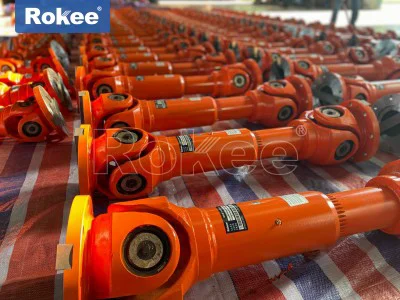
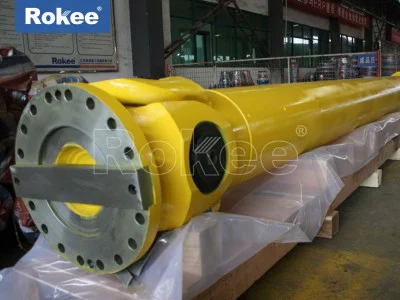
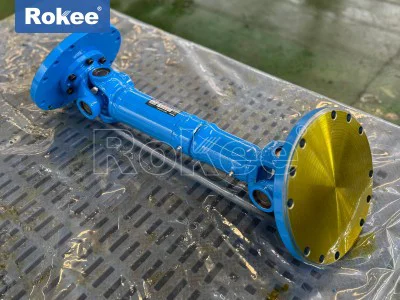
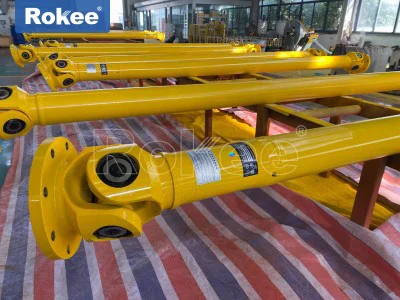
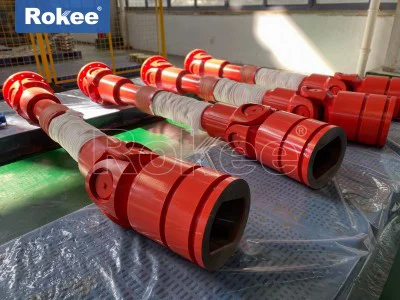
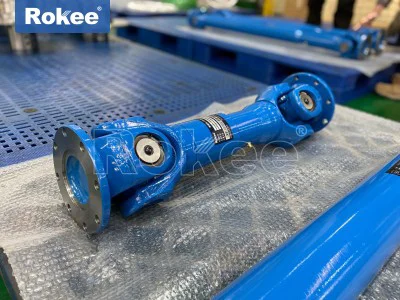
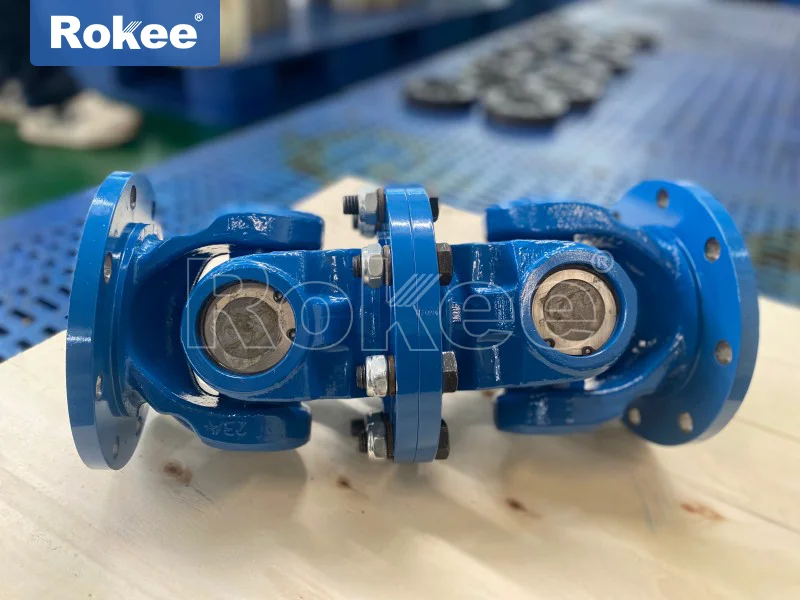
A comprehensive understanding of the intrinsic structural characteristics and working principles of cardan shafts constitutes the core foundation for distributors to carry out professional distribution services. The basic composition of a standard cardan shaft includes universal joints, intermediate transmission shafts, connecting flanges and auxiliary supporting structures, among which the cross-shaped universal joint acts as the core functional unit. The cross shaft connects two sets of fork-shaped joint yokes, allowing the joint yokes to swing freely within a certain spatial angle range. When one shaft rotates, the cross shaft drives the other shaft to complete synchronous rotational motion, realizing torque transmission between non-coaxial shafts. In practical industrial applications, most cardan shafts adopt a double universal joint structure. This structural design effectively compensates for the instantaneous angular velocity difference generated during the operation of a single universal joint, ensuring that the input shaft and output shaft maintain consistent rotational speed throughout the operation process and avoiding mechanical vibration and torque loss caused by velocity fluctuation. Most cardan shafts applied in heavy-duty industries are made of high-strength alloy steel, processed through precision forging and heat treatment technologies to enhance structural rigidity, torsional resistance and fatigue resistance, enabling them to withstand continuous impact loads and high-intensity friction in harsh working conditions.
The wide application coverage of cardan shafts determines the diversified service scope of distributors, and also puts forward higher requirements for their product reserve and industry adaptation capabilities. In the field of transportation machinery, cardan shafts are widely installed in traditional rear-wheel-drive and four-wheel-drive vehicles. They connect the transmission and the drive axle, adapting to the relative position changes between mechanical components caused by road bumps and suspension jitter during vehicle travel, and ensuring uninterrupted power output during driving. In heavy industrial manufacturing scenarios such as metallurgy and rolling mills, cardan shafts undertake the power transmission task between motors and rolling rollers. They operate stably in high-temperature environments with continuous heavy loads and frequent startup shocks, maintaining the synchronous operation of rolling equipment and supporting continuous industrial production. The mining and aggregate processing industry also relies heavily on cardan shaft products. These components are applied to vibrating screening equipment and material conveying systems, adapting to severe vibration and dust-filled working environments to ensure stable power transmission during mineral screening and raw material classification. In addition, cardan shafts are commonly used in textile machinery, agricultural equipment, forging machinery and drying equipment, covering almost all industrial fields that require flexible torque transmission.
Against the backdrop of expanding industrial application demands, the core operational value of cardan shaft distributors is gradually highlighted in the industrial supply chain. Unlike ordinary mechanical part suppliers, professional distributors do not simply complete commodity circulation; they integrate industrial resources to solve the diversified matching problems of end-users. Different industries have distinct requirements for the structural parameters of cardan shafts. Industrial equipment with small operating space needs compact shaft body structures with small deflection angles, while heavy-load metallurgical machinery requires thickened shaft bodies and reinforced universal joint structures to bear ultra-high torque. Distributors need to classify and sort cardan shaft products according to structural forms, load-bearing capacities, deflection ranges and adaptive working environments, forming a standardized product inventory system. This classification mechanism enables industrial users to quickly locate products that match their equipment parameters, avoiding performance mismatch caused by blind selection and reducing the trial-and-error cost of mechanical operation.
Supply chain management capability is one of the most essential comprehensive competencies of cardan shaft distributors. The production cycle of high-precision cardan shafts is relatively long, involving multiple processes such as raw material smelting, precision machining, surface treatment and assembly debugging. Distributors need to establish long-term and stable cooperative relationships with qualified processing factories to ensure sufficient raw material reserves and continuous production capacity. A scientific inventory management system is indispensable for daily operation. Distributors need to predict market demand changes in combination with the industrial production cycle, seasonal construction peaks and equipment maintenance cycles, to reasonably allocate conventional and special cardan shaft products. For conventional general-purpose products used in automobile maintenance and light industrial machinery, distributors maintain moderate spot inventory to meet the urgent replacement needs of users; for special customized products with unique structural sizes and enhanced performance parameters, they adopt an order-based production and delivery mode to reduce inventory backlog and capital occupation. Meanwhile, distributors need to optimize the regional logistics distribution network, classify products according to volume, weight and anti-collision requirements, and formulate targeted packaging and transportation schemes to prevent structural deformation, thread damage and surface abrasion of cardan shafts during transportation.
Professional technical service capability distinguishes high-quality cardan shaft distributors from ordinary trading merchants. Most industrial end-users lack in-depth professional knowledge of mechanical transmission components, and they often encounter difficulties in model selection, installation debugging and daily maintenance. Distributors need to equip professional technical teams with mechanical engineering knowledge to provide one-stop technical support. In the model selection stage, technical personnel analyze the user’s equipment operating parameters, including daily operating duration, load intensity, operating temperature and vibration frequency, to recommend cardan shafts with appropriate material hardness, structural strength and deflection tolerance. During the installation and commissioning phase, the technical team provides standardized installation guidelines to guide users in completing flange positioning, bolt locking and angle debugging, ensuring that the coaxiality and deflection angle of the installed cardan shaft meet operating standards and eliminating potential risks such as abnormal noise and mechanical jitter caused by irregular installation. In addition, distributors need to popularize daily maintenance knowledge for users, including regular lubrication of universal joint bearings, inspection of sealing devices, and cleaning of surface attachments, to reduce component wear and extend service life.
Strict product quality control runs through the entire operation process of cardan shaft distributors, which is the key to maintaining market credibility and long-term cooperative relationships. Distributors need to formulate complete quality inspection standards for incoming goods, and conduct multi-dimensional sampling inspections on each batch of cardan shaft products delivered by processing factories. The inspection items include surface smoothness of shaft bodies, dimensional accuracy of connecting parts, flexibility of universal joint rotation, uniformity of heat treatment hardness and tightness of sealing structures. For products used in extreme working environments such as high temperature, high humidity and heavy dust, additional resistance tests are required to verify the structural stability under simulated working conditions. Unqualified products with dimensional deviations, surface cracks and inflexible rotation shall be returned and processed in a timely manner to prevent substandard products from entering the industrial supply chain. At the same time, distributors need to establish product quality tracking files, record production batches, inspection data and circulation tracks of each product, so as to quickly locate problems and complete after-sales processing when users encounter product abnormalities during use.
The after-sales service system is an important part of the distributor’s operational system, which directly affects user experience and market reputation. In industrial production, the sudden failure of cardan shafts will lead to equipment shutdown, causing economic losses to production enterprises. Distributors need to build a rapid after-sales response mechanism, set up regional service outlets, and provide timely replacement and maintenance services. For faulty products within the normal service cycle, professional maintenance personnel are arranged to conduct on-site inspection and troubleshooting to judge the failure causes including natural wear, improper operation and environmental corrosion, and provide targeted solutions such as part replacement and structural debugging. In addition, distributors regularly conduct return visits to long-term cooperative users, collect feedback on product operation performance, count common failure problems in different application scenarios, and feed back the optimized improvement suggestions to processing manufacturers. This closed-loop feedback mechanism promotes the continuous upgrading of cardan shaft structural design and production technology, and realizes the coordinated development of distributors, manufacturers and end-users.
With the continuous progress of industrial manufacturing technology, the development trend of the cardan shaft industry is gradually changing, which also brings new development opportunities and challenges for distributors. At present, industrial machinery is developing toward intelligent integration and lightweight optimization, putting forward higher requirements for the performance of cardan shaft products. Lightweight high-strength composite materials are gradually applied to the processing of cardan shaft shells, which can reduce the self-weight of components while ensuring structural strength and improving the energy-saving efficiency of mechanical operation. The intelligent monitoring structure is also gradually integrated into cardan shaft products. Built-in sensing components can monitor operating parameters such as rotation torque, operating temperature and wear degree in real time, providing data support for equipment predictive maintenance. Facing the industrial upgrading trend, distributors need to keep pace with technological changes, actively learn the performance characteristics and application methods of new products, and optimize the product reserve structure to eliminate backward products with single performance and high energy consumption.
In terms of market competition, the homogenization phenomenon of cardan shaft products is increasingly obvious, and the comprehensive service capability has become the core competitive advantage of distributors. Many distributors have begun to transform from single product sales to integrated industrial service providers, expanding service content including customized product processing, mechanical transmission system optimization scheme design, and regular equipment maintenance contracts. For large-scale industrial enterprises with complex equipment structures, distributors can carry out personalized transformation and production according to special equipment installation space and operating requirements, processing non-standard cardan shaft products that meet unique working conditions. This customized service mode breaks through the limitations of standardized products, meets the personalized needs of segmented industries, and enhances the stickiness of cooperative relationships between distributors and users.
Although the cardan shaft distribution industry has broad development prospects, it still faces multiple operational challenges in the actual development process. The fluctuation of raw material prices will directly affect the production cost of cardan shafts, bringing unstable profit space to distributors. The iteration speed of industrial mechanical equipment is accelerating, and the update cycle of product parameters is shortening, which requires distributors to continuously update product inventory and increase the capital investment in product renewal. In addition, the professional technical level of practitioners varies greatly. Some grassroots sales personnel lack mechanical professional knowledge, which is easy to cause misleading selection for users and affect the safe operation of equipment. To cope with these challenges, distributors need to establish flexible cost control mechanisms, optimize the capital allocation structure, and reduce the impact of raw material price fluctuations through bulk procurement and long-term cooperation. It is necessary to build a systematic personnel training system, regularly carry out professional knowledge training including product structure, application scenarios and fault identification for employees, and improve the comprehensive service quality of the team.
Looking into the future, as the global industrial system continues to improve and the infrastructure construction of various industries becomes more complete, the market demand for cardan shafts will maintain a steady growth trend. As an important hub in the industrial supply chain, cardan shaft distributors need to adhere to the development concept of quality priority and service optimization, continuously integrate high-quality industrial resources, improve the refined management level of inventory, logistics and technology services, and adapt to the diversified and high-end development trend of the industrial market. By continuously optimizing the product supply system, improving the professional technical service capacity, and building a perfect after-sales guarantee system, distributors can better connect manufacturers and end-users, reduce the comprehensive operating cost of the industrial chain, and provide reliable basic component support for the stable operation and technological upgrading of various mechanical equipment. In the increasingly competitive industrial market, only distributors with professional capabilities, standardized processes and service awareness can maintain long-term stable development and create lasting industrial value in the field of cardan shaft circulation and application.