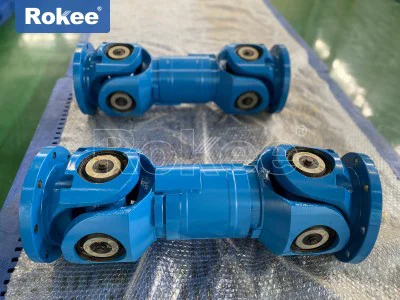
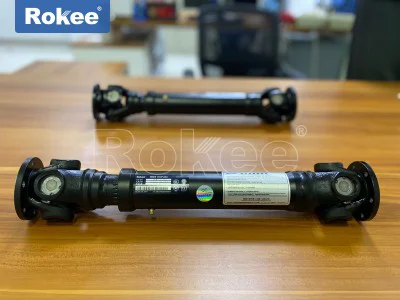
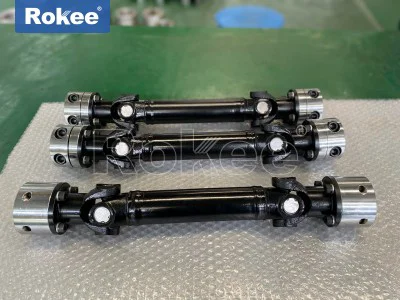
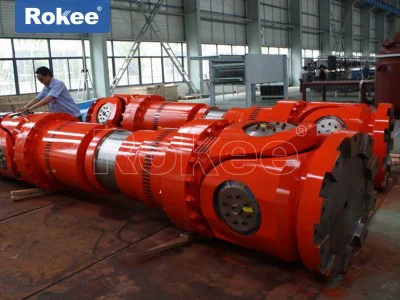
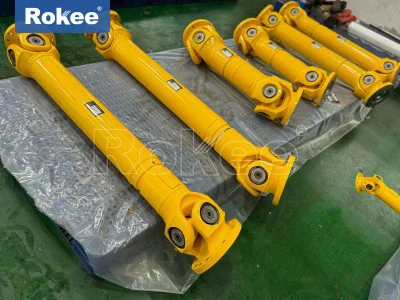
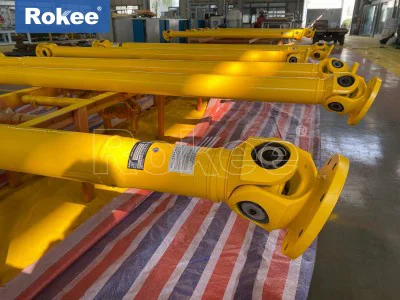
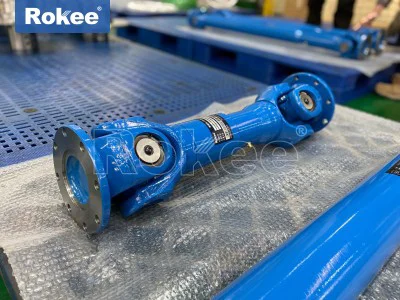
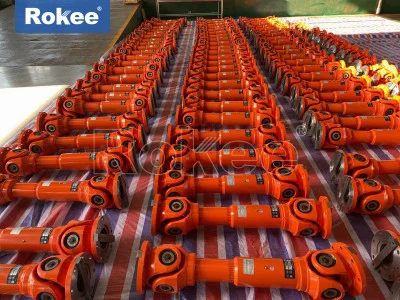
Cardan Shaft for Chemical Industry
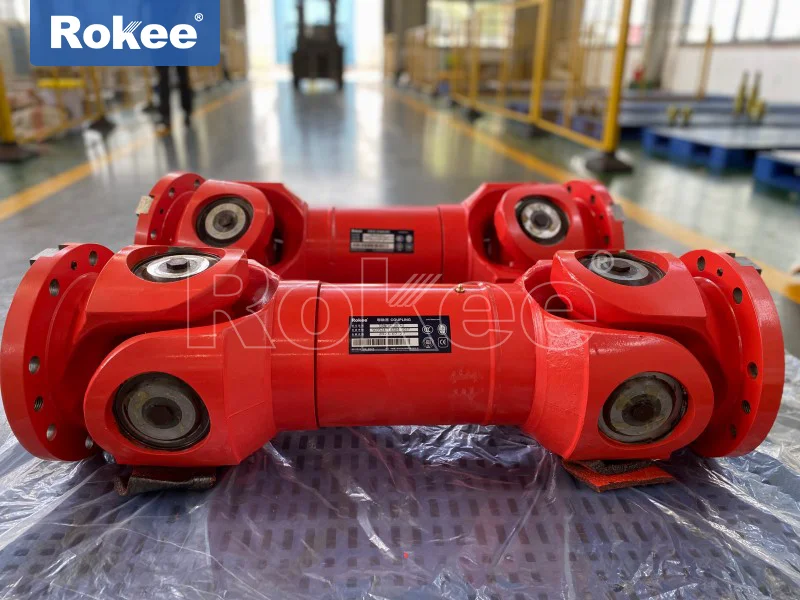
The chemical industry stands as one of the most complex and demanding industrial sectors, characterized by harsh operating environments, continuous production cycles, and stringent requirements for mechanical stability. In numerous mechanical transmission systems within chemical production facilities, the cardan shaft has emerged as an indispensable core component, undertaking the critical task of torque transmission between disjointed mechanical shafts. Unlike conventional transmission parts, cardan shafts are uniquely engineered to adapt to angular deviations, axial displacements, and complex spatial installation conditions, making them highly compatible with the diverse and rigorous equipment layout demands of chemical plants. Throughout the entire production process covering raw material processing, chemical reaction, product purification, and material transportation, these mechanical components maintain stable power output, ensuring the uninterrupted operation of various chemical equipment and laying a solid foundation for the smooth progress of industrial chemical production.
A cardan shaft, also universally recognized as a universal joint shaft, features a simple yet sophisticated mechanical structure that endows it with exceptional adaptive transmission capabilities. Its basic structural composition includes cross shafts, needle roller bearings, shaft sleeves, and connecting flanges, where the cross shaft serves as the core connecting component linking two independent shaft bodies. Relying on the flexible rotational fit between the cross shaft and bearings, the cardan shaft can efficiently transmit torque even when there is a noticeable angular offset between the driving shaft and the driven shaft. This fundamental working principle enables the equipment connected by the cardan shaft to retain stable rotational synchronization without being restricted by strict coaxial installation conditions. In chemical production scenarios, many mechanical devices face unavoidable installation deviations due to spatial layout limitations, equipment foundation settlement, and long-term operational vibration. The adaptive deflection performance of cardan shafts effectively offsets these axis misalignment problems, eliminating additional mechanical stress generated by eccentric transmission and reducing the risk of component wear and structural damage.
Material selection constitutes the core determinant of the service performance and durability of cardan shafts used in the chemical industry. Given the frequent exposure of chemical production workshops to corrosive gases, liquid chemical solvents, humid air, and fluctuating temperature conditions, common ordinary carbon steel materials fail to meet the long-term operational requirements of such harsh environments. For this reason, high-strength alloy steels are predominantly adopted for manufacturing chemical-industry-specific cardan shafts, among which chromium-molybdenum alloy steels are the most widely applied. These alloy materials possess excellent tensile strength, yield toughness, and fatigue resistance, with mechanical properties more than twice superior to those of ordinary carbon steel. In terms of processing technology, key components such as cross shafts and bearing assemblies undergo precision quenching and grinding treatments, while integral parts are subjected to quenching and tempering processes to achieve reasonable hardness matching. This processing method ensures that the surface of the cardan shaft maintains high wear resistance, while the internal structure retains sufficient toughness to withstand instantaneous impact loads generated during equipment startup, shutdown, and operational fluctuation.
Corrosion resistance optimization is a crucial design direction for cardan shafts serving the chemical industry. Different from mechanical parts used in conventional mechanical processing industries, cardan shafts in chemical plants are persistently eroded by acidic, alkaline, and salty chemical media. Prolonged erosion can easily lead to surface oxidation, rusting, and structural pitting of metal components, which not only damages the surface flatness of the shaft body but also reduces the mechanical precision and structural strength of the entire transmission component. To address this challenge, manufacturers implement multiple anti-corrosion treatments on the surface of cardan shafts. High-density anti-corrosion coatings are uniformly sprayed on the outer surface of the shaft body to form a protective isolation layer that prevents direct contact between corrosive media and the metal matrix. Meanwhile, some key movable parts adopt passivation treatment processes to enhance the chemical stability of the metal surface. These comprehensive anti-corrosion measures effectively slow down the aging rate of cardan shafts in corrosive environments and extend their overall service cycle.
The unique structural design of cardan shafts makes them highly adaptable to diversified mechanical equipment in the chemical industry. Most chemical production equipment features compact internal structures and complex transmission paths, making it difficult to achieve linear coaxial arrangement of power components. The flexible connection structure of cardan shafts perfectly solves this layout dilemma. The angular compensation capability allows the shaft body to maintain efficient torque transmission at a certain deflection angle, and the optimized flange connection structure simplifies the assembly and docking process between equipment. In addition, the modular structural design enables each component of the cardan shaft to be independently disassembled and replaced, which creates convenient conditions for daily inspection and component replacement. In high-load continuous production links such as chemical raw material crushing, mixing and stirring, and medium conveying, cardan shafts can stably bear high torque loads and avoid transmission stagnation caused by instantaneous load fluctuations.
In the chemical industry, cardan shafts are deployed across multiple key production links, covering processing equipment, conveying equipment, and reaction auxiliary equipment. In raw material pretreatment workshops, a large number of crushing and grinding devices are required to process bulk solid chemical raw materials into fine particles that meet reaction standards. Such equipment operates with high vibration and large load fluctuations during operation, and cardan shafts connect driving motors and working execution components to ensure continuous and uniform power transmission. Their excellent vibration resistance effectively buffers mechanical vibration generated by equipment operation, reducing vibration conduction between components and lowering the wear degree of fixed parts. In chemical mixing and stirring equipment, cardan shafts transmit power to stirring shafts, enabling uniform rotation of stirring blades to facilitate sufficient mixing and reaction of different chemical raw materials. The stable transmission performance avoids stirring dead angles and uneven material mixing caused by rotational speed jitter.
Fluid conveying equipment represented by chemical pumps and compressors is also a major application scenario for cardan shafts. In the transportation of liquid chemical raw materials, finished products, and gaseous media, such equipment needs to maintain long-term continuous operation with stable rotational speed. The high dynamic balance performance of precision-manufactured cardan shafts effectively suppresses vibration and noise generated during high-speed operation, ensuring the smooth operation of fluid conveying systems. Moreover, in some chemical production processes requiring low-temperature or high-temperature environments, cardan shafts can maintain stable mechanical properties within a wide temperature range, avoiding structural deformation or transmission failure caused by extreme temperature changes. This temperature adaptability enables them to work reliably in special production links such as cryogenic liquefaction and high-temperature catalytic reaction.
Operational stability and safety are vital advantages of cardan shafts in chemical industrial applications. The chemical industry involves flammable, explosive, toxic, and corrosive raw materials, and any mechanical failure may trigger production safety hazards. Cardan shafts adopt an integrated reinforced structure with tightly fitted internal components, which is not prone to loosening, disconnection, or mechanical failure during long-term high-intensity operation. The optimized gap design between bearings and cross shafts reduces mechanical friction and heat generation during operation, avoiding excessive temperature rise that affects the stability of surrounding chemical materials. Additionally, the buffer performance of the cardan shaft structure can absorb instantaneous impact loads generated by equipment startup and sudden load changes, protecting driving components such as motors and reducers from impact damage and improving the overall operational safety of the mechanical transmission system.
Scientific maintenance and reasonable usage methods are essential to maximize the service life of cardan shafts in chemical industrial environments. Although high-quality cardan shafts have strong environmental adaptability, long-term exposure to corrosive media and heavy loads will inevitably cause gradual wear of internal components. Daily maintenance work mainly includes regular cleaning of the shaft body surface to remove residual chemical attachments and dust, which prevents corrosive substances from adhering to the surface for a long time and eroding the metal structure. It is also necessary to periodically inspect the tightness of connecting bolts and the lubrication state of bearing parts. Filling high-performance anti-corrosion lubricating grease into movable friction parts can reduce mechanical wear and prevent rusting and sticking of components. For cardan shafts that have been used for a long time, regular dynamic balance detection and precision calibration should be carried out to eliminate transmission errors caused by structural deformation and ensure consistent operational accuracy.
With the continuous upgrading of the modern chemical industry toward large-scale, intelligent, and low-energy-consumption production, the performance requirements for cardan shafts are constantly improving. Traditional cardan shaft products are gradually optimized in structural design, material formula, and processing technology to adapt to more complex extreme working conditions. On the one hand, lightweight optimization is carried out on the premise of ensuring structural strength to reduce the self-weight load of the transmission system and lower equipment energy consumption. On the other hand, intelligent monitoring structures are added to partial cardan shaft products to monitor operational parameters such as rotational speed, vibration amplitude, and component temperature in real time, providing data support for equipment fault early warning and predictive maintenance. In addition, the personalized customized production mode enables cardan shafts to adapt to non-standard chemical equipment of different specifications, further expanding their application coverage in the chemical industry.
In the entire mechanical transmission system of the chemical industry, the cardan shaft is a seemingly inconspicuous but irreplaceable basic component. Its excellent angular compensation performance, reliable structural stability, strong environmental adaptability, and convenient maintenance characteristics perfectly fit the harsh production conditions and continuous operational requirements of the chemical industry. From raw material processing to finished product delivery, from conventional normal-temperature production to extreme environmental processing procedures, cardan shafts always maintain efficient and stable operating states, providing reliable power transmission guarantees for various chemical mechanical equipment. In the future, driven by the continuous progress of material science and mechanical processing technology, the comprehensive performance of cardan shafts will be further improved, which will better meet the evolving production demands of the chemical industry and make more contributions to the stable and efficient operation of the modern chemical industrial system.