Cardan Shaft for Crushers
In the complex and demanding ecosystem of mineral processing and aggregate production, crushing machinery stands as the fundamental equipment responsible for reducing bulky raw ores and rock materials into standardized granular sizes. Every functional module inside a crusher undertakes distinct mechanical tasks, and the cardan shaft emerges as an indispensable power transmission component that sustains the continuous and stable operation of the entire crushing system. Operating in harsh working conditions characterized by heavy cyclic loads, intense mechanical vibration, pervasive dust pollution and irregular impact forces, the cardan shaft serves as a critical mechanical bridge to transmit rotational torque between disjointed drive components of crushers. Its structural rationality, material durability and operational stability directly determine the overall working efficiency, mechanical safety and service life of crushing equipment, making it a core research object in the optimization design of heavy-duty industrial crushing machinery.
The inherent structural characteristics of crushers create stringent requirements for power transmission components. Most crushing machines adopt an asymmetric mechanical layout, where the power input terminal and the execution crushing terminal cannot maintain a completely collinear axis. During the installation and debugging phase, minor angular deviations and axial misalignments are inevitably generated due to equipment assembly errors and foundation settlement. Moreover, continuous material crushing produces persistent vibration, which further changes the relative spatial position between internal transmission parts in real time. Unlike rigid transmission shafts that are only applicable to highly aligned transmission systems, the cardan shaft features unique spatial transmission adaptability, which can efficiently transmit rotational power under stable and dynamic deflection conditions. This distinctive mechanical property makes it widely applied in various types of crushing equipment, including jaw crushers, cone crushers, impact crushers and mobile crushing stations.
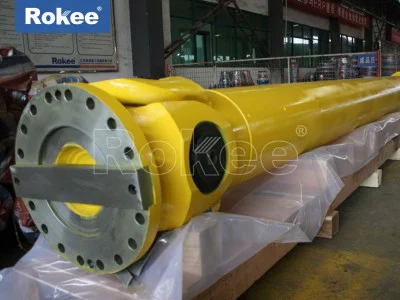
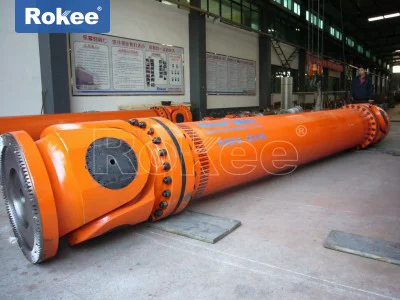
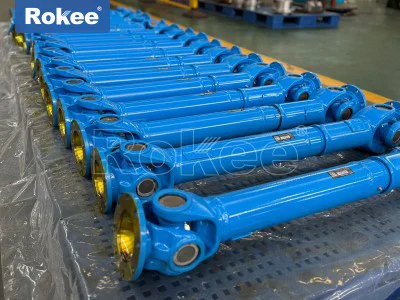
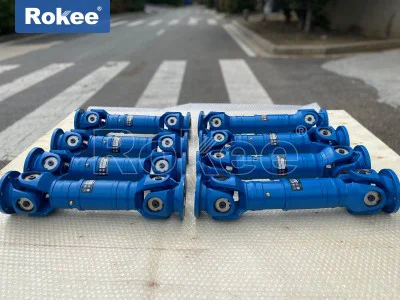
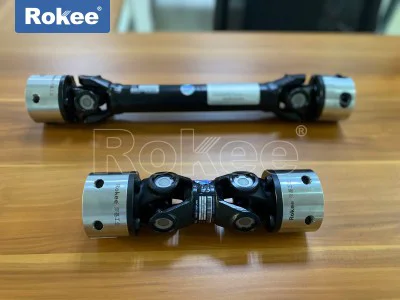
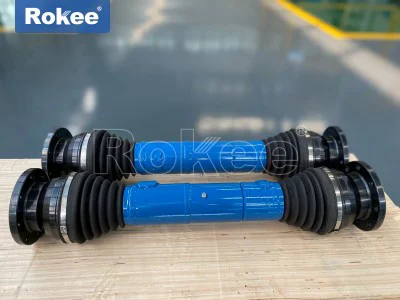
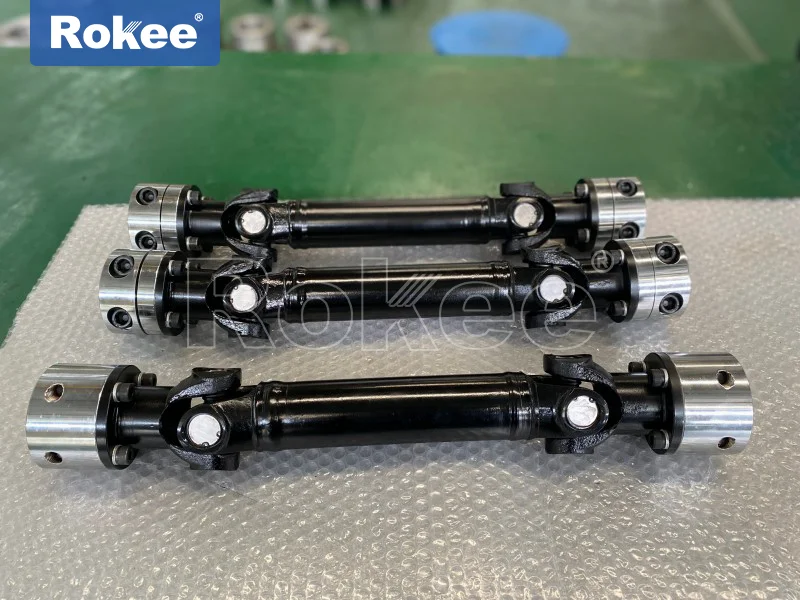
The basic mechanical structure of a cardan shaft consists of multiple interconnected components with clear functional divisions, and each part is precisely engineered to adapt to heavy-load crushing scenarios. The core transmission unit is composed of cross shafts and needle roller bearings, which form flexible universal joint structures at both ends of the intermediate shaft. The fork-shaped joints connected with the universal joints serve as the connection carrier between the shaft body and other mechanical components of the crusher, realizing firm locking and torque conduction. Some cardan shafts are equipped with spline connection structures, which can moderately compensate for tiny axial displacement during equipment operation and relieve rigid extrusion stress caused by mechanical expansion and contraction under temperature changes. All movable matching parts are fitted with sealed protection structures, which isolate internal precision moving parts from external harsh environmental pollutants. The integrated structural design combines rigid bearing capacity and flexible deflection performance, achieving a perfect balance between high-torque transmission and spatial position adaptation.
The working principle of the cardan shaft follows the basic laws of spatial mechanical transmission. When the power drive device of the crusher outputs rotational kinetic energy, the torque is transmitted to the input end of the cardan shaft through the connecting flange. The cross shaft in the universal joint relies on the flexible rotation of needle roller bearings to drive the fork-shaped joints to move synchronously. Even if there is an included angle between the input shaft and the output shaft, the continuous rotation of the cross shaft can ensure uninterrupted power transmission. In the working process, the deflection angle of the shaft body can be adaptively adjusted according to the vibration amplitude and displacement of the crusher. Within the allowable deflection range, the fluctuation of transmission speed is controlled at a low level, avoiding abnormal torque loss caused by angular deviation. For mobile crushing equipment that frequently changes working sites, the cardan shaft can withstand spatial position changes generated by equipment walking and terrain jitter, maintaining stable power output during material crushing.
Material selection is the key factor determining the comprehensive performance of cardan shafts for crushers. Considering the long-term complex stress environment of crushing equipment, high-strength alloy forged steel is generally adopted as the main raw material. This type of material has excellent mechanical properties such as high tensile strength, strong fatigue resistance and good impact toughness, which can resist cyclic alternating stress and instantaneous impact load in the crushing process. The surface of the shaft body undergoes multiple heat treatment processes, including quenching and tempering, to improve surface hardness and wear resistance, while maintaining appropriate internal toughness to prevent brittle fracture under sudden heavy loads. The needle roller bearings inside the universal joints are made of wear-resistant alloy materials with low friction coefficient, which reduces mechanical wear during high-speed rotation. The sealing components are made of high-elasticity rubber and polymer composite materials, which can maintain stable sealing performance under variable temperature and vibration conditions to prevent dust, gravel and muddy water from invading the internal movement gap.
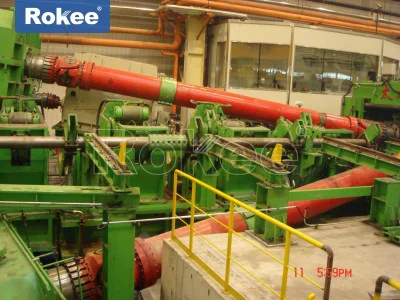
In different types of crushing equipment, the cardan shaft undertakes differentiated transmission tasks and adapts to diverse crushing working modes. In gyratory crushers used for coarse crushing of large ores, the cardan shaft bears ultra-high continuous torque to drive the eccentric transmission mechanism, realizing the cyclic squeezing action of the crushing cone on raw materials. The heavy-load structural design of the cardan shaft matches the low-speed and high-torque operating characteristics of gyratory crushers, effectively dispersing concentrated stress generated during ore breaking. In impact crushers focusing on medium and fine crushing, the cardan shaft needs to adapt to high-frequency vibration and frequent load changes, efficiently transmitting power to the high-speed rotating impact rotor to complete material crushing through impact and collision. For mobile crushing stations with flexible mobility, the compact and highly adaptable cardan shaft structure saves installation space, and its strong anti-vibration performance ensures reliable transmission in complex terrain environments.
The application advantages of cardan shafts in crushing machinery are prominently reflected in mechanical stability and economic applicability. Firstly, the universal joint structure effectively offsets axis misalignment caused by installation errors and equipment operation, reducing additional mechanical friction and kinetic energy loss. This optimization effect improves the overall energy utilization rate of the crusher and reduces unnecessary energy consumption during long-term operation. Secondly, the flexible connection mode disperses instantaneous impact force generated when hard materials are crushed, avoiding direct rigid impact on the motor and reduction gearbox, which protects high-value core transmission components and prolongs the overall service life of the equipment. In addition, the modular structural design of the cardan shaft simplifies daily disassembly and assembly steps. Worn parts can be individually replaced without overall dismantling of the transmission system, lowering maintenance difficulty and time cost for crushing equipment.
Despite the robust structural design, cardan shafts inevitably suffer performance attenuation during long-term service due to severe working conditions. The most common wear part is the matching surface of cross shafts and needle roller bearings. Long-term high-load rotation causes continuous friction between metal components, leading to increased clearance of matching parts, which further generates abnormal vibration and noise during equipment operation. Severe dust accumulation will wear the external protective shell of the shaft body, and long-term erosion of mineral particles will form irregular scratches on the shaft surface, reducing structural rigidity. Aging and deformation of sealing components is another common failure phenomenon. After prolonged vibration and temperature alternation, the elasticity of sealing materials decreases, resulting in poor sealing performance. External dust and moisture enter the internal movement gap, causing lubricant deterioration and aggravating abrasion of precision parts. Improper installation and overload operation will also lead to permanent deformation of the shaft body, affecting transmission accuracy.
Scientific daily maintenance and standardized operation modes are essential to extend the service life of cardan shafts and maintain stable transmission performance. Regular lubrication maintenance is the core link of daily upkeep. It is necessary to select high-viscosity and anti-oxidation lubricating grease suitable for heavy-load industrial environments, and regularly inject lubricant into the bearing clearance to form a uniform oil film between friction surfaces. This can effectively reduce metal friction and avoid dry wear of parts. During the regular equipment shutdown inspection, staff should check the surface integrity of the shaft body, the tightness of connecting fasteners and the flexibility of universal joint rotation. Timely cleaning of dust and mineral residues on the surface prevents corrosive substances from eroding the metal matrix. For sealing components with aging deformation, regular replacement is required according to the service cycle to ensure the isolation effect of the internal lubrication system. In terms of operation management, the crusher should avoid starting with excessive materials to prevent instantaneous overload impact on the cardan shaft, and control the feeding particle size to reduce extreme impact load caused by oversized hard ores.
With the continuous upgrading of mineral processing and aggregate production industries, the technical iteration of crushing machinery puts forward higher requirements for cardan shaft performance. At present, the optimization direction of cardan shaft design mainly focuses on material upgrading and structural refinement. New wear-resistant and high-temperature resistant alloy materials are being applied to shaft body manufacturing to further improve fatigue resistance and environmental adaptability. The internal structure of universal joints is optimized through mechanical simulation technology to realize uniform stress distribution under complex working conditions and reduce local concentrated wear. In terms of production technology, precision forging and CNC finishing processes improve the machining accuracy of matching parts, minimizing mechanical vibration generated by assembly gaps. Meanwhile, integrated monitoring components are gradually applied to cardan shafts to realize real-time perception of operating parameters such as rotational speed, vibration amplitude and temperature, providing data support for predictive maintenance of crushing equipment.
In the entire industrial chain of ore crushing and solid material processing, the cardan shaft, as a seemingly inconspicuous mechanical component, undertakes the vital task of power transmission. Its performance stability is closely related to production efficiency, operation safety and economic benefits of crushing production lines. Facing complex and changeable working conditions, high-strength structural design, excellent material characteristics and scientific maintenance methods jointly guarantee the long-term reliable operation of cardan shafts. With the continuous progress of industrial manufacturing technology, cardan shafts for crushers will develop towards higher load resistance, stronger environmental adaptability and intelligent monitoring. Continuous optimization of this basic transmission component will further improve the automation level and operational stability of crushing machinery, providing solid technical support for the high-quality development of mining, construction aggregate and related industrial fields.