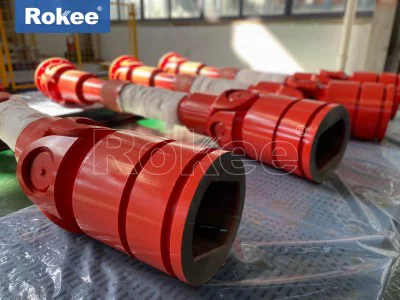
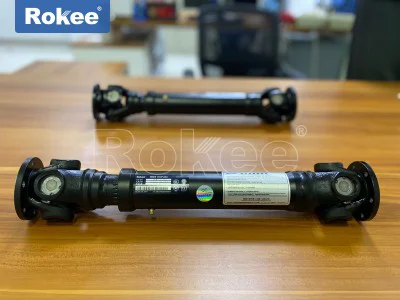
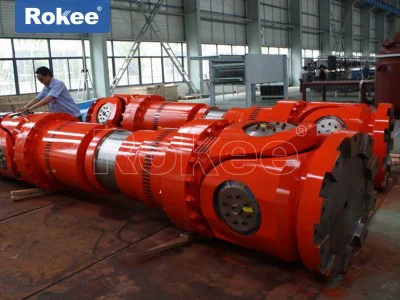
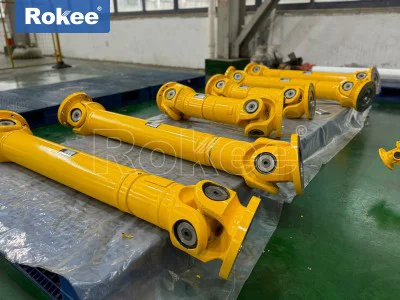
Steel Cast Cardan Shaft
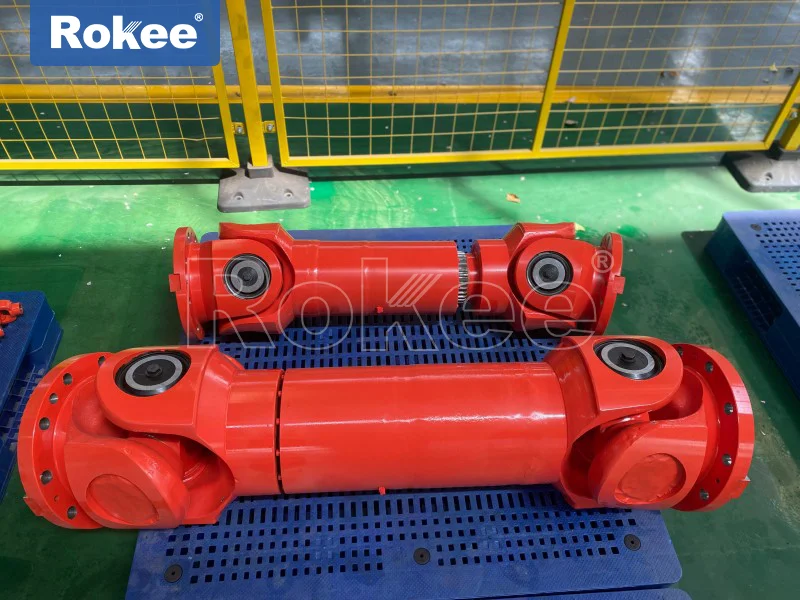
In the complex and interconnected system of modern mechanical transmission, steel cast cardan shafts stand out as indispensable mechanical components that undertake the critical task of torque transmission between disjointed and misaligned rotating parts. These robust mechanical parts are engineered to resolve the technical challenges of power delivery in environments where axial offset, angular deflection, and spatial displacement inevitably occur during equipment operation. Unlike ordinary transmission shafts with simple structural designs, steel cast cardan shafts adopt integrated casting molding technology combined with optimized mechanical structures, endowing them with exceptional mechanical strength, structural stability, and environmental adaptability. They are widely embedded in heavy-duty industrial machinery, transportation equipment, and continuous production lines, serving as the core link to ensure continuous and stable power transmission between mechanical components. With the continuous upgrading of industrial manufacturing standards and the increasing demand for equipment load resistance, the application value of steel cast cardan shafts has been further highlighted, and their structural design, material characteristics, and operating performance have become key research focuses in the field of mechanical transmission engineering.
The inherent material advantages of steel cast components lay a solid foundation for the superior performance of cardan shafts. The steel casting process melts high-purity steel raw materials and pours them into customized molds to form integrated shaft body and joint structures, which eliminates the structural defects such as welding seams and assembly gaps existing in welded or assembled cardan shafts. The internal metal structure of cast steel materials is compact and uniform, with excellent tensile strength, impact resistance, and fatigue resistance. During the smelting and casting process, the internal grain distribution of steel is optimized through temperature control and cooling treatment, effectively reducing internal stress and avoiding structural deformation or fracture under long-term alternating load. In contrast to forged steel parts with high production costs and complex processing procedures, steel casting can realize the integrated molding of complex structures such as fork heads and shaft bodies, simplifying the production process while ensuring the overall structural rigidity of the cardan shaft. This material characteristic makes steel cast cardan shafts particularly suitable for harsh working conditions involving heavy load, frequent vibration, and variable torque, where ordinary shaft parts are prone to wear and structural damage.
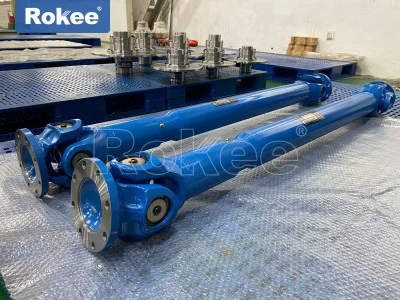
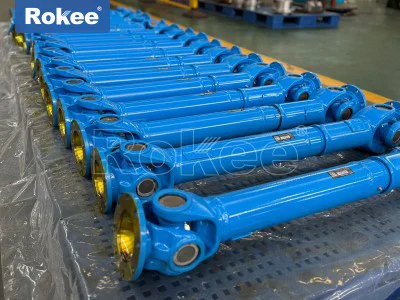
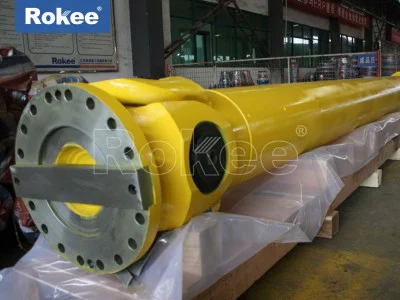
The internal structure of steel cast cardan shafts follows mature and optimized mechanical design logic, with each component cooperating closely to complete efficient power transmission. The overall structure mainly includes cast steel fork heads, cross shafts, rolling needle bearings, telescopic spline pairs, sealing components, and intermediate shaft tubes. The cast steel fork heads are integrally cast with high-strength steel, featuring thickened wall thickness and smooth transition of stress parts, which can disperse concentrated torque and avoid local stress damage during operation. The cross shaft, as the core force-bearing component, connects the driving fork and the driven fork, realizing flexible rotation and angular deflection between the two shafts. Equipped with high-precision rolling needle bearings between the cross shaft and the fork head inner hole, the friction resistance during relative rotation is greatly reduced, improving transmission efficiency while lowering mechanical wear. The telescopic spline pair installed in the middle section of the shaft body can compensate for axial displacement generated by equipment operation, thermal expansion and contraction, and installation errors, ensuring that the shaft body maintains a stable connection without jamming or separation during movement. All connection parts are matched with durable sealing devices, which can isolate external dust, moisture, and corrosive substances, and prevent internal lubricating grease from leaking outward, creating a stable internal operating environment for moving parts.
The working principle of steel cast cardan shafts is based on the spatial motion characteristics of universal joint transmission, which can stably transmit rotational torque under multi-dimensional offset conditions. When power is input from the driving end, the rotational motion is first transmitted to the driving fork through the connecting flange, and the cross shaft converts the unidirectional rotation of the driving fork into spatial deflection rotation, thereby driving the driven fork to synchronously rotate. Even when there is a certain angular deviation between the input shaft and the output shaft, the flexible deflection of the cross shaft can eliminate the motion dead angle and maintain continuous power transmission. Although a single universal joint will produce slight speed fluctuation during rotation, the symmetrical double-section universal joint structure commonly adopted by steel cast cardan shafts can offset the speed difference through reverse deflection, realizing constant-speed and smooth torque transmission. This unique transmission principle enables the cardan shaft to adapt to complex installation layouts and dynamic displacement changes of equipment, solving the transmission difficulties that rigid straight shafts cannot overcome. In the actual operation process, the cooperation of the internal lubrication system ensures that the friction pair always maintains a low-friction operating state, reducing kinetic energy loss and improving the overall transmission efficiency of the mechanical system.
The manufacturing process of steel cast cardan shafts involves multiple precision processing procedures, and each link strictly controls the processing accuracy to ensure product performance. The initial stage takes high-quality carbon steel or alloy steel as raw materials, which are smelted in high-temperature furnaces to remove impurities and adjust the metal composition ratio, so as to enhance the mechanical properties of the castings. The molten steel is poured into prefabricated metal molds, and the integrated blank of the cardan shaft is formed after natural cooling and solidification. Subsequently, the blank is subjected to heat treatment processes including quenching and tempering to optimize the hardness and toughness of the steel material, eliminate casting internal stress, and prevent structural deformation in subsequent use. After heat treatment, precision machining such as turning, milling, and grinding is carried out on key parts such as the cross shaft matching hole, spline surface, and flange connection surface to ensure the dimensional tolerance and surface smoothness of the matching parts. The surface of the shaft body is treated with anti-corrosion and wear-resistant processes to enhance the ability to resist oxidation and external abrasion. Before leaving the production workshop, each cardan shaft will undergo dynamic balance detection and load simulation tests to screen out products with unqualified dynamic performance and structural stability, ensuring that every finished product can meet the rigorous operating standards of industrial equipment.
Steel cast cardan shafts exhibit outstanding performance characteristics in actual industrial applications, becoming the preferred transmission component for heavy machinery. First of all, the integrated casting structure gives the shaft body extremely high structural rigidity, which can bear instantaneous impact torque and continuous heavy load without permanent deformation. Secondly, the excellent environmental adaptability allows it to work stably in high-temperature, dusty, humid, and vibration-intensive working scenarios. The optimized sealing and lubrication structure can prolong the service life of internal moving parts and reduce the frequency of component replacement. In addition, the flange connection method adopted at both ends of the shaft body simplifies the assembly and disassembly process, facilitating the daily maintenance and overhaul of mechanical equipment. The telescopic structure can automatically adapt to the distance change between the driving end and the driven end of the equipment, avoiding additional mechanical stress caused by position deviation. Compared with other types of transmission components, steel cast cardan shafts have stronger load-bearing capacity, better structural stability, and lower comprehensive maintenance cost, which can effectively reduce the failure rate of mechanical transmission systems and improve the continuous operation efficiency of production equipment.
These cardan shafts have a wide coverage of application scenarios, penetrating multiple heavy industrial fields and mechanical equipment types. In the metallurgical industry, they are applied to rolling mill production lines to undertake torque transmission between rolling motors and rolling rollers, adapting to high-temperature environments and frequent vibration generated during metal rolling. In the field of engineering machinery, they serve as power transmission components for heavy-duty transportation vehicles and construction machinery, realizing power delivery between engines and driving structures to cope with complex road conditions and variable load changes. In the forging and pressing industry, they match with large forging equipment to complete high-power torque transmission, withstanding instantaneous impact load generated by mechanical stamping. In addition, they are also widely used in port handling machinery, mining equipment, and automated production lines, providing stable transmission support for various large-scale mechanical systems. With the diversified development of industrial equipment, the structural design of steel cast cardan shafts is also continuously optimized, realizing customized production for different working conditions to meet the differentiated transmission needs of various industries.
Rational daily maintenance and scientific use methods are crucial to prolong the service life of steel cast cardan shafts and maintain stable operating performance. In the daily operation of equipment, staff should regularly check the operating state of the cardan shaft, observe whether there is abnormal vibration, noise, or oil leakage during rotation, and stop the machine for inspection in case of abnormal conditions. The lubrication system needs regular maintenance, and high-quality lubricating grease should be injected into the bearing and spline parts periodically to avoid dry friction and excessive wear of metal parts. The sealing components shall be inspected regularly, and aging or damaged sealing rings shall be replaced in a timely manner to prevent external impurities from entering the interior and causing component abrasion. During the installation and disassembly process, it is necessary to strictly follow the assembly specifications to avoid excessive clamping force causing structural deformation of the shaft body, and control the installation angle deviation within the reasonable design range to prevent additional torque loss. In addition, long-term overload operation should be avoided in the use process, as excessive load will accelerate metal fatigue and shorten the service life of the cardan shaft. Standardized maintenance management can effectively reduce equipment failure probability, lower operation and maintenance costs, and ensure the long-term stable operation of the transmission system.
With the continuous progress of industrial manufacturing technology and the upgrading of heavy machinery performance requirements, the development direction of steel cast cardan shafts is gradually moving towards high precision, lightweight, and intelligent optimization. In terms of material research and development, higher-performance alloy cast steel materials are being continuously developed to further improve the strength, corrosion resistance, and fatigue resistance of the shaft body while reducing the self-weight of components. In terms of structural design, finite element analysis technology is used to optimize the stress distribution of each component, simplify the internal structure on the premise of ensuring load-bearing capacity, and realize lightweight manufacturing. In terms of processing technology, intelligent casting and automated precision processing equipment are adopted to improve the dimensional accuracy and surface processing quality of castings, and reduce the error rate of manual processing. At the same time, combined with sensor monitoring technology, some optimized cardan shaft products can realize real-time monitoring of operating parameters such as torque, vibration, and temperature, providing data support for equipment maintenance and fault early warning. These technological innovations will further expand the application scope of steel cast cardan shafts and enhance their comprehensive performance in complex working conditions.
As a key basic component in the field of mechanical transmission, steel cast cardan shafts carry the important function of power connection for modern heavy industrial equipment. Their unique cast steel material advantages, mature mechanical structure, reliable transmission performance, and wide application scenarios make them an indispensable part of the industrial manufacturing system. From raw material smelting, integral casting to precision processing and performance testing, every production link condenses mechanical engineering technology, and every structural optimization is based on the actual demand of industrial production. In the future, with the continuous development of industrialization and the continuous innovation of mechanical manufacturing technology, steel cast cardan shafts will continue to complete technological iteration and performance upgrading. They will always maintain stable and efficient transmission capacity, provide solid technical support for the safe operation of various heavy machinery and equipment, and make continuous contributions to the high-quality development of the global industrial manufacturing industry.