Cardan Coupling for Winches
In the complex mechanical transmission system of winches, the stable delivery of torque and motion serves as the core guarantee for efficient winding and lifting operations. Among various transmission components, cardan couplings stand out as indispensable mechanical parts tailored for winch operation conditions, relying on their unique structural characteristics and excellent angular compensation capabilities. A winch often faces variable installation postures, fluctuating load pressures and complex spatial position deviations during operation, which puts forward stringent requirements for the flexibility, stability and durability of transmission connectors. As a classic rigid universal joint transmission component, the cardan coupling effectively solves the power transmission problem between misaligned shafts, ensuring continuous and reliable power output for winch equipment under harsh and changeable working environments.
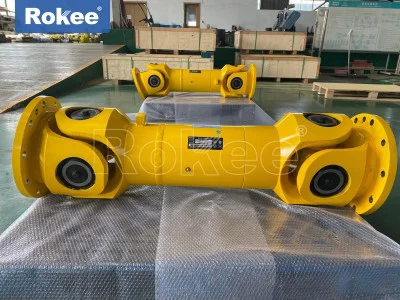
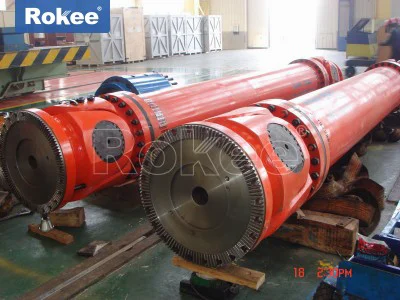
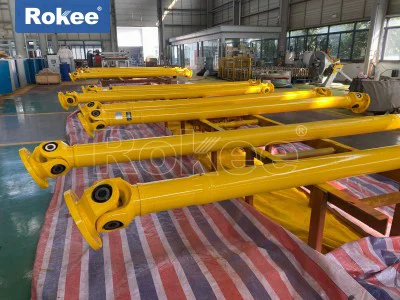
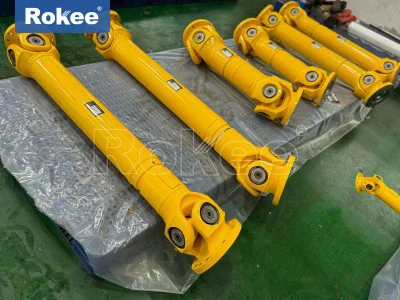
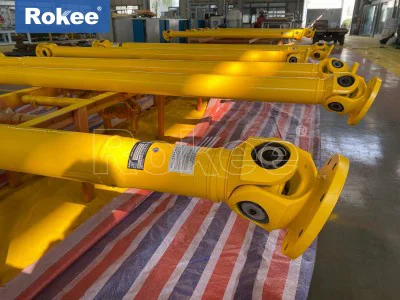
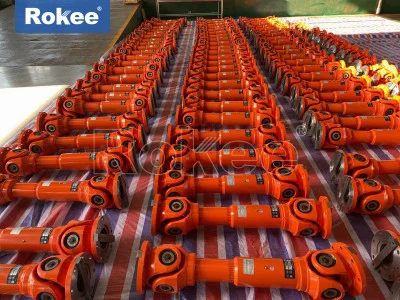
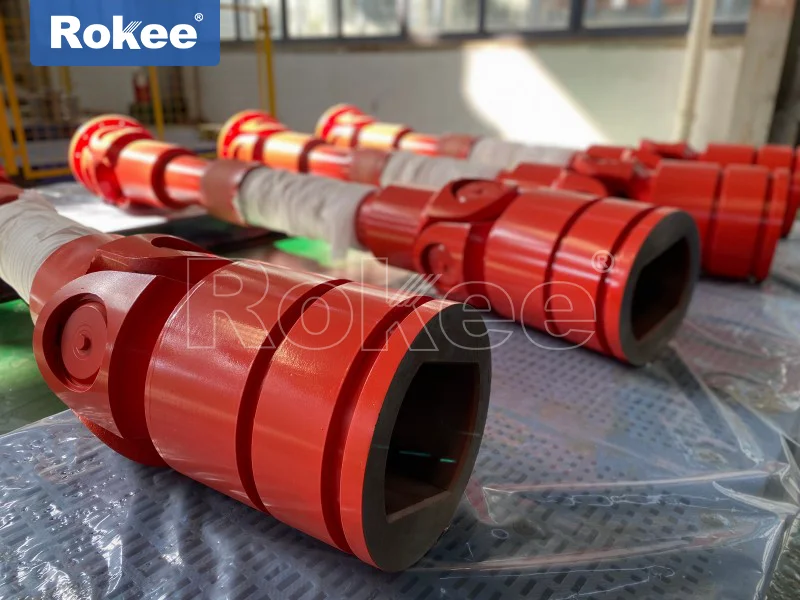
The basic structural composition of a cardan coupling determines its superior adaptability to winch transmission systems. The core structure mainly includes two yoke parts, a central cross shaft, needle roller bearings and sealing components, and each part undertakes irreplaceable mechanical functions. The two yokes are separately connected to the driving shaft and driven shaft of the winch, forming the connecting carrier for power input and output. The cross shaft acts as the central rotating hinge, penetrating the end holes of the two yokes to realize flexible angular deflection between the connected shafts. Needle roller bearings are installed at the four journal positions of the cross shaft, which can convert sliding friction into rolling friction during the rotation process, greatly reducing mechanical friction resistance and wear loss between components. The external sealing structures are designed to isolate external dust, moisture and particulate impurities, preventing internal bearing parts from abrasion and corrosion. This compact and rugged structural layout enables the cardan coupling to maintain structural integrity under the heavy-load working state of winches, laying a solid foundation for long-term stable power transmission.
The working principle of cardan couplings is based on spatial mechanical rotation and angular displacement compensation, which perfectly matches the transmission logic of winch equipment. In the actual operation of a winch, it is difficult to keep the driving shaft and driven shaft in an absolute collinear state due to equipment installation errors, frame vibration and metal structural deformation under load. The cardan coupling makes use of the rotational flexibility of the cross shaft and yokes to allow a certain included angle between the two connected shafts. When the driving shaft rotates, the torque is transmitted to the cross shaft through the driving yoke, and then the cross shaft drives the driven yoke and the driven shaft to rotate synchronously. During the continuous rotation process, the cross shaft dynamically adjusts the deflection angle according to the spatial position change of the two shafts, realizing uninterrupted power transmission within the allowable angle range. For most winch transmission scenarios, the effective deflection angle of the cardan coupling can meet the daily operation requirements, and the double-section cardan structure can further optimize the rotation uniformity to avoid torque fluctuation caused by single-angle deflection, ensuring smooth winding and hoisting actions of the winch.
Winch equipment is widely used in industrial hoisting, marine traction, engineering rescue and material handling industries, and different application scenarios have put forward differentiated performance requirements for cardan couplings. In terrestrial industrial winches, the equipment is mostly installed on fixed metal supports, and slight vibration and axial deviation will be generated during heavy-load winding. The cardan coupling can absorb tiny displacement changes through its own angular compensation performance, avoiding additional mechanical stress on the transmission shaft caused by rigid connection. In marine winch working environments, the equipment is affected by hull shaking and water surface fluctuation, and the relative position between transmission shafts is in a dynamic changing state. The flexible connection characteristic of the cardan coupling can adapt to the frequent small-amplitude deflection of the shaft system, preventing transmission stagnation or component damage during traction and mooring operations. For mobile engineering winches, the equipment often moves with engineering vehicles, and the bumpy working terrain will cause continuous vibration of the transmission structure. The sturdy mechanical structure of the cardan coupling can resist impact loads, maintain stable torque output in complex motion states, and ensure the safety and continuity of material hoisting and traction tasks.
Compared with other types of transmission connectors, cardan couplings have unique application advantages in winch matching. In terms of angular compensation capability, traditional flange couplings and sleeve couplings can only realize power transmission under collinear shaft conditions, and slight shaft deviation will cause severe component wear and transmission noise. In contrast, cardan couplings can stably work within a large angle deviation range, which greatly reduces the installation precision requirements of winch equipment and lowers the difficulty of equipment debugging and later maintenance. In terms of load resistance, the all-metal rigid structure of the cardan coupling can bear high torque impact generated during the start-up and sudden braking of the winch. It will not produce elastic deformation like flexible couplings, avoiding power loss and position deviation during heavy-load transmission. In terms of structural applicability, the compact overall size and convenient assembly mode of cardan couplings make them suitable for winch equipment with limited internal installation space. The simple disassembly and replacement process also improves the maintenance efficiency of mechanical failures, reducing the downtime loss of winch operation.
In the actual operation of winches, the operating environment imposes multiple durability tests on cardan couplings. Most winch working sites are accompanied by harsh environmental factors such as dust accumulation, humid air and temperature changes. The surface of the cardan coupling is usually treated with anti-rust and wear-resistant processing technology, which can effectively resist oxidative corrosion and surface abrasion. The internal closed sealing structure can block fine dust and water vapor from entering the bearing gap, ensuring the flexible rotation of internal moving parts for a long time. In low-temperature working environments, the optimized structural clearance and high-performance lubricating grease can avoid mechanical jamming caused by material shrinkage, maintaining the normal transmission efficiency of the winch. In high-intensity continuous working conditions, the excellent heat dissipation performance of the metal structure can quickly export the friction heat generated inside the coupling, preventing structural deformation and performance degradation caused by long-term high-temperature accumulation.
Rational installation and standardized maintenance are key factors to extend the service life of cardan couplings and optimize the operating state of winches. During the installation process, workers need to ensure that the coaxiality of the connecting shafts is controlled within the optimal deviation range, avoiding long-term overload deflection of the coupling caused by excessive installation angle. The connecting bolts between the yoke and the shaft body should be evenly tightened to prevent loose connection and torque vibration during rotation. In daily maintenance, regular inspection of the sealing integrity of the coupling is required to replace aging sealing accessories in a timely manner and prevent lubricant leakage. It is also necessary to supplement high-quality lubricating grease for internal bearings at fixed cycles to reduce metal friction and wear. During the equipment idle period, the surface of the coupling should be cleaned of dust and dirt, and anti-corrosion oil should be coated on the exposed metal parts to avoid rust erosion. In addition, the operating vibration and noise of the coupling should be monitored in real time during the operation of the winch. Once abnormal jitter or harsh friction sound is found, the equipment should be shut down for inspection to eliminate potential mechanical failures in advance.
With the continuous upgrading of industrial mechanical technology, the optimization and iteration of cardan coupling structures for winches are also advancing steadily. Modern mechanical design concepts focus on lightweight and high-strength optimization. By improving the forging process of metal materials, the overall weight of the coupling is reduced while ensuring mechanical strength, which helps to lower the self-load of winch equipment and improve energy utilization efficiency. The optimized internal bearing structure further reduces friction coefficient, effectively cutting down the energy consumption loss during power transmission. In view of the extreme working conditions such as high humidity and strong corrosion in special industries, new anti-corrosion alloy materials and surface coating processes are applied to the coupling production, enhancing the environmental adaptability of the product. At the same time, the integrated structural design simplifies the assembly steps, reduces the number of connecting parts, and improves the structural stability of the coupling in high-frequency rotation.
The matching performance between cardan couplings and winches also needs to be reasonably selected according to the actual operating parameters of the equipment. In the selection process, the maximum operating torque of the winch, the rotating speed of the transmission shaft, the working deflection angle and the environmental conditions should be comprehensively considered. For heavy-duty industrial winches with large torque demand, cardan couplings with thicker shaft diameter and enhanced bearing structure should be selected to ensure sufficient load-bearing capacity. For high-speed light-load winch equipment, priority should be given to couplings with low friction and high dynamic balance to reduce transmission vibration and noise. Reasonable type matching can not only give full play to the transmission advantages of cardan couplings, but also avoid component fatigue damage caused by improper model selection, so as to maintain the long-term stable operation of the winch system.
In the entire mechanical transmission system of winches, the cardan coupling is a small but vital core component. It undertakes the important task of connecting power components and executing components, and its operating state directly affects the working efficiency, operation stability and service life of the entire winch equipment. From basic structural composition to working principle, from environmental adaptability to industry application value, cardan couplings show irreplaceable application advantages in winch matching. With the continuous development of mechanical manufacturing technology, the performance of cardan couplings will be further optimized, and they will adapt to more complex and extreme winch operation scenarios. In the future industrial production and engineering operation fields, this kind of traditional and efficient transmission component will still play a stable supporting role, continuously provide reliable power transmission guarantee for winch equipment, and create greater application value for various mechanical operation industries.