Cardan Shaft for Low Loaders
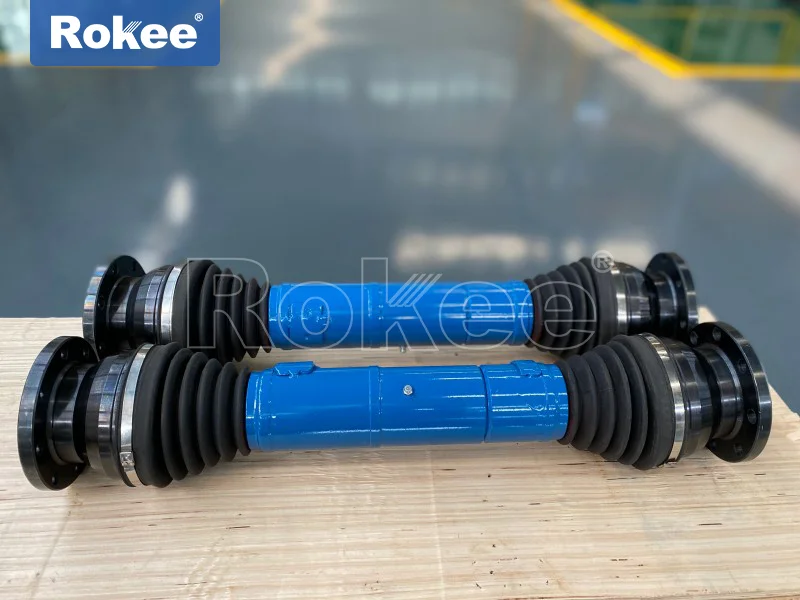
Low loaders serve as indispensable transportation equipment in logistics, engineering construction, and heavy cargo transit, primarily designed to haul oversized, overweight, and special-shaped goods that conventional vehicles cannot carry. The stable and efficient operation of low loaders relies on a complete power transmission system, among which the cardan shaft stands out as a core transmission component that determines the smoothness, safety, and operational efficiency of the entire vehicle power system. Unlike common transmission shafts used in standard vehicles, cardan shafts configured for low loaders are uniquely optimized to adapt to the vehicle’s special chassis structure, low body height, and complex driving working conditions, undertaking the critical task of transmitting torque and rotational power between the vehicle’s power output end and the drive axle. This mechanical component is not a simple auxiliary part but a key carrier that connects discrete power structures and ensures coordinated operation of the whole vehicle, directly influencing the driving stability and service life of low loaders in diverse and harsh operating scenarios.
The core working logic of the cardan shaft originates from the mechanical characteristics of universal joint transmission, which enables continuous and stable transmission of rotational torque even when there are angular deviations and positional offsets between the driving shaft and the driven shaft. In the structural layout of low loaders, the chassis is designed with an ultra-low height to meet the passing requirements of oversized cargo and special road sections, which leads to a non-linear and spatially limited installation distance between the engine power output end and the drive axle. Conventional rigid transmission shafts cannot adapt to this irregular spatial layout, as rigid connection structures are prone to torsion, deformation, and power transmission blockage once misalignment occurs. The cardan shaft solves this industry pain point perfectly through its flexible universal joint structure. It can adapt to dynamic angular changes within a certain range during vehicle operation, compensate for axial and radial displacement caused by chassis vibration, road bumping, and body deformation, and maintain uninterrupted power output throughout the driving process.
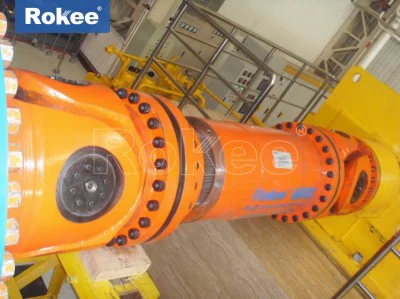
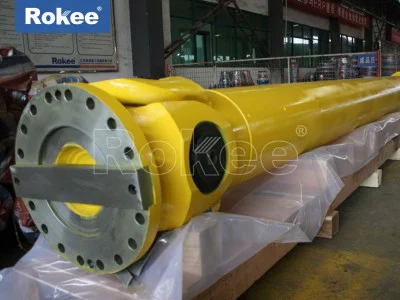
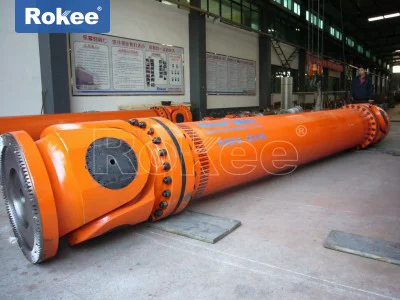
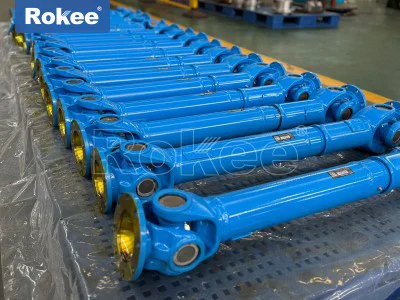
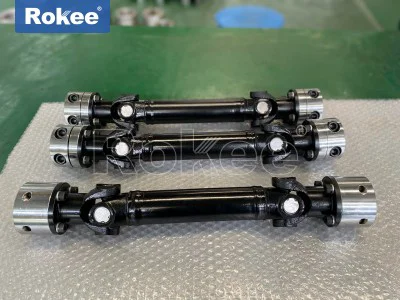
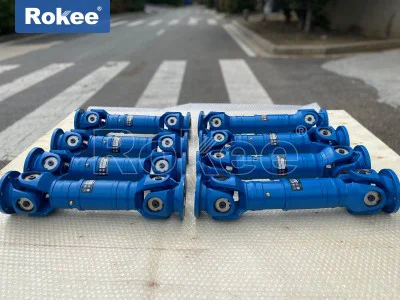
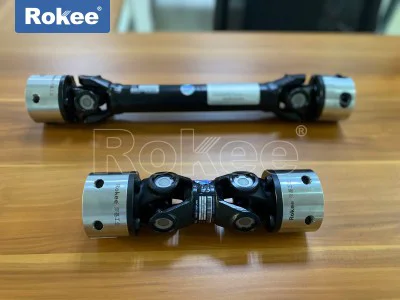
The overall structure of a low loader cardan shaft is composed of multiple core mechanical components that cooperate with each other, including universal joints, intermediate shaft bodies, connecting flanges, and telescopic adjusting structures. Each component bears distinct functional responsibilities and together forms a high-adaptability transmission system. The universal joint is the most critical functional unit of the cardan shaft, mainly relying on the cross shaft structure to realize flexible rotation and angle compensation. When the low loader is driving on uneven roads, turning, or bearing uneven loads, the cross shaft inside the universal joint can freely deflect within a specific angle range, offsetting the dislocation stress generated by the relative position change of the front and rear transmission structures. This structural design effectively avoids the power loss and mechanical damage caused by rigid torsion, ensuring that torque can be efficiently transmitted to the drive axle in real time.
The intermediate shaft body is the main bearing and transmission component of the cardan shaft. For low loaders, the design of the shaft body focuses on balancing structural rigidity, toughness, and lightweight performance. Low loaders often work in complex environments such as construction sites, mountain roads, and suburban unimproved roads, with frequent load changes and continuous vibration impact during operation. Therefore, the shaft body needs to have strong resistance to torsion and fatigue fracture. The integrated seamless structural design is widely adopted for the shaft body, which can uniformly disperse the torque stress generated during high-intensity operation and avoid local stress concentration leading to structural damage. Meanwhile, the reasonable wall thickness and diameter design of the shaft body effectively reduces the self-weight of the component, avoiding excessive self-weight increasing the vehicle’s running resistance and energy consumption, and improving the overall transportation economy of low loaders.
The connecting flange and telescopic structure are key auxiliary structures to ensure the stable operation of the cardan shaft. The connecting flange adopts a high-precision matching structure, which can realize tight connection and positioning between the cardan shaft and the vehicle power output and input ends. The uniform stress distribution of the flange connection surface ensures no looseness or displacement during high-speed rotation and high-torque transmission, avoiding abnormal vibration and noise caused by poor connection. The telescopic structure can adapt to the axial distance change between the transmission parts of low loaders during driving. When the vehicle passes through bumpy road sections or the chassis undergoes elastic deformation due to load pressure, the telescopic structure can automatically adjust the overall length of the cardan shaft, eliminating the axial extrusion and stretching stress of the shaft body, and protecting the integrity and stability of the entire transmission structure.
The working performance of the cardan shaft directly matches the unique operating characteristics of low loaders. Low loaders are mainly used for low-speed and heavy-load transportation, with long-term low-speed operation and frequent start-stop working states, which puts forward higher requirements for the low-speed torque transmission stability and impact resistance of the cardan shaft. Different from the high-speed and low-torque working mode of ordinary vehicle transmission shafts, the cardan shaft for low loaders is optimized for low-speed and high-torque working conditions. Its internal universal joint and cross shaft structure have larger bearing capacity, which can withstand the instantaneous impact torque generated when the vehicle starts and accelerates with heavy loads, and avoid transmission stalling or component damage caused by insufficient torque bearing capacity.
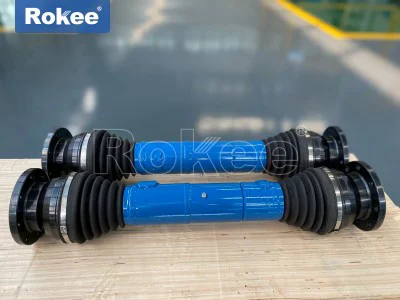
In terms of environmental adaptability, low loaders often operate in open-air and harsh working environments, facing the erosion of dust, sediment, rainwater, and seasonal temperature changes. The cardan shaft is designed with targeted protective structures. The sealing components at the universal joint and telescopic parts can effectively block external impurities from entering the internal moving gap, preventing abrasive wear of precision moving parts caused by dust and sediment. At the same time, the surface anti-corrosion and anti-rust treatment enables the shaft body and connecting components to maintain stable mechanical performance in humid and variable temperature environments, reducing the failure rate of components caused by environmental erosion and extending the overall service life.
The operational stability of the cardan shaft is crucial to the driving safety of low loaders. Low loaders carry large-volume and heavy cargo, and the center of gravity of the vehicle is high and the load distribution is uneven. Once the power transmission system fails during driving, it is easy to cause vehicle stalling, body shaking, and even safety accidents such as cargo tilt and rollover. A high-quality cardan shaft can maintain synchronous and stable power output during vehicle turning, climbing, bumping and other complex driving states. The angle compensation and displacement buffering functions can eliminate the jitter and power fluctuation of the transmission system, ensure uniform and continuous power output of the drive axle, and enable the driver to stably control the vehicle running state.
Reasonable maintenance and daily inspection are important guarantees to maintain the long-term stable performance of the cardan shaft. In the daily operation of low loaders, the cardan shaft will be affected by continuous vibration, torque impact and environmental erosion for a long time, and slight wear and structural fatigue will inevitably occur. Regular inspection of the connection tightness of the flange parts can prevent bolt looseness caused by long-term vibration, avoiding abnormal noise and transmission deviation. Checking the sealing performance of the universal joint and telescopic parts can ensure that the internal lubricating grease is sufficient and free of impurity mixing, reducing the friction and wear of moving parts. Timely cleaning of surface sediment and dirt can prevent long-term adhesion of corrosive substances from damaging the component surface structure. In addition, regular lubrication maintenance of the rotating and telescopic moving parts can effectively reduce mechanical friction resistance, improve power transmission efficiency, and reduce energy consumption during vehicle operation.
In the long-term use process, the aging and wear of the cardan shaft present regular characteristics. Minor wear often manifests as slight abnormal noise during vehicle start and acceleration, while excessive wear will lead to increased vibration of the transmission system and unstable power output. Timely detection and maintenance of minor faults can avoid the expansion of faults and prevent small component damage from affecting the normal operation of the entire vehicle power system. For the cardan shaft used for a long time, regular structural inspection of the shaft body is required to check for subtle cracks, deformation and fatigue damage, so as to replace aging components in time and ensure the overall structural strength and transmission performance of the cardan shaft.
With the continuous upgrading of low loader transportation requirements, the performance design of supporting cardan shafts is also constantly optimized and iterated. Modern low loaders are developing towards larger load capacity, higher transportation efficiency and stronger road adaptability, which puts forward higher standards for the torque transmission capacity, structural stability, wear resistance and lightweight level of cardan shafts. The optimized cardan shaft structure further improves the angle compensation range and displacement adaptation capacity, which can adapt to more complex chassis deformation and road condition changes. The improved structural materials enhance the fatigue resistance and impact resistance of components, meeting the high-intensity operation requirements of low loaders for long-distance and high-frequency heavy-load transportation.
In the entire low loader power transmission system, the cardan shaft is a small but vital core component. It connects the power source and the driving execution structure, undertakes the key task of power transmission, and adapts to the complex and changeable working conditions of low loaders through flexible structural design and stable mechanical performance. Its performance directly determines the transportation stability, operational safety and use cost of low loaders. In the field of heavy cargo transportation, ensuring the good working condition of the cardan shaft is not only the basis for maintaining the efficient operation of the vehicle, but also an important part of reducing equipment failure rates and extending the service life of transportation equipment. With the continuous development of the heavy transportation industry, the technical optimization of low loader cardan shafts will continue to promote the improvement of the overall performance of special transportation vehicles and provide solid technical support for the stable and efficient development of the heavy logistics and engineering transportation industry.