Heavy Duty Double Joint Universal Shaft
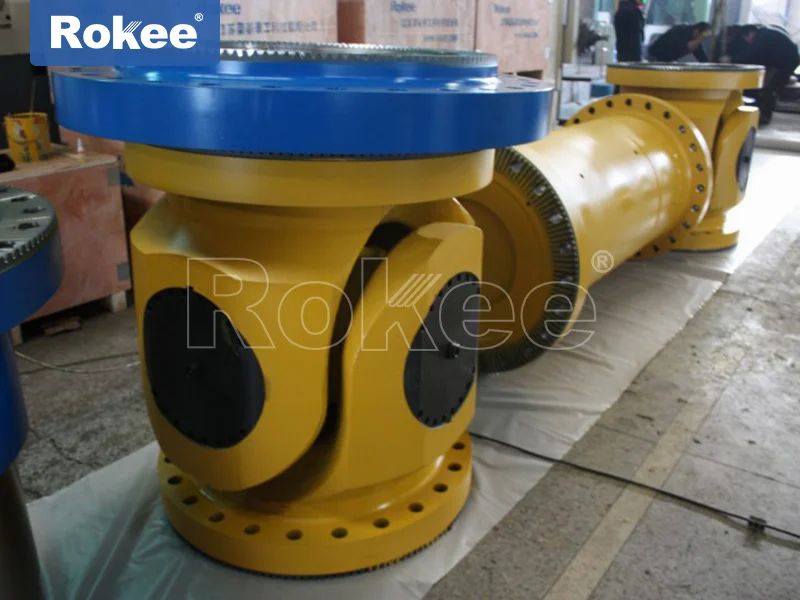
In the complex operational logic of modern heavy industrial machinery, power transmission components serve as the fundamental guarantee for stable mechanical operation, and the heavy duty double joint universal shaft stands out as an indispensable core transmission part in heavy-load working scenarios. This mechanical component is uniquely engineered to address the transmission challenges caused by axis deviation, spatial displacement and angular deflection between connected shafts, delivering continuous and efficient power transmission under extreme working conditions that ordinary transmission shafts cannot withstand. Unlike single joint universal shafts with limited compensation capacity, the double joint structure integrates two sets of universal joint assemblies with an intermediate connecting shaft, forming a flexible transmission system that balances mechanical rigidity and adaptive flexibility. Its inherent structural advantages enable it to adapt to diverse harsh industrial environments, achieving reliable torque transmission while offsetting installation errors, thermal expansion displacement and mechanical vibration interference, which makes it widely applied in numerous heavy industrial fields.
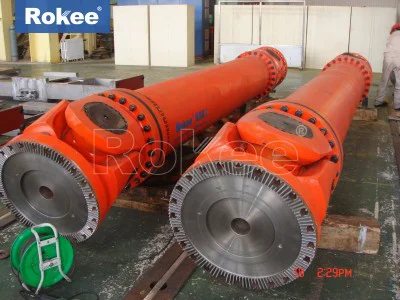
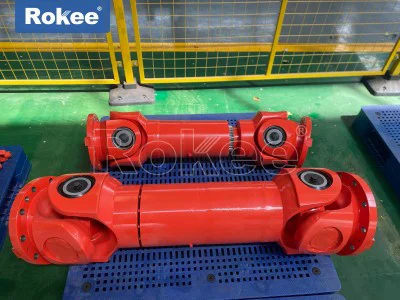
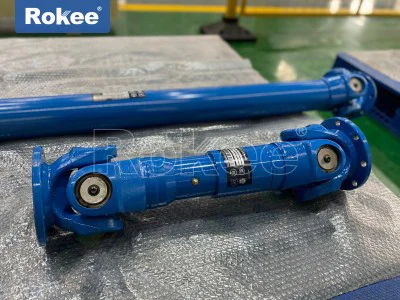
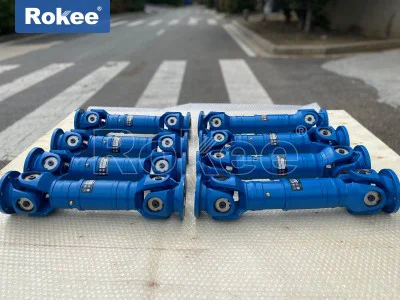
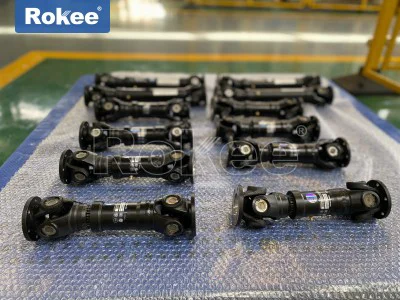
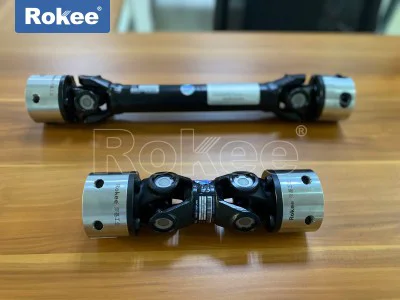
The basic structural composition of a heavy duty double joint universal shaft follows mature mechanical design logic, with each component cooperating closely to undertake heavy load transmission tasks. The overall structure mainly consists of two universal joint yokes, solid cross shafts, high-precision rolling bearings, an intermediate spline shaft and sealing protection components. The paired universal joints are symmetrically distributed at both ends of the intermediate shaft, and the cross shaft acts as the core hinge connecting the joint yokes, realizing flexible angular rotation between adjacent components. The rolling bearings installed at the ends of the cross shaft effectively reduce friction resistance during rotational operation, ensuring smooth power transmission and minimizing mechanical energy loss. The intermediate spline shaft possesses axial telescoping capability, which can automatically compensate for linear displacement generated by mechanical operation, material thermal expansion and assembly gaps. All structural parts are tightly assembled through embedded clamping structures and high-strength connecting fasteners, avoiding loose displacement under long-term heavy torque impact. There is no redundant decorative structure in the overall design, and all structural layouts focus on improving mechanical bearing capacity and operational stability, conforming to the practical design concept of heavy industrial mechanical components.
The working principle of the heavy duty double joint universal shaft is derived from the kinematic characteristics of universal hinge structures, optimizing the inherent motion defects of single joint transmission. A single universal joint inevitably produces instantaneous angular velocity fluctuation during operation when there is an included angle between the input shaft and the output shaft, resulting in periodic vibration and torque fluctuation that affect transmission stability. The double joint structure perfectly compensates for this defect through symmetrical arrangement and linkage operation. The two universal joints synchronously adjust the rotation angle during power transmission, offsetting the velocity deviation generated by a single joint, and controlling the instantaneous angular velocity difference between the input end and the output end within an extremely low range. When the connected mechanical shafts have angular deflection, parallel displacement or axial deviation, the double joint assembly flexibly adjusts the spatial angle through the cross shaft hinge, ensuring that the rotation state of the output shaft remains consistent with the input shaft. In high-torque working conditions, the intermediate shaft evenly distributes the load to the two sets of universal joints, avoiding local stress concentration and reducing the fatigue loss of a single structural part. This coordinated kinematic mechanism enables the component to maintain stable transmission efficiency even with a maximum deflection angle ranging from 15 degrees to 25 degrees, meeting the displacement compensation demands of complex mechanical layouts.
Material selection and processing craftsmanship determine the service life and comprehensive performance of heavy duty double joint universal shafts, and all key components adopt high-performance metal materials suitable for heavy-load working conditions. High-strength alloy steel is the primary raw material for main load-bearing parts such as cross shafts and joint yokes. This type of material has excellent tensile strength, torsional resistance and impact toughness, which can withstand instantaneous torque impact and continuous heavy load pressure in industrial operation. In terms of smelting technology, the raw materials undergo refined smelting processes to reduce internal impurity content, optimize metal grain structure and lay a solid foundation for mechanical stability. The intermediate spline shaft is processed by precision forging technology, which improves the density of the metal structure and enhances the wear resistance and deformation resistance of the spline surface. All key parts are subjected to standardized heat treatment including quenching and tempering; this process refines the internal metal grains, eliminates processing stress, and significantly improves fatigue strength and surface hardness. For special working environments with corrosive media such as acid and alkali, surface anti-corrosion treatments are applied to the components to isolate moisture and chemical corrosion. The bearing parts adopt high-precision rolling structural design, matching with wear-resistant alloy materials to reduce rotational friction and extend continuous operation time.
The unique structural design and superior material properties endow heavy duty double joint universal shafts with multiple irreplaceable performance advantages in industrial applications. First of all, it has outstanding displacement compensation capability, which can simultaneously adapt to angular deviation, axial displacement and radial misalignment. It effectively offsets assembly errors generated during mechanical installation and position changes caused by equipment vibration and thermal expansion during operation, reducing assembly precision requirements for connected mechanical parts. Secondly, the component has excellent torque transmission capacity, and the optimized double joint stress distribution structure can bear high continuous torque, adapting to heavy-load operation demands of large-scale industrial equipment. In terms of operational stability, the symmetrical double joint structure suppresses rotational vibration and torque fluctuation, realizing low-noise and low-vibration operation even at medium and high rotation speeds. Additionally, the integrated sealing structure effectively isolates external dust, moisture and abrasive particles, preventing lubricant leakage and internal component abrasion. The reasonable structural disassembly design simplifies daily maintenance work; the lubrication structure is arranged reasonably without the need for frequent disassembly, reducing maintenance difficulty and time cost. Compared with other flexible transmission components, it has stronger structural rigidity and environmental adaptability, and can maintain stable working performance in high-temperature, low-temperature, dusty and humid harsh working conditions.
Heavy duty double joint universal shafts are widely used in various heavy industrial sectors, covering mechanical equipment with diverse transmission demands. In the metallurgical industry, they serve as key transmission components of rolling mills, connecting driving motors and rolling rollers to complete continuous metal rolling processing. The stable high-torque transmission performance ensures the synchronization of roller operation, and the displacement compensation function adapts to the thermal deformation of metal processing equipment. In engineering machinery, this component is applied to heavy-duty excavators, bulldozers and mixing equipment, undertaking power transmission between power devices and walking or executing structures. It can withstand complex vibration and impact loads in construction scenarios to ensure the continuous operation of engineering equipment. In the field of heavy transportation, it is used for power transmission of large cargo vehicles and special transport machinery, adapting to chassis jitter and axis displacement during driving to maintain the stability of power output. Besides, it also plays an important role in petroleum machinery, mining equipment, large-scale conveying production lines and industrial automation processing equipment, providing reliable transmission support for various heavy-load mechanical systems.
Despite the sturdy structural design of heavy duty double joint universal shafts, inevitable wear and aging will occur after long-term continuous operation, so scientific wear analysis and regular maintenance are essential to extend service life. The main wear parts are concentrated on the contact positions between cross shafts and bearings as well as the meshing surfaces of spline structures. Long-term rotational friction leads to gradual wear of bearing rolling elements, increasing operational resistance and vibration amplitude. The spline surface is prone to metal fatigue and abrasion under frequent axial telescoping and torque impact, resulting in reduced transmission accuracy. In harsh working environments, external impurities entering the interior will accelerate component wear, and chemical corrosion will cause surface oxidation and structural strength decline. To mitigate these problems, standardized maintenance procedures need to be implemented in daily use. Regular lubrication replenishment is required to keep the friction parts covered with high-performance lubricants, reducing metal dry friction. The sealing components should be inspected periodically to replace aging and damaged seals and prevent external pollutants from entering. During equipment shutdown maintenance, the fastening state of connecting fasteners and the wear degree of key parts need to be checked; severely worn components should be replaced in a timely manner to avoid transmission failure. In addition, avoiding long-term overload operation is an effective measure to reduce fatigue loss, which can prevent irreversible structural deformation caused by excessive torque.
With the continuous upgrading of modern industrial manufacturing technology, the production and optimization technology of heavy duty double joint universal shafts is also evolving steadily. Advanced precision machining equipment is widely used in component processing to improve the dimensional accuracy and surface smoothness of parts, further reducing assembly gaps and transmission friction. Optimized heat treatment processes are adopted to accurately control metal hardness and toughness, realizing a better balance between impact resistance and wear resistance. In terms of structural optimization, lightweight design concepts are introduced on the premise of ensuring mechanical strength; reasonable hollowing and structural simplification reduce the self-weight of components, lower the extra energy consumption caused by self-weight during operation. Meanwhile, personalized structural improvement is carried out for different application scenarios: corrosion-resistant structural optimization for chemical industrial environments, enhanced vibration resistance design for mining machinery, and high-temperature resistant material matching for metallurgical production lines. In the future, with the integration of intelligent monitoring technology, real-time monitoring of operating parameters such as component temperature, vibration amplitude and torque load will be realized, making maintenance work more intelligent and precise.
As a vital connecting component in heavy industrial power transmission systems, the heavy duty double joint universal shaft relies on its flexible compensation capability, stable torque transmission performance and strong environmental adaptability to solve numerous difficult transmission problems in complex mechanical systems. Its simple and reliable structural form, mature processing technology and convenient maintenance mode make it have high application value and economic benefits in the industrial field. From basic mechanical transmission to large-scale heavy industrial production, this component always maintains stable working conditions, providing solid technical support for the normal operation of various heavy equipment. In the context of continuous industrial upgrading and increasingly stringent mechanical performance requirements, heavy duty double joint universal shafts will continue to complete technological iteration and performance optimization, adapt to more diversified and extreme working scenarios, and make greater contributions to the efficient and stable operation of modern heavy industry. Every optimized structural detail and upgraded material process reflects the rigorous logic of industrial mechanical design, and this durable and efficient transmission component will remain an indispensable key part of the heavy machinery industry for a long time in the future.