Function Of Universal Joint Coupling
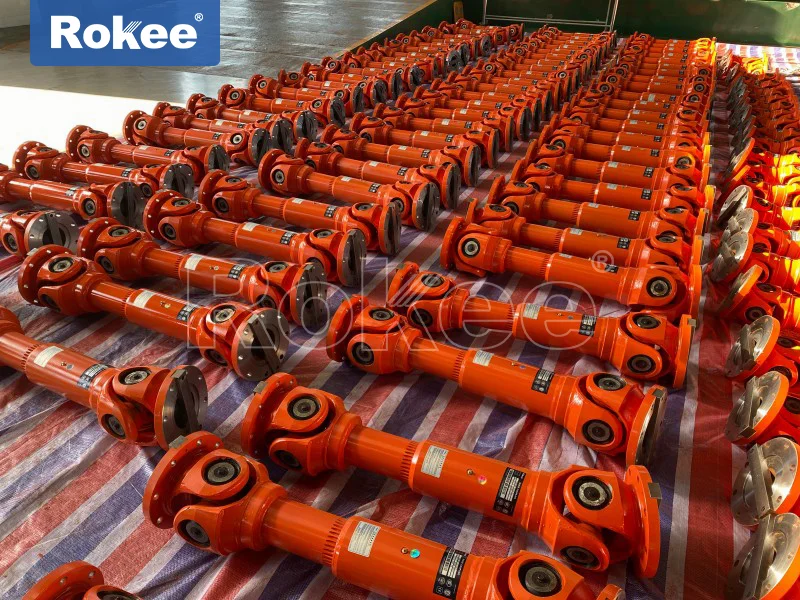
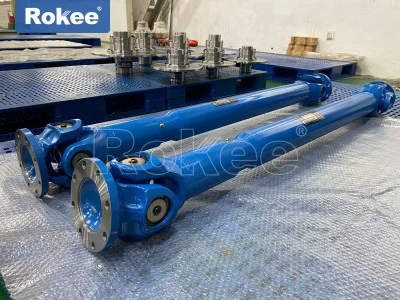
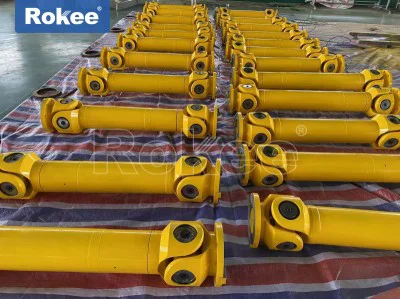
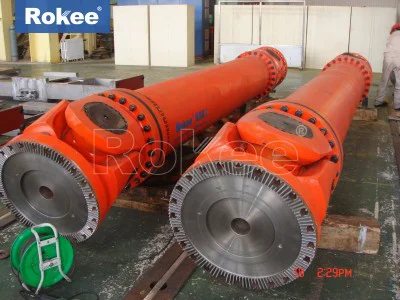
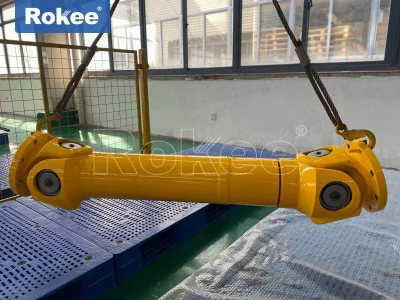
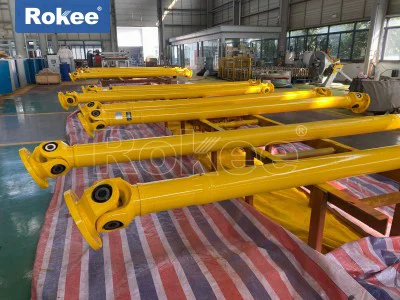
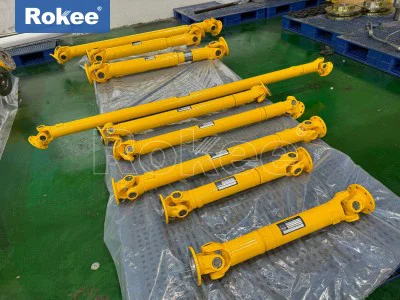
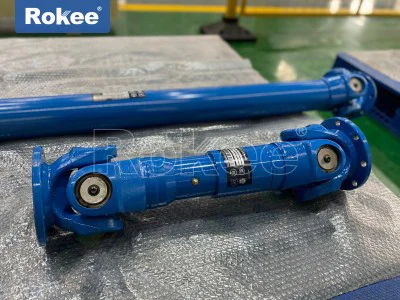
Universal joint coupling is a key component widely used in mechanical transmission systems, mainly used to connect different axes or transmission shafts with certain angles to achieve power transmission. The following are the main functions of universal joint couplings:
The universal joint coupling can transmit power from the driving shaft to the driven shaft, even if the two shafts are not on the same axis or have a certain angle (usually between 5 ° -45 °). This characteristic makes it particularly important in situations where flexible adjustment of transmission direction is required.
The universal joint coupling has a large angular compensation capability and can adapt to axial, radial, and angular deviations between two shafts. This compensation capability can effectively reduce vibration and impact caused by installation errors or deformation during equipment operation, thereby protecting other components of the transmission system.
In high-speed and heavy-duty power transmission, universal joint couplings can absorb and disperse impact loads through their structural design, reduce vibration and noise, and improve the dynamic performance of the shaft system. This is crucial for extending equipment lifespan and improving operational stability.
Universal joint couplings are widely used in various fields such as automobiles, metallurgy, heavy machinery, petrochemicals, and engineering machinery to adapt to complex working conditions. For example, in the automotive transmission system, it allows for relative motion between the drive axle and gearbox, adapting to bumps and steering during vehicle operation.
Improving transmission efficiency: The universal joint coupling has a compact structure, high transmission efficiency, and can maintain stable power transmission in complex working environments. Some designs, such as dual universal couplings, can also achieve equal angular velocity transmission through the equal angle layout of the intermediate shaft, further reducing power loss.
Easy to maintain universal joint couplings are typically designed with a modular structure, making them easy to disassemble and maintain. Regular lubrication and inspection can significantly extend its service life and ensure the reliability of the transmission system.
The universal joint coupling achieves efficient and flexible power transmission in mechanical transmission systems through its unique structure and function, while solving axis deviation and vibration problems. Whether it is industrial equipment or automotive transmission, it is a key component to ensure smooth power transmission.