Industrial Universal Shaft Couplings
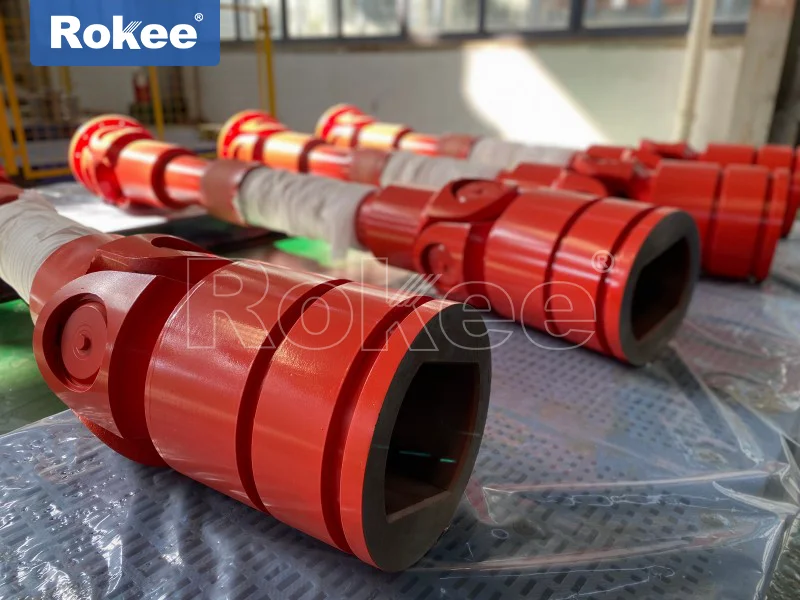
As a core component in mechanical transmission systems, industrial universal shaft couplings play an indispensable role in modern industrial production. From heavy-duty metallurgical equipment to precision machine tools, from automotive drive systems to aerospace devices, universal shaft couplings solve the problem of power transmission under complex working conditions with their unique structural design and excellent performance.
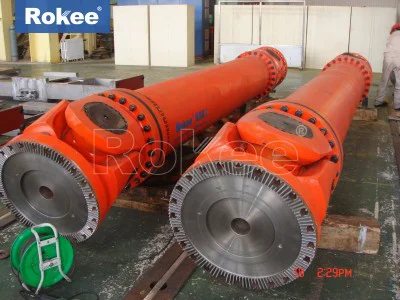
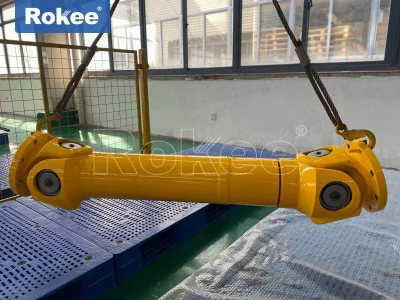
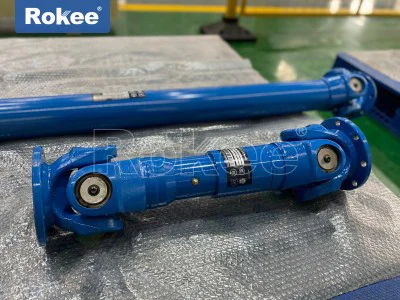
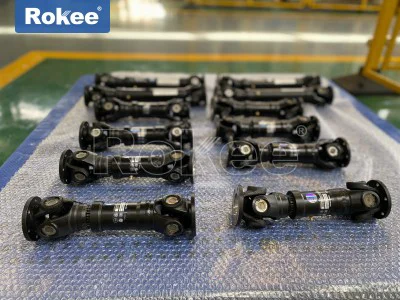
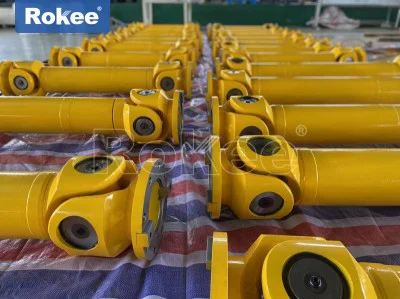
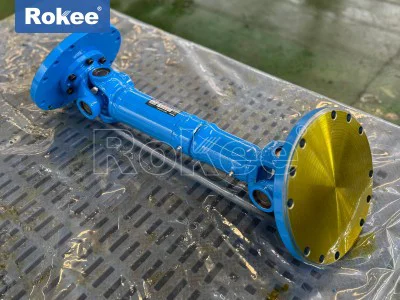
The core functions of industrial universal shaft couplings are reflected in three aspects: angle compensation, torque transmission, and motion connection. Compared with ordinary couplings, the characteristic of universal shaft couplings is the ability to flexibly deflect within a certain angle range (usually up to 45 °) while maintaining the continuity of power transmission. This characteristic makes it an indispensable transmission component in many mechanical devices. Structurally, a typical industrial universal shaft coupling consists of key components such as input flange, output flange, universal shaft coupling cross shaft, bearing sleeve, needle roller bearing, and sealing system. Each component has been meticulously designed and manufactured to ensure the reliable operation of the transmission system.
The working principle of industrial universal shaft couplings is based on their unique hinge structure. When the input shaft rotates, the rotational power and torque are transmitted to the output shaft through the special design of the universal shaft coupling. The cross axis universal shaft coupling is a common type, which transmits power through the angle changes between the two shafts by fitting the four necks of the cross axis with the holes on the universal shaft coupling fork. This structure is simple and reliable, with high transmission efficiency, and is widely used in various industrial fields.
The structural design of industrial universal shaft couplings directly determines their performance and application range. A complete universal shaft coupling system is a sophisticated embodiment of mechanical engineering, where each component serves a specific function to ensure efficient and reliable power transmission.
In the complex network of industrial power transmission systems, the industrial universal shaft coupling stands as a critical and indispensable component, serving as the vital link between rotating shafts that may not be perfectly aligned or are positioned at different angles. Unlike rigid connectors that demand strict coaxial alignment, this mechanical device introduces flexibility into power transmission, enabling machinery to operate efficiently and reliably even in dynamic and challenging working environments. Its ability to compensate for angular, radial, and axial displacements while transmitting torque and motion seamlessly makes it a cornerstone in various industrial sectors, ranging from heavy metallurgy and mining to precision manufacturing and transportation. To fully understand the value and functionality of industrial universal shaft couplings, it is essential to explore their structural composition, core performance characteristics, diverse types, and wide-ranging applications, as each aspect contributes to their adaptability and effectiveness in different operational scenarios.
The structure of an industrial universal shaft coupling is meticulously designed to balance flexibility, strength, and durability, ensuring it can withstand the demands of industrial operations while maintaining efficient power transmission. At its core, the basic structure of most universal shaft couplings consists of several key components that work in harmony to achieve angular compensation and torque transfer. These components typically include universal joints, cross assemblies, yokes (or fork-shaped heads), a central shaft body, and bearing elements, with additional features such as spline connections and sealing devices to enhance performance and longevity. The universal joint, often the central element of the coupling, is responsible for enabling the angular movement between the connected shafts. In its simplest form, a universal joint comprises a cross shaft (or spider) with four trunnions, each fitted with a bearing that allows rotation. The cross shaft is connected to two yokes, which are respectively attached to the driving shaft and the driven shaft. The yokes are designed to accommodate the cross shaft, allowing it to rotate freely within a certain angular range, thus enabling the two shafts to operate at different angles without disrupting power transmission.
Bearing elements are crucial to the smooth operation of the universal shaft coupling, as they reduce friction between the moving components and support the torque transferred through the cross shaft. Needle roller bearings are the most commonly used type due to their compact size, high load-bearing capacity, and ability to withstand both radial and axial loads. In some heavy-duty or harsh environment applications, sliding bearings may be used instead, as they offer better resistance to dust, debris, and high temperatures. The central shaft body, which connects the two universal joints in longer couplings, provides structural integrity and ensures that torque is transmitted evenly along the length of the coupling. Spline connections are often integrated into the design to compensate for axial displacement, allowing the coupling to adjust to changes in shaft length caused by thermal expansion or vibration. Sealing devices, such as dust covers or lip seals, are also incorporated to protect the internal components from contamination, moisture, and wear, extending the service life of the coupling.
The performance of an industrial universal shaft coupling is defined by a set of key characteristics that determine its suitability for different applications. These performance metrics include angular compensation capability, torque transmission capacity, transmission efficiency, stability, durability, and adaptability to harsh environments. Angular compensation is perhaps the most distinctive feature of universal shaft couplings, as it allows the connected shafts to operate at an angle to each other while maintaining continuous power transmission. The allowable angle between the two shafts varies depending on the type and design of the coupling, typically ranging from 5° to 45°, with some specialized types capable of accommodating even larger angles. This flexibility is crucial in applications where perfect alignment of shafts is difficult or impossible, such as in construction machinery, automotive drivetrains, and industrial machinery with moving components.
Torque transmission capacity refers to the maximum amount of torque that the coupling can safely transmit without damage or failure. This capacity is determined by factors such as the material of the components, the size of the cross shaft and yokes, and the design of the bearings. Industrial universal shaft couplings are available in a wide range of torque capacities, from small units capable of transmitting a few newton-meters to heavy-duty models that can handle torque levels exceeding 10,000 kN·m, making them suitable for both light and heavy industrial applications. Transmission efficiency is another critical performance metric, as it directly impacts the energy efficiency of the entire power transmission system. High-quality universal shaft couplings typically achieve transmission efficiencies of 98% or higher, with some precision models reaching up to 99.8%, ensuring minimal energy loss during torque transfer. This high efficiency is particularly important in large-scale industrial operations where energy conservation is a key concern.
Stability and vibration damping are also essential performance characteristics, as they affect the overall smoothness of the machinery and the lifespan of other components. Well-designed universal shaft couplings can absorb shock loads and reduce torsional vibration, minimizing wear on the connected shafts, bearings, and other mechanical parts. This is achieved through the use of flexible materials, optimized bearing designs, and balanced components that reduce vibration during operation. Durability is another key factor, especially in harsh industrial environments where couplings are exposed to high temperatures, dust, moisture, and corrosive substances. The use of high-strength materials such as alloy steel, carbon steel, and stainless steel, combined with surface treatments like nitriding or galvanizing, enhances the wear resistance and corrosion resistance of the coupling, ensuring long-term reliable operation with minimal maintenance. Additionally, the adaptability of universal shaft couplings to different operating conditions, such as high speeds, low temperatures, and heavy loads, makes them versatile and suitable for a wide range of industrial applications.
Industrial universal shaft couplings are available in a variety of types, each designed to meet specific application requirements based on factors such as torque capacity, angular compensation needs, speed, and operating environment. The most common types include cross shaft universal couplings, ball cage universal couplings, ball fork universal couplings, ball hinge universal couplings, and three-pin universal couplings, each with unique structural features and performance characteristics. Cross shaft universal couplings, also known as cardan couplings, are the most widely used type in industrial applications due to their simple structure, high load-bearing capacity, and ease of maintenance. Their core structure consists of two yokes, a cross shaft, and four sets of needle roller bearings, and they can be further subdivided into integral fork head, split bearing seat, and integral bearing seat designs based on the configuration of the yokes and bearing seats. Cross shaft universal couplings are particularly suitable for heavy-duty, low-speed applications such as metallurgical rolling mills, mine crusher, and ship propulsion systems. However, they exhibit speed fluctuations when used as a single unit, so they are often used in pairs and arranged correctly to achieve constant speed transmission, with an allowable angular deviation typically not exceeding 15° to 20°.
Ball cage universal couplings, also known as constant velocity (CV) couplings, are designed to achieve true constant speed transmission, fundamentally solving the problem of speed fluctuations associated with cross shaft couplings. Their structure consists of a spherical outer ring, a star-shaped inner ring, a cage, and force-transmitting steel balls. The key design feature is that the centers of all steel balls are always located on the bisector of the angle between the two shafts, ensuring that the driving and driven shafts rotate at the same speed regardless of the angular deviation. This makes ball cage universal couplings ideal for high-speed, precision applications such as industrial robots, precision machine tools, and automotive drive shafts, where smooth and accurate power transmission is essential. They also offer higher angular compensation capabilities than cross shaft couplings, with allowable angles ranging from 20° to 45°, and operate with low vibration and noise.
Ball fork universal couplings are a variation of the ball cage type, featuring a simpler structure with two fork-shaped components and steel balls that roll in curved grooves. They offer good angular compensation and are suitable for medium-speed, medium-load applications where space is limited, such as in agricultural machinery and light industrial equipment. Ball hinge universal couplings use a ball-and-socket joint instead of a cross shaft, providing higher radial load-bearing capacity and better adaptability to harsh environments. They are available in single-ball and double-ball hinge designs, with single-ball hinge models suitable for angles up to 10° and double-ball hinge models offering greater angular flexibility but slightly lower torque capacity. These couplings are commonly used in petroleum machinery, ship propulsion systems, and other applications where radial loads are significant and installation space is limited.
Three-pin universal couplings, also known as tripod couplings, feature a three-pin structure that connects the two yokes, offering a compact design and larger angular compensation capabilities than cross shaft couplings. They are suitable for medium-speed, heavy-duty applications where space is constrained, such as in construction machinery and mining equipment. Additionally, there are specialized types of universal shaft couplings designed for specific environments, such as sliding bearing cross shaft couplings, which use sliding bearings instead of needle roller bearings to withstand dust, debris, and low-speed, heavy-load conditions, making them ideal for mine and coal processing equipment.
The wide range of types and performance characteristics of industrial universal shaft couplings makes them suitable for a diverse array of applications across various industrial sectors. In the metallurgical industry, they are used extensively in rolling mills, where they connect the motor to the rolling stands, compensating for the angular and axial displacements caused by thermal expansion and mechanical vibration. Heavy-duty cross shaft universal couplings are particularly well-suited for this application, as they can transmit large torques and withstand the harsh operating conditions of high temperatures and heavy loads. In the mining industry, universal shaft couplings are used in crushers, conveyors, and mine hoists, where they connect the drive motors to the working components, accommodating the misalignment caused by the dynamic movement of the machinery and the uneven terrain of mining sites.
The automotive and transportation industry is another major user of industrial universal shaft couplings, where they are used in drivetrains to connect the engine, transmission, and drive axles. Ball cage universal couplings are commonly used in passenger cars and light commercial vehicles, as they provide constant speed transmission and can accommodate the angular changes caused by suspension movement and steering. In heavy-duty trucks and buses, cross shaft universal couplings are used to transmit large torques between the transmission and the drive axles, ensuring reliable power delivery even under heavy loads. Additionally, universal shaft couplings are used in railway locomotives and rolling stock, where they connect the traction motors to the wheelsets, compensating for the misalignment between the motor and the axle.
In the construction machinery sector, universal shaft couplings are essential components in excavators, loaders, bulldozers, and cranes. They connect the hydraulic motors and engines to the working components such as the boom, bucket, and winch, allowing for flexible movement and power transmission in tight spaces. The angular compensation capability of these couplings is particularly important in construction machinery, as the working components often move at varying angles relative to the engine and hydraulic system. In the energy sector, universal shaft couplings are used in wind turbines, where they connect the rotor to the generator, compensating for the misalignment caused by wind-induced vibration and the rotation of the rotor. They are also used in thermal power plants and hydroelectric facilities, where they connect the turbines to the generators, ensuring efficient and reliable power transmission.
Precision manufacturing and automation industries also rely on universal shaft couplings, particularly ball cage and ball hinge types, for applications such as industrial robots, CNC machine tools, and automated production lines. These applications require high precision, low vibration, and constant speed transmission, which ball cage universal couplings provide, ensuring accurate movement and positioning of the machinery. In the aerospace and defense industries, specialized universal shaft couplings are used in aircraft engines, helicopters, and military vehicles, where they must withstand extreme temperatures, high speeds, and harsh operating conditions while maintaining reliable performance. These couplings are often made from high-strength, lightweight materials to meet the strict weight and performance requirements of aerospace applications.
Other applications of industrial universal shaft couplings include agricultural machinery, where they are used in tractors, harvesters, and other farm equipment to connect the engine to the wheels and working components; marine equipment, where they are used in ship propulsion systems and auxiliary machinery; and material handling equipment, such as conveyors and elevators, where they ensure smooth and reliable power transmission. The versatility of universal shaft couplings is further enhanced by their ability to be customized to meet specific application requirements, such as custom lengths, torque capacities, and material specifications, making them suitable for even the most unique and challenging industrial applications.
In conclusion, the industrial universal shaft coupling is a vital component in modern industrial power transmission systems, offering flexibility, reliability, and efficiency in connecting non-coaxial shafts. Its carefully designed structure, which includes universal joints, cross assemblies, yokes, and bearings, enables it to compensate for angular, radial, and axial displacements while transmitting torque and motion seamlessly. The core performance characteristics, such as angular compensation capability, torque capacity, transmission efficiency, and durability, make it suitable for a wide range of applications across various industrial sectors. The diverse types of universal shaft couplings, each with unique structural and performance features, ensure that there is a suitable coupling for every application, from heavy-duty metallurgical and mining equipment to high-precision automated machinery and aerospace systems. As industrial technology continues to advance, the design and performance of universal shaft couplings will continue to evolve, further enhancing their adaptability and effectiveness in meeting the ever-changing demands of modern industry. Whether in heavy industry, precision manufacturing, transportation, or energy production, the industrial universal shaft coupling remains an indispensable component that enables the smooth and reliable operation of countless machines and systems around the world.