Sliding Universal Shaft
In the complex operating logic of modern mechanical transmission systems, the rational connection and stable power transmission between mechanical components determine the overall operating efficiency and service life of equipment. A sliding universal shaft stands out among numerous transmission components by virtue of its unique structural design and flexible motion coordination capability, becoming an indispensable core part in medium and heavy-duty mechanical transmission scenarios. Unlike fixed transmission shafts with single motion attributes, this type of shaft integrates axial sliding compensation and universal angle deflection functions, which can effectively adapt to the spatial position changes and motion deviations of connected parts during mechanical operation. It realizes continuous and stable torque transmission under complex working conditions such as axis misalignment, linear displacement and angular deflection, providing reliable basic guarantee for the normal operation of various industrial machinery and mobile mechanical equipment. With the continuous upgrading of industrial manufacturing technology and the gradual improvement of mechanical operation precision requirements, the structural optimization, material upgrading and performance iteration of sliding universal shafts have also attracted extensive attention from the mechanical engineering industry, and their application scope is constantly expanding to multiple industrial fields.
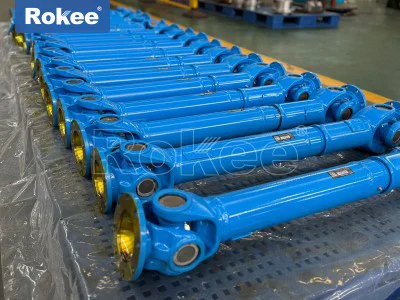
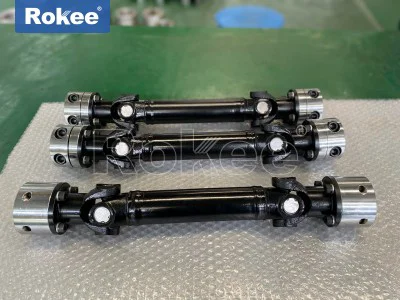
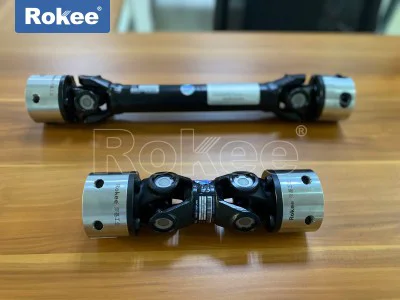
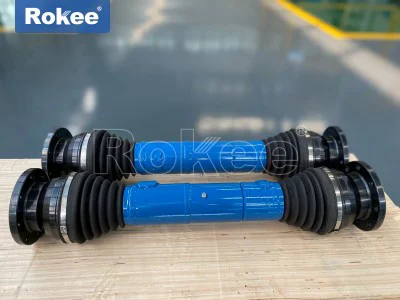
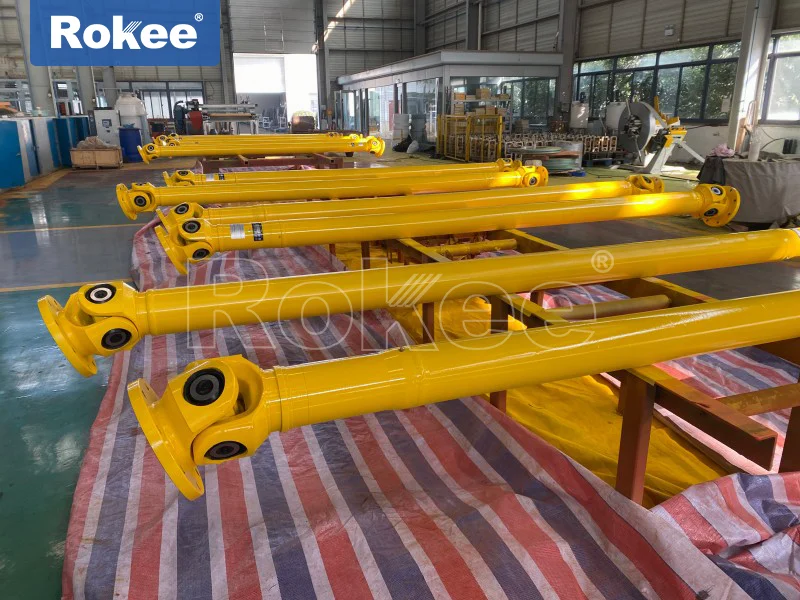
The basic structural composition of a sliding universal shaft follows the mechanical design logic of combining simplicity and practicability, and each component has clear division of labor and closely cooperative connection to jointly complete the power transmission task. The main body of the shaft is composed of a universal joint assembly, a sliding transmission rod, an internal and external spline matching structure, sealing components and auxiliary connecting parts. The universal joint assembly is the core functional unit to realize angular deflection, and most structures adopt a cross shaft type connection mode. The cross shaft is matched with the fork-shaped connectors at both ends, and the precise gap between the shaft neck of the cross shaft and the fork hole enables the two connected shafts to produce a certain angle deflection in three-dimensional space. The sliding function of the shaft mainly depends on the nested matching design of internal and external splines. The inner spline shaft can perform linear reciprocating sliding along the inner cavity of the outer spline sleeve, and the tooth-shaped structure of splines ensures that torque will not be lost during the axial sliding process, maintaining the consistency of transmission power. In order to adapt to harsh industrial working environments, the surface of key load-bearing components such as cross shafts and spline shafts usually undergoes special surface treatment to improve surface hardness and wear resistance. Meanwhile, the external sealing structure can isolate dust, moisture and corrosive impurities in the external environment, preventing internal lubricating grease from overflowing and reducing the friction loss of internal moving parts.
The working mechanism of a sliding universal shaft is based on the comprehensive application of mechanical kinematics and material mechanics, realizing dual compensation of angular deviation and axial displacement in power transmission. In the actual operation of mechanical equipment, due to installation errors, mechanical vibration, metal thermal expansion and contraction, and elastic deformation of brackets, the spatial relative position of the two connected transmission shafts will always change dynamically, and it is difficult to maintain a completely collinear stable state. When the axis angle of the two shafts deviates, the cross shaft in the universal joint assembly can rotate freely in the fork hole, converting the unbalanced angular motion into smooth rotary torque transmission. When the distance between the two shafts changes linearly due to mechanical stretching or shaking, the spline matching structure starts to work, and the inner and outer splines slide relatively to automatically adjust the overall length of the transmission shaft. This passive adaptive adjustment mode does not require additional manual control or auxiliary driving components, and can synchronously respond to position changes during equipment operation. In the process of torque transmission, the stress is evenly distributed on the spline teeth and the cross shaft contact surface through the optimized structural layout, which avoids local stress concentration caused by uneven force, effectively reduces the fatigue loss of materials, and maintains the stability of transmission efficiency under long-term continuous operation.
Compared with traditional fixed transmission shafts and ordinary rigid coupling shafts, sliding universal shafts have prominent comprehensive performance advantages, which are reflected in adaptability, stability and economy. First of all, it has excellent spatial displacement compensation capability. It can not only tolerate a certain range of angular deflection between shafts, but also adapt to axial stretching and shrinking displacement, which solves the transmission failure problem caused by position deviation of mechanical parts. Secondly, the transmission stability is outstanding. The internal rolling matching structure reduces sliding friction resistance, and the smooth torque transmission process effectively weakens vibration and noise generated during equipment operation, optimizing the overall operating environment of mechanical equipment. In terms of structural applicability, the modular assembly design makes the disassembly and replacement of each component more convenient. The independently worn parts can be maintained separately without replacing the whole shaft body, which greatly reduces the daily maintenance difficulty of the equipment. In addition, the optimized mechanical structure enables the sliding universal shaft to bear large instantaneous impact torque, which can resist the vibration and load impact generated by equipment start-up, sudden stop and load switching, and maintain structural integrity in complex and changeable working conditions.
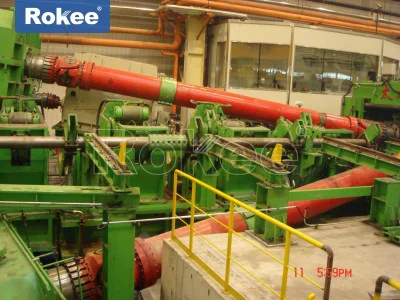
Sliding universal shafts are widely used in multiple industrial fields relying on their superior performance characteristics, covering heavy industry manufacturing, mobile engineering machinery, agricultural production equipment and material transportation systems. In the metallurgical industry, various rolling and casting equipment need to keep running continuously under high-temperature working conditions. The thermal deformation of metal frames will cause axis deviation of transmission components. The sliding universal shaft can adapt to the position changes of equipment parts under high temperature, ensuring the continuous transmission of power in the rolling production line. In the field of mining machinery, the working environment is accompanied by a large amount of dust and irregular impact loads. The good sealing performance and impact resistance of the sliding universal shaft can adapt to the harsh working conditions of mining equipment such as ball mills and stacking machines, reducing the failure rate of transmission structures. Engineering machinery such as excavators and compactors often undergoes complex position changes during operation. The deflection and sliding functions of the shaft can coordinate the power connection between movable mechanical arms and fixed power components, realizing flexible power output. In agricultural machinery, field operating equipment is affected by uneven ground, and the fuselage will shake irregularly. The sliding universal shaft can offset the position deviation caused by jitter, ensuring the stable operation of tillage and harvesting equipment. Besides, it also plays an important role in warehouse transportation and conveyor equipment, providing stable power support for the telescopic and rotating transmission structure of conveying devices.
In the long-term service process, the main wear and failure forms of sliding universal shafts are concentrated on spline friction pairs, cross shaft contact surfaces and internal bearing structures. Under the action of long-term cyclic torque, the contact surface of spline teeth will produce gradual abrasive wear, which leads to the increase of matching gap, resulting in vibration and torque loss during transmission. The cross shaft is affected by alternating shear force and friction force for a long time, and fatigue cracks are prone to appear at the stress concentration parts. In addition, the aging and damage of external sealing components will cause the leakage of internal lubricating oil, and the invasion of external impurities will accelerate the abrasion of moving parts. In order to effectively extend the service life of the shaft body, the industrial field usually adopts a variety of optimization improvement measures. In terms of material selection, high-strength alloy steel with good toughness and wear resistance is selected for key components, and heat treatment processes such as quenching and tempering are used to improve the mechanical properties of materials. In terms of structural optimization, the transition radian of stress concentration parts is optimized to reduce local load pressure, and the tooth profile of splines is polished to reduce friction resistance. Daily maintenance also plays a key role. Regular replacement of lubricating grease and inspection of sealing integrity can effectively delay the aging and wear of components.
With the continuous progress of industrial intelligent manufacturing technology, the development trend of sliding universal shafts is gradually moving towards high precision, lightweight and intelligent adaptation. In terms of production and manufacturing, advanced precision machining equipment is used to reduce the assembly gap between components, improve the motion coordination accuracy of the shaft body, and meet the high-precision transmission requirements of modern automated mechanical equipment. In terms of material innovation, new composite alloy materials and surface coating technologies are constantly applied to the production of sliding universal shafts. These new materials have stronger corrosion resistance and fatigue resistance, and can maintain stable performance in extreme working environments such as high humidity and strong corrosion. Lightweight design has also become an important development direction. Under the premise of ensuring load-bearing capacity, the structural layout is optimized to reduce the self-weight of the shaft body, which helps to reduce the energy consumption of mechanical operation. In addition, with the popularization of intelligent monitoring technology, some improved sliding universal shafts are equipped with auxiliary sensing components to monitor the operating temperature, vibration amplitude and abrasion degree of the shaft body in real time, providing data support for equipment predictive maintenance and avoiding sudden mechanical failure.
As a basic mechanical transmission component integrating sliding and universal transmission functions, the sliding universal shaft undertakes the important task of power connection in various complex mechanical systems. Its simple and efficient structural design, reliable displacement compensation capability and excellent environmental adaptability make it an indispensable part of modern industrial machinery. From heavy metallurgical and mining equipment to mobile engineering and agricultural machinery, it provides stable power transmission guarantee for all kinds of mechanical equipment, and indirectly promotes the efficient operation of industrial production. In the future, driven by material science, precision machining and intelligent monitoring technology, the comprehensive performance of sliding universal shafts will be further improved, and the application boundary will continue to expand. It will keep pace with the development of modern manufacturing industry, continuously optimize structural performance and service mode, and provide more solid basic support for the upgrading and iteration of mechanical transmission systems. In the field of mechanical engineering, continuous in-depth research on the structural optimization, material upgrading and maintenance technology of sliding universal shafts is of great significance to improve the overall operating level of mechanical equipment and reduce industrial production costs.