Cardan Coupling for Hydraulic Motors
In modern industrial transmission systems, hydraulic motors serve as core power execution components that convert hydraulic pressure energy into mechanical rotational energy, providing stable and continuous power output for various mechanical equipment. As a vital connecting transmission part between hydraulic motors and driven machinery, cardan couplings undertake the critical task of torque transmission, displacement compensation and motion coordination, and their operational performance directly determines the overall operating stability and service life of hydraulic transmission systems. Unlike ordinary rigid couplings, cardan couplings possess unique structural flexibility, which enables them to maintain efficient power transmission under complex working conditions with axis deflection, positional deviation and mechanical vibration. In heavy-duty industrial scenarios such as engineering machinery, mining equipment and agricultural machinery, hydraulic motors often face harsh operating environments including uneven stress, frequent load fluctuations and installation position deviations, making cardan couplings an indispensable key component in matched transmission structures.
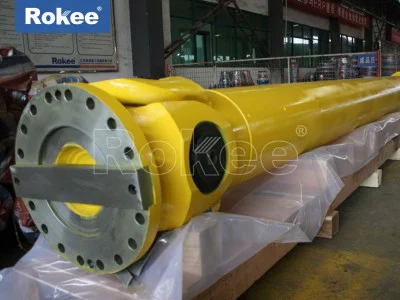
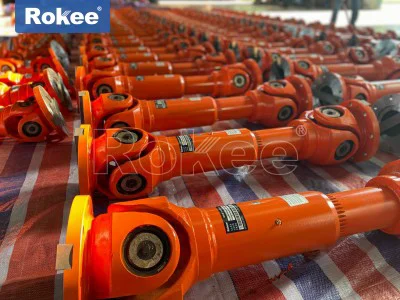
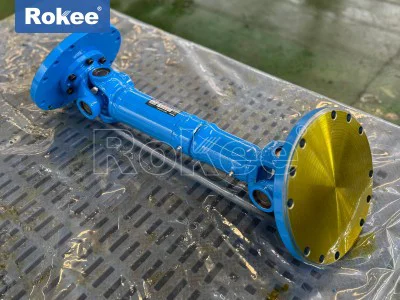
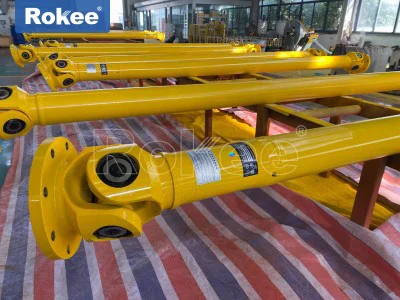
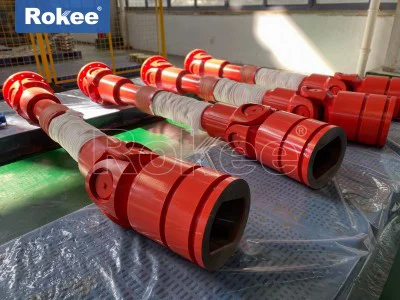
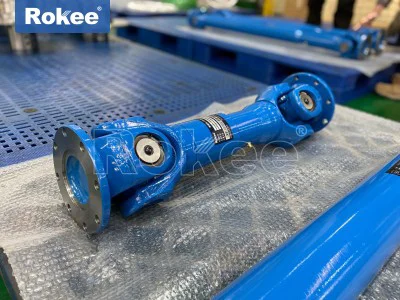
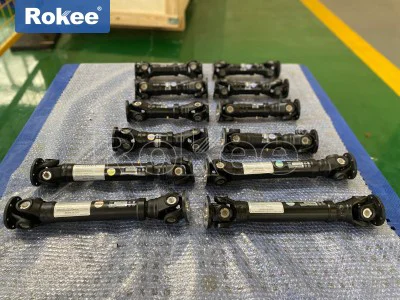
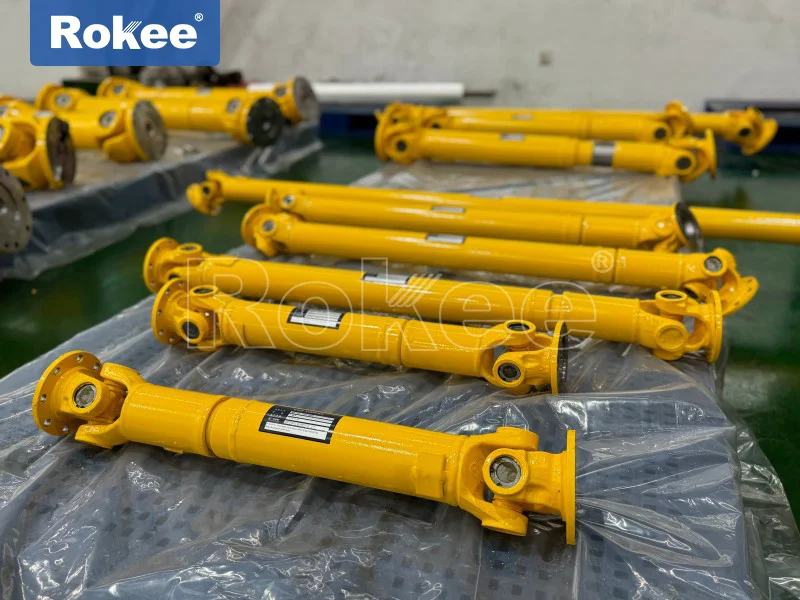
The basic structure of a cardan coupling matched with a hydraulic motor follows a mature mechanical design logic, and the overall composition is concise and rugged to adapt to high-torque and high-vibration operating environments. The core components mainly include two fork-shaped joints, a cross shaft, needle roller bearings, sealing assemblies and connecting fasteners. The two fork-shaped joints are respectively fixed on the output shaft of the hydraulic motor and the input shaft of the driven equipment, forming independent connection structures at the power input and output ends. The cross shaft is the central force-bearing component of the entire coupling, with four uniformly distributed shaft necks that are flexibly connected to the inner rings of the needle roller bearings installed on the fork-shaped joints. The needle roller bearings can effectively reduce the friction resistance during relative rotation between the cross shaft and the fork joints, converting sliding friction into rolling friction and improving transmission efficiency while lowering component wear. The sealing assemblies are arranged on the outer side of the bearings, which can isolate external dust, moisture and corrosive impurities, and prevent internal lubricating grease from leaking, creating a stable lubrication environment for the rotating friction pairs. For heavy-duty hydraulic motor matching scenarios, most cardan couplings adopt an integrated welded structure or an integral forged structure, which enhances the structural rigidity of the coupling and avoids structural deformation under long-term high-torque load conditions.
The working principle of cardan couplings is based on the spatial motion characteristics of the cross shaft structure, realizing continuous and stable torque transmission under the condition of non-coaxial axes. When the hydraulic motor starts to operate, the motor output shaft drives the active fork joint to rotate circumferentially, and the torque is transmitted to the driven fork joint through the cross shaft, thereby driving the connected mechanical equipment to operate synchronously. During the transmission process, if there is an angular deviation between the motor shaft and the driven shaft caused by installation errors, equipment vibration or mechanical deformation, the cross shaft can swing freely at a certain angle around the bearing center, relying on the flexible connection characteristics to adapt to the axis deflection. The allowable deflection angle of conventional single-section cardan couplings ranges from 5 degrees to 45 degrees, and the specific angle tolerance depends on the structural size and processing precision of the coupling. In order to eliminate the periodic speed fluctuation of a single universal joint during angle transmission, most hydraulic motor transmission systems adopt a double-section cardan coupling structure. By arranging two universal joints symmetrically, the angular speed fluctuation generated by the first joint is offset by the second joint, ensuring constant and uniform rotation speed of the output end and avoiding torque impact caused by speed changes. This kinematic characteristic makes cardan couplings uniquely advantageous in hydraulic motor matching, especially suitable for equipment with unstable installation benchmarks and dynamic axis offset during operation.
Combined with the operating characteristics of hydraulic motors, cardan couplings have multiple inherent performance advantages that are irreplaceable compared with other types of couplings. First of all, they have excellent angular compensation capability, which can adapt to coaxiality errors generated during the installation of hydraulic motors and supporting equipment, as well as dynamic axis offset caused by equipment vibration and mechanical fatigue during operation. This compensation function avoids additional shear stress on the motor shaft and transmission shaft, effectively protecting the precision internal components of hydraulic motors and reducing the failure rate of shaft body deformation and oil leakage. Secondly, the cardan coupling has strong load-bearing capacity and can withstand instantaneous impact torque and alternating loads generated during the start-up, shutdown and load switching of hydraulic motors. Its high-strength metal structure can maintain stable mechanical performance under heavy-duty working conditions, and is not prone to plastic deformation or fracture damage. In addition, the overall transmission efficiency of the cardan coupling is relatively high, and the rolling friction structure minimizes energy loss during torque transmission, ensuring that the hydraulic energy converted by the motor is efficiently transmitted to the executing mechanism. Moreover, the structural compactness of the coupling enables it to be installed in narrow mechanical spaces, which meets the layout requirements of compact hydraulic power units in engineering machinery and special industrial equipment.
Hydraulic motors are mostly applied in harsh industrial working conditions, and the operating environment puts forward strict requirements on the environmental adaptability of supporting cardan couplings. In mining machinery and construction equipment, hydraulic motors need to operate in dusty, humid and muddy environments, and the sealing structure of cardan couplings can effectively block external pollutants to prevent bearing abrasion and internal corrosion. In low-temperature or high-temperature working scenes such as cold northern construction sites and high-temperature industrial production workshops, the metal materials and lubricating media of couplings can maintain stable physical properties, avoiding structural embrittlement or lubrication failure caused by extreme temperatures. For mechanical equipment with frequent reciprocating motions and position changes, such as aerial work platforms and material handling vehicles, cardan couplings can adapt to axial displacement and radial deviation generated during equipment operation through the flexible swing of the cross shaft, ensuring continuous power transmission without interruption. In addition, some optimized cardan coupling structures are designed with axial telescopic functions, which can compensate for the axial displacement caused by thermal expansion and cold contraction of the transmission shaft during long-term operation, further improving the environmental adaptability of the transmission system.
Despite the reliable performance of cardan couplings in hydraulic motor matching applications, they still have inevitable wear and failure problems during long-term operation, which are mainly affected by working conditions, assembly precision and daily maintenance. The most common failure form is wear of needle roller bearings and cross shaft journal surfaces. Under long-term high-load friction, the lubricating grease inside the bearing will gradually deteriorate and deplete, resulting in increased friction between the rolling elements and the shaft journal, forming abrasive wear and increasing the rotation resistance of the coupling. Excessive vibration and impact loads will also cause micro-deformation of the cross shaft, leading to unbalanced stress on each transmission part and aggravating local wear. Seal aging and damage are another typical failure problem; after long-term exposure to the external environment, the rubber sealing components are prone to aging, cracking and deformation, which will cause grease leakage and external impurities to invade, further accelerating the wear and corrosion of internal parts. In addition, improper assembly is also an important cause of coupling failure. Excessive deflection angle during installation will increase the operating load of the cross shaft, and uneven fastening torque of connecting bolts will cause eccentric rotation of the coupling, generating periodic vibration and noise, and reducing the service life of the entire transmission assembly.
Scientific daily maintenance and fault optimization measures can effectively extend the service life of cardan couplings and ensure the stable operation of hydraulic motor transmission systems. Lubrication management is the core link of maintenance work. It is necessary to select high-viscosity and anti-oxidation special lubricating grease according to the operating temperature and load conditions, and regularly replenish and replace the lubricating grease to keep the friction pair in a good lubrication state. In the daily inspection process, staff should regularly check the sealing state of the coupling, replace aging and damaged sealing parts in a timely manner, and clean the dust and attachments on the coupling surface to avoid impurity accumulation affecting the rotation flexibility. For the bolts and connecting fasteners used for fixation, regular torque detection and fastening are required to prevent loosening and displacement caused by mechanical vibration. During equipment assembly, professional tools should be used to calibrate the installation position to control the deflection angle within the allowable range of the coupling, avoiding long-term overload operation of the cross shaft and bearings. For couplings with obvious wear, surface scratches or structural deformation, partial component replacement should be carried out in a timely manner to prevent damaged parts from affecting the operating stability of the hydraulic motor and even causing secondary failure of the power system.
With the continuous upgrading of industrial hydraulic transmission technology, the application scope of cardan couplings matched with hydraulic motors is constantly expanding, and the technical optimization direction is becoming clearer. At present, this type of coupling has been widely used in engineering machinery such as excavators, loaders and road rollers, providing stable power connection for walking and rotating hydraulic motors. It also plays an important role in agricultural machinery, metallurgical equipment and port handling machinery, adapting to the diversified power transmission needs of different industries. In terms of technical optimization, modern manufacturing processes such as precision forging and surface quenching are gradually applied to the production of cardan couplings, which improve the surface hardness and fatigue resistance of metal components. The optimized sealing structure adopts multi-layer composite sealing materials to enhance the dust-proof and waterproof performance, adapting to more extreme harsh working conditions. In addition, with the development of intelligent monitoring technology, some coupling structures are embedded with vibration and temperature sensing elements, which can realize real-time monitoring of operating status, provide data support for predictive maintenance, and reduce unexpected shutdown losses caused by coupling failures.
In conclusion, as an important connecting component in hydraulic motor transmission systems, cardan couplings rely on their unique cross shaft hinge structure to achieve efficient and stable torque transmission under complex working conditions such as axis deflection and load fluctuation. Their excellent compensation performance, strong load-bearing capacity and compact structural layout make them highly compatible with hydraulic motors in various industrial scenarios. Although affected by working environment and operating time, couplings are prone to wear, seal aging and other failures, and the service life of equipment can be effectively prolonged through standardized assembly, scientific lubrication and regular maintenance. With the continuous progress of material science and mechanical processing technology, the structural performance of cardan couplings will be further optimized, with higher wear resistance, corrosion resistance and intelligent monitoring capability. In the future industrial hydraulic transmission field, cardan couplings will continue to exert irreplaceable application value, provide reliable basic guarantee for the safe and efficient operation of hydraulic motor equipment, and promote the steady development of modern industrial transmission technology.