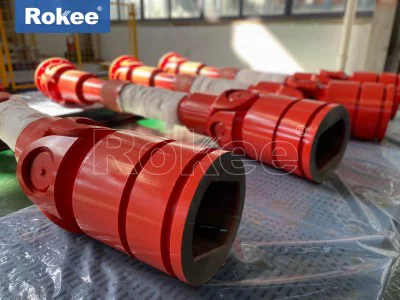
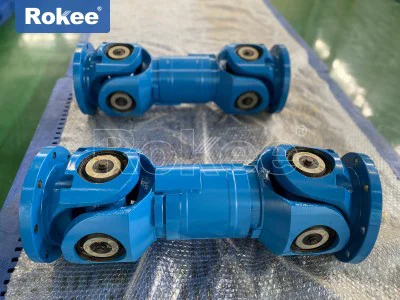
Cardan Shaft for Hydraulic Pumps
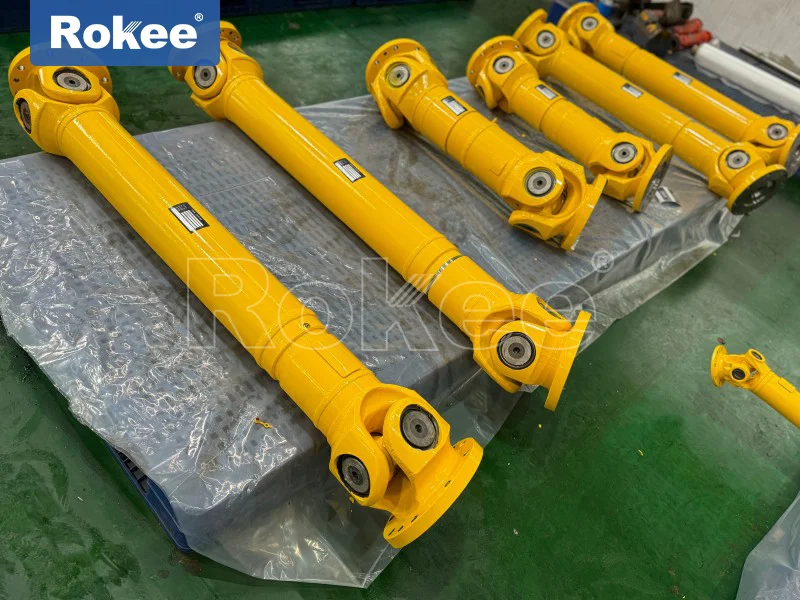
In modern hydraulic transmission systems, the smooth transmission of mechanical power serves as the fundamental guarantee for the stable operation of hydraulic pumps, and cardan shafts have emerged as indispensable mechanical transmission components in such working systems. A cardan shaft, also commonly known as a universal joint shaft, undertakes the critical task of transmitting rotational torque between disjointed shafts within hydraulic pump assemblies, effectively resolving the transmission difficulties caused by axial deviation, angular deflection and spatial displacement between power sources and hydraulic pump bodies. Unlike rigid transmission shafts that can only operate under coaxial conditions, the unique structural design of cardan shafts enables them to maintain continuous and efficient power transmission under complex working postures, which makes them highly adaptable to the diverse and harsh operating environments of hydraulic pumps in industrial and engineering fields. With the continuous upgrading of hydraulic system technology, the performance requirements for cardan shafts in terms of load resistance, motion stability and service life have been progressively improved, driving the continuous optimization of their structural design, material selection and manufacturing processes.
The basic working principle of a cardan shaft matched with hydraulic pumps originates from the mechanical motion characteristics of universal joints. The core transmission structure relies on the mutual cooperation of cross-shaped shaft bodies and joint forks, which can convert the rotational motion of the driving shaft into stable rotational output of the driven shaft even when there is a certain angular deviation between the two shafts. When the hydraulic pump is in operation, the power output by the prime mover is transmitted to the pump rotor through the cardan shaft. During this process, the cross shaft inside the universal joint can freely rotate and swing within a certain angle range, offsetting the mechanical vibration and axis misalignment generated during the operation of the hydraulic system. For hydraulic pumps such as plunger pumps and gear pumps that rely on volume changes to complete liquid suction and discharge, the cardan shaft needs to bear alternating torque and cyclic impact loads. The rolling friction formed by the needle roller bearings installed on the journal of the cross shaft can reduce mechanical friction resistance during power transmission, ensuring that the torque is evenly transmitted to the internal moving parts of the hydraulic pump, and avoiding flow fluctuation and pressure instability of the hydraulic liquid caused by uneven power transmission.
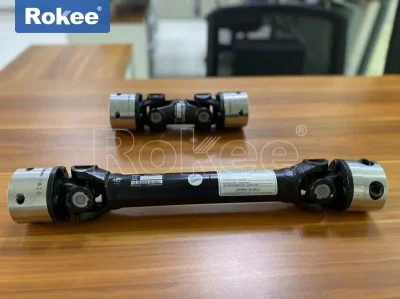
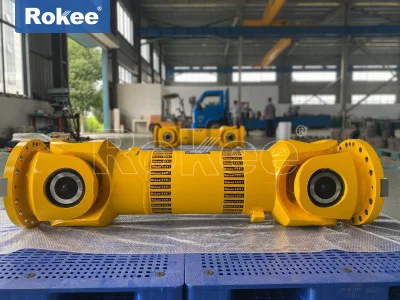
The internal structure of a cardan shaft for hydraulic pumps follows a compact and high-strength design logic, with each component undertaking independent and interconnected mechanical functions. The universal joint forks located at both ends of the shaft body are the key connecting parts, which are used to lock and connect with the power input end and the hydraulic pump spindle respectively. The cross shaft, as the central force-bearing component, penetrates the reserved holes of the two groups of joint forks to form a flexible rotating connection, and its four shaft necks are equipped with precision needle roller bearings to isolate direct contact between metal structures and reduce wear loss during relative motion. The middle shaft body is usually made of integrated high-strength metal materials, and some structures adopt segmented assembly designs to meet the length adjustment requirements of different hydraulic pump installation spaces. In order to adapt to the sealed operating environment of hydraulic pumps, the exterior of the universal joint is equipped with elastic sealing components, which can effectively block hydraulic oil, dust and abrasive particles in the external working environment from entering the bearing gap. This sealing structure not only maintains the lubrication state of the internal moving parts of the cardan shaft, but also prevents the abrasive particles from aggravating the wear of the bearing and the cross shaft, thereby prolonging the stable operation cycle of the transmission assembly.
Material selection determines the basic mechanical performance and environmental adaptability of cardan shafts for hydraulic pumps. Most mainstream cardan shaft products adopt alloy steel as the base material, which undergoes heat treatment processes such as quenching and tempering to improve structural hardness, torsional strength and fatigue resistance. The working environment of hydraulic pumps is usually accompanied by liquid erosion, temperature changes and mechanical vibration, so the surface of the shaft body is often treated with anti-corrosion and wear-resistant coatings to slow down metal oxidation and surface abrasion. The needle roller bearings inside the universal joint are made of high-carbon chromium steel with high hardness and low deformation characteristics, which can keep the rotation precision stable under long-term high-load operation. The elastic sealing parts are made of high-elastic polymer materials, which can maintain good sealing performance under the fluctuation of hydraulic oil temperature and pressure, avoiding oil leakage and lubrication failure. The scientific combination of different materials enables the cardan shaft to adapt to low-speed heavy-load and medium-speed stable transmission working modes, covering the operation requirements of most industrial hydraulic pump equipment.
In the assembly and matching process of hydraulic pumps, the cardan shaft needs to comply with standardized installation specifications to ensure transmission efficiency and operational safety. Before installation, it is necessary to calibrate the axial position of the power source and the hydraulic pump, control the angular deflection and radial displacement within the allowable range of the shaft body, and avoid excessive deflection leading to intensified vibration and torque loss during operation. The connection between the joint fork and the shaft end usually adopts spline transmission or bolt locking structure, which can enhance the connection rigidity and prevent relative sliding between components under high torque conditions. After the assembly is completed, it is essential to inject special lubricating oil into the closed cavity of the universal joint. The lubricating oil can form a uniform oil film on the surface of the bearing and the cross shaft, reducing friction heat generation while weakening metal fatigue caused by alternating loads. In the integrated hydraulic system, the installation position of the cardan shaft should avoid contact with high-pressure oil pipes and vulnerable sealing parts, so as to prevent mechanical friction from damaging peripheral auxiliary components and affecting the overall operation stability of the hydraulic pump.
Cardan shafts exhibit distinct performance advantages in the application of hydraulic pump systems compared with other transmission components. The most prominent feature is the strong axis offset compensation capability. In complex mechanical equipment such as engineering machinery and agricultural machinery, the chassis will produce slight deformation during operation, causing the axis of the power mechanism and the hydraulic pump to deviate. The flexible connection structure of the cardan shaft can automatically compensate for such displacement changes without affecting the continuity of power transmission. Secondly, the cardan shaft has high torque transmission efficiency, and the mechanical loss in the power transmission process is extremely low, which can convert most of the mechanical energy into the kinetic energy required for the hydraulic pump to pressurize the liquid, optimizing the energy utilization rate of the entire hydraulic system. In addition, the overall structural compactness of the cardan shaft is suitable for the limited internal installation space of hydraulic pump units. It can realize multi-directional spatial transmission without occupying excessive layout space, which is conducive to the miniaturization and integrated design of hydraulic equipment.
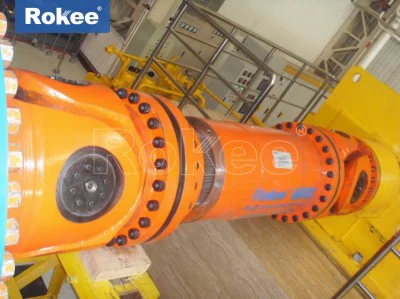
Different types of hydraulic pumps have differentiated application requirements for cardan shafts. For axial plunger pumps widely used in industrial machinery, the cardan shaft needs to bear continuous cyclic pressure, so it is necessary to optimize the structural thickness of the cross shaft and improve the fatigue resistance to adapt to the high-frequency reciprocating motion of internal plungers. Radial plunger pumps have eccentric rotor movement characteristics, requiring the cardan shaft to have a larger angular compensation range to match the radial displacement of the rotor and ensure the synchronization of power transmission and mechanical movement. Gear pumps with simple structure and low operating noise have relatively mild load conditions, and the matching cardan shaft can adopt a lightweight optimized design to reduce the self-weight of the transmission assembly and lower the operating energy consumption. For large-scale hydraulic pumps used in marine and mining equipment, the cardan shaft needs to have excellent impact resistance and corrosion resistance to cope with humid, dusty and high-vibration extreme working environments, avoiding structural damage caused by sudden load fluctuations.
In the long-term operation process, cardan shafts for hydraulic pumps will inevitably produce natural wear and aging, and daily maintenance and fault diagnosis are crucial to extend their service life. The most common abnormal working state is bearing wear. Long-term friction will lead to increased gaps between the needle rollers and the shaft neck, generating obvious vibration and abnormal noise during the rotation of the shaft body. At this time, the worn bearings need to be replaced in a timely manner, and the lubricating oil should be updated to restore the rotation precision. Sealing failure is another frequent fault. Aging and deformation of the sealing ring will cause lubricating oil leakage, resulting in dry friction of internal moving parts. Regular inspection of the sealing structure and replacement of aging accessories can effectively avoid such problems. In addition, excessive torque load will cause permanent deformation of the cross shaft and the shaft body, leading to transmission jamming of the hydraulic pump. It is necessary to reasonably control the operating load of the hydraulic system to ensure that the working torque is within the bearing range of the cardan shaft. Regular cleaning of the dust and oil stains on the surface of the shaft body can prevent corrosive substances from penetrating into the gaps and protect the surface coating of the components.
With the rapid development of intelligent manufacturing and hydraulic transmission technology, the upgrading direction of cardan shafts for hydraulic pumps has become increasingly clear. In terms of structural optimization, the bionic integrated forging process will be adopted to reduce the number of assembly gaps of components, further improve the overall rigidity and motion stability of the shaft body. In terms of material innovation, new composite metal materials with higher strength and lighter weight will replace traditional alloy steel to reduce the self-load of the transmission assembly while improving the extreme environmental adaptability. In terms of intelligent monitoring, some cardan shaft products will be embedded with miniature sensing components to collect real-time data such as vibration frequency, temperature and torque during operation, providing data support for predictive maintenance of hydraulic pump systems. In the future, with the continuous expansion of the application scope of hydraulic equipment in new energy, marine engineering and intelligent construction fields, the performance requirements for cardan shafts will be further upgraded, and low noise, high durability and intelligent monitoring will become the core development trends of such transmission components.
As a vital connecting component in hydraulic pump systems, the cardan shaft undertakes the important function of stable power transmission. Its unique flexible transmission structure, scientific material configuration and compact assembly design make it adapt to complex and changeable working conditions, providing reliable mechanical guarantee for the efficient operation of various hydraulic pumps. From basic mechanical transmission to extreme environment adaptation, from manual maintenance to intelligent monitoring, cardan shafts are constantly evolving with the progress of hydraulic technology. In the field of modern industrial transmission, optimizing the structural performance of cardan shafts, standardizing installation and maintenance procedures, and promoting material and process innovation will not only improve the operating efficiency and service life of hydraulic pump equipment, but also lay a solid foundation for the high-quality development of the entire hydraulic transmission industry. The continuous breakthrough of cardan shaft technology will surely inject more stable and reliable power into the iterative upgrading of hydraulic mechanical equipment.