Cardan Shaft for Pneumatic Systems
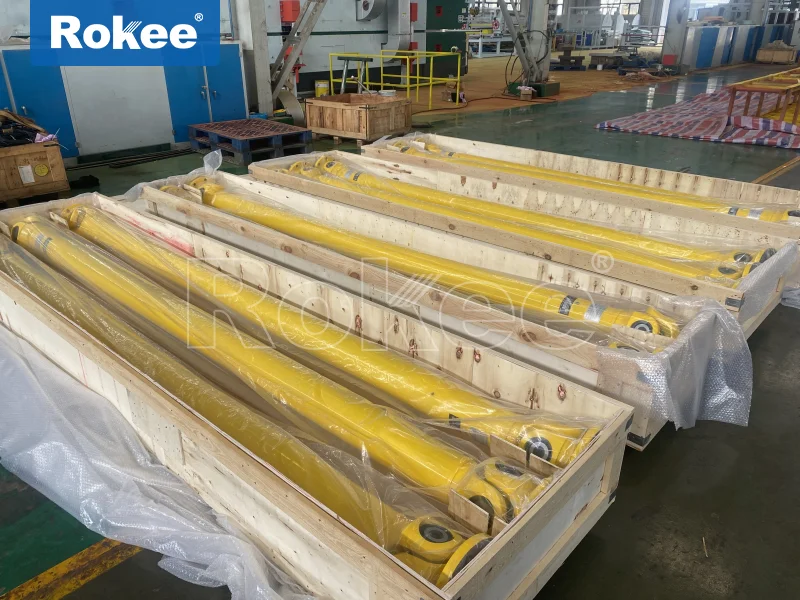
In modern industrial operation, pneumatic systems stand as one of the most indispensable power transmission frameworks, relying on compressed air to drive mechanical movements and complete automated processing, material handling, and sequential mechanical actions. Within these intricate systems, the rational transmission of torque and motion between scattered mechanical components determines the overall operational stability and execution efficiency, and cardan shafts have gradually become a core connecting component tailored to the complex transmission demands of pneumatic equipment. As a universal mechanical coupling built on the principle of Hooke’s hinge, the cardan shaft features a unique cross-axis structure that enables stable power transmission between shafts with angular deviations and positional offsets, perfectly fitting the flexible connection requirements of pneumatic systems under diverse operating conditions. Different from rigid transmission parts that require precise axis alignment, this mechanical component can tolerate minor axial misalignment, angular deflection, and subtle displacement generated during equipment operation, effectively solving the transmission obstacles caused by structural layout limitations and mechanical vibration in pneumatic machinery. Its inherent structural flexibility and mechanical stability make it widely applicable in various pneumatic-driven equipment, ranging from small-scale automated pneumatic actuators to large industrial pneumatic transmission assemblies.
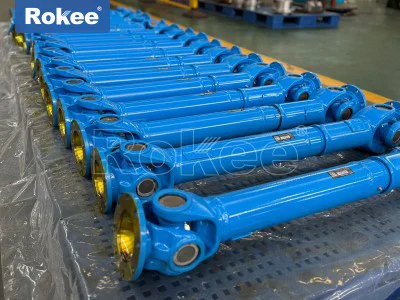
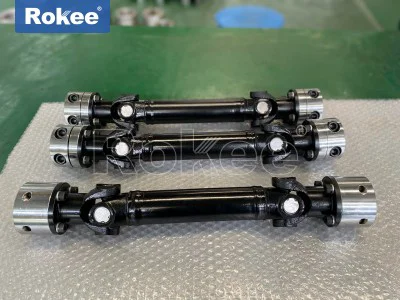
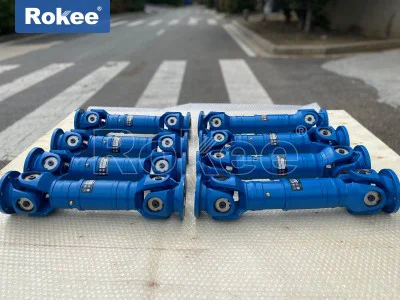
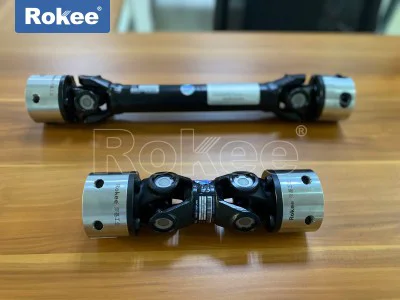
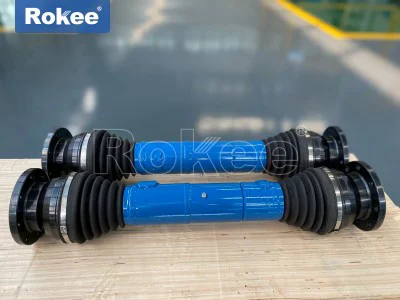
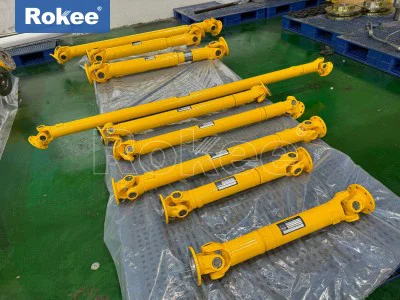
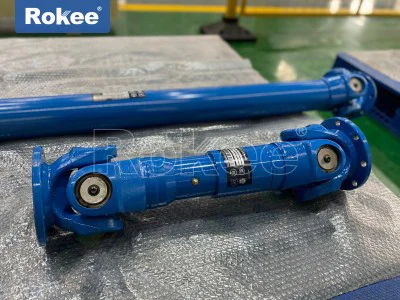
The fundamental structural composition of a cardan shaft remains consistent for pneumatic system applications, consisting mainly of two yoke heads, a central cross shaft, precision rolling bearings, and sealing assemblies. Every structural unit is designed to adapt to the low-pressure, frequent start-stop and vibration-prone operating characteristics of pneumatic equipment. The paired yoke heads serve as the connection terminals, stably locking with the rotating shafts of pneumatic power components and execution components respectively to ensure synchronous rotation during operation. The cross shaft acts as the core force-bearing and connecting structure, penetrating the inner grooves of the two yoke heads to form a flexible hinge structure. This structure allows the connected shafts to maintain continuous torque transmission while generating a certain range of angular deflection, which is the key to the cardan shaft’s adaptive transmission capability. The rolling bearings installed at the contact positions between the cross shaft and yoke heads reduce metal friction during relative rotation, lower motion resistance, and avoid mechanical jamming caused by long-term friction wear. Meanwhile, the built-in sealing components can block fine dust, moisture and industrial debris in the working environment from invading the internal moving structures, reducing the wear of bearings and cross shafts and extending the continuous service cycle of components. The overall structure adopts a compact integrated design, which saves installation space and facilitates embedded assembly in densely arranged pneumatic transmission systems.
Material selection is the core factor that determines the service performance and durability of cardan shafts for pneumatic systems, and the selection criteria fully conform to the operating characteristics of pneumatic machinery. Most mainstream cardan shafts adopt high-strength alloy steel as the base raw material, which undergoes quenching, tempering and surface carburizing treatment to optimize mechanical properties. After thermal processing, the metal structure achieves balanced hardness and toughness, enabling the components to withstand alternating torque generated by frequent start and stop of pneumatic equipment without permanent deformation or structural fracture. In view of the slight vibration and impact load during the operation of pneumatic systems, the optimized alloy material can disperse local stress concentration, effectively resisting metal fatigue caused by long-term cyclic motion. For pneumatic equipment operating in humid and dusty industrial environments, the surface of the cardan shaft is usually polished and anti-corrosion treated to isolate corrosive media, prevent surface oxidation and rust, and ensure stable transmission performance in harsh working conditions. The bearing parts are made of wear-resistant alloy materials with smooth surface precision grinding, which minimizes friction coefficient and maintains low-noise and low-wear operation during high-frequency rotation. Such rigorous material matching and processing technology enable cardan shafts to adapt to the long-term continuous operation mode of industrial pneumatic systems and reduce the frequency of component replacement.
The working principle of cardan shafts in pneumatic systems follows the basic mechanical logic of universal hinge motion, realizing efficient transmission of rotational torque under non-coaxial conditions. When the pneumatic power source outputs compressed air, the air pressure pushes the internal moving parts of the actuator to generate rotational motion, and the torque is transmitted to the connected yoke head. Driven by the external force, the cross shaft rotates synchronously inside the yoke heads, driving the other end of the shaft body to follow the rotation. Even if the two connected shafts produce an included angle due to equipment vibration or structural displacement, the cross shaft can adjust the motion angle in real time to keep the torque transmission uninterrupted. In the pneumatic system with reciprocating motion, the cardan shaft can bear forward and reverse alternating torque, and its flexible hinge structure buffers the instantaneous mechanical impact generated by air pressure switching. This buffering effect effectively avoids rigid collision between pneumatic components, reduces vibration amplitude of the equipment body, and optimizes the overall operation stability of the pneumatic system. Unlike fixed-axis transmission parts, the cardan shaft does not require high-precision axis alignment during installation, which lowers the assembly difficulty of pneumatic equipment and allows reasonable layout optimization of mechanical components according to space constraints.
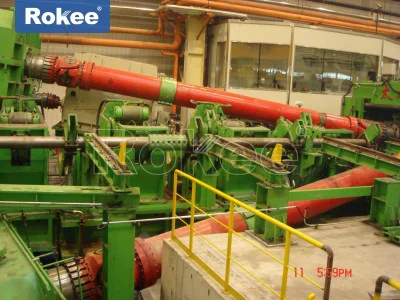
Pneumatic systems involve diversified industrial application scenarios, and the functional advantages of cardan shafts are reflected in different types of pneumatic equipment. In automated pneumatic sorting and conveying machinery, multiple sets of pneumatic actuators work together to complete material transportation and positioning. The cardan shaft connects the power output end and the conveying roller set, adapting to the tiny position deviation of the roller set caused by material extrusion, ensuring synchronous rotation of each roller and avoiding material conveying jitter. In pneumatic stamping and pressing equipment, the instantaneous air pressure impact will cause slight displacement of the transmission structure, and the cardan shaft can absorb such displacement deviation to maintain stable torque output and ensure consistent stamping accuracy of the equipment. For large-scale pneumatic transmission equipment used in industrial production lines, multiple cardan shafts are used in series to build a distributed transmission system, realizing long-distance power transmission between scattered pneumatic execution units. In addition, in mobile pneumatic machinery with complex operating postures, the angular adjustment capability of cardan shafts meets the motion requirements of multi-angle rotation and folding of mechanical arms, providing reliable power connection for flexible pneumatic execution actions.
Compared with other traditional transmission connecting parts, cardan shafts have unique application advantages in pneumatic systems. First of all, their adaptive misalignment performance is outstanding. They can tolerate axial, radial and angular deviations within a certain range, eliminating the transmission failure risks caused by installation errors and equipment operation displacement. Secondly, the transmission efficiency remains stable under medium and low speed operating conditions, which matches the conventional operating speed range of most pneumatic equipment. The internal low-friction structure reduces kinetic energy loss during torque conversion, improving the energy utilization rate of compressed air. In terms of structural applicability, the compact volume and customizable length of cardan shafts enable them to adapt to narrow installation spaces inside pneumatic equipment, and the simple docking structure facilitates rapid assembly and disassembly. In terms of operating stability, the integrated forging structure has high structural rigidity, which is not easy to deform under long-term vibration load, and can maintain consistent transmission accuracy for a long time. Moreover, the matching sealing structure can prevent pneumatic system impurities from entering the transmission gaps, avoiding transmission jamming caused by dust accumulation, and reducing the failure rate of pneumatic mechanical linkage.
Although cardan shafts have mature application advantages in pneumatic systems, their operating performance is still affected by environmental factors and working conditions, so reasonable application optimization measures need to be adopted. In high-dust industrial environments, regular cleaning of the outer surface and sealing gaps of the cardan shaft is required to prevent dust accumulation from increasing component friction. For pneumatic equipment operating in low-temperature environments, low-temperature resistant lubricants should be applied to the internal bearing structures to avoid lubricant viscosity increase leading to poor rotation flexibility. In high-frequency cyclic working scenarios, the operating load of a single cardan shaft should be controlled within the rated torque range to prevent metal fatigue damage caused by long-term overload. In addition, the connection tightness between the yoke head and the shaft body needs to be checked regularly. Loose connection will cause transmission torque loss and generate abnormal mechanical noise, which will interfere with the normal air pressure coordination of the pneumatic system. Through standardized daily maintenance and parameter optimization, the service life of cardan shafts can be maximized, and the long-term stable operation of pneumatic transmission systems can be guaranteed.
With the continuous upgrading of industrial automation technology, pneumatic systems are developing towards refined control, intelligent operation and multi-unit integration, which also puts forward higher optimization requirements for cardan shaft performance. At present, the structural lightweight optimization of cardan shafts is gradually advancing. By adjusting the alloy ratio and optimizing the hollow shaft body design, the self-weight of components is reduced while ensuring structural strength, which is conducive to improving the sensitive response speed of small pneumatic actuators. The surface treatment process is also constantly upgraded, and the composite anti-corrosion and wear-resistant coating can adapt to more extreme working environments such as high humidity and chemical gas volatilization. In terms of structural design, the integrated seamless connection structure reduces assembly gaps, further weakens vibration and noise during transmission, and improves the operation smoothness of high-precision pneumatic equipment. In the future, with the continuous innovation of material science and mechanical processing technology, the load-bearing capacity and adaptive adjustment range of cardan shafts will be further expanded, which can meet the transmission needs of ultra-high frequency and large-torque new pneumatic systems.
As an essential mechanical connecting component in pneumatic systems, the cardan shaft connects scattered pneumatic power units and execution units into an integrated operating system. Its unique hinge transmission structure, excellent material mechanical properties and diverse application adaptability solve many transmission pain points in pneumatic equipment operation, including axis deviation, vibration impact and space layout constraints. From basic structural composition to practical industrial application, every design detail of the cardan shaft is tailored to the operating logic of pneumatic systems, providing stable, efficient and durable torque transmission support for automated pneumatic machinery. In the context of the continuous expansion of industrial pneumatic application scenarios, the application value of cardan shafts will become more prominent. Continuous optimization of structure, materials and processing technology will further enhance the compatibility between cardan shafts and pneumatic systems, laying a solid foundation for the efficient and stable operation of modern industrial automated production lines. Reasonable selection, installation and maintenance of cardan shafts can effectively improve the overall operating efficiency of pneumatic equipment, reduce mechanical failure loss, and create more stable operating conditions for the sustainable development of industrial pneumatic transmission technology.