Customize Cardan Shaft
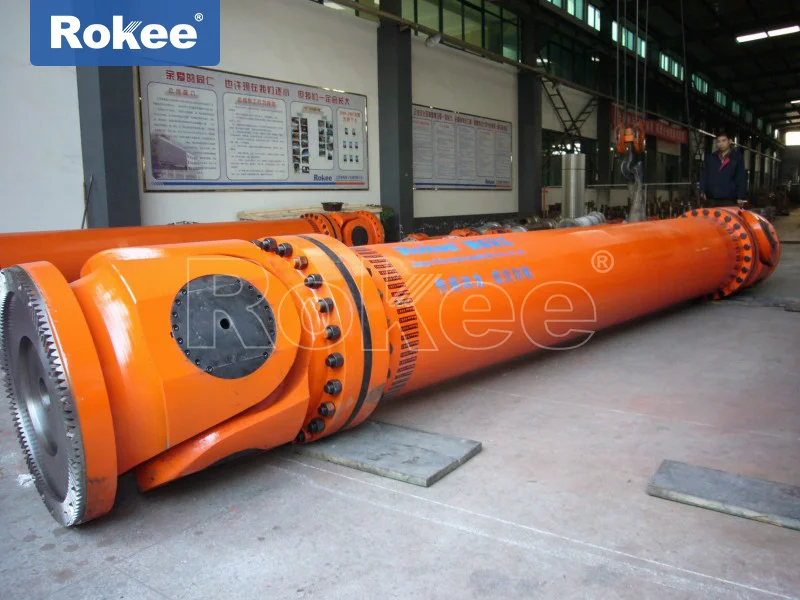
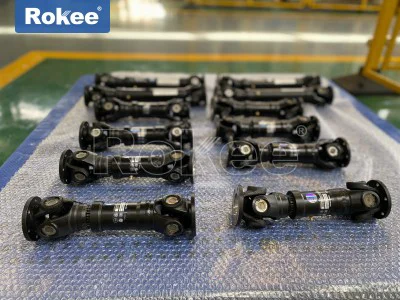
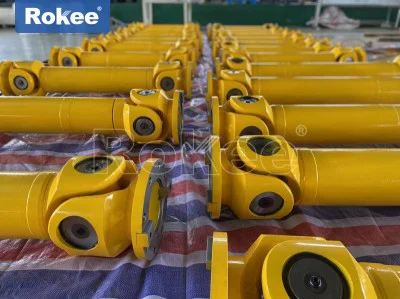
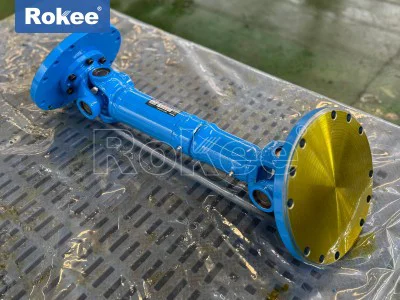
In the intricate ecosystem of modern mechanical transmission systems, cardan shafts stand out as indispensable mechanical components that facilitate power transmission between non-coaxial rotating shafts. A customized cardan shaft further elevates the adaptability and practicality of this fundamental transmission part, tailored meticulously to meet the unique operational parameters, structural constraints, and environmental conditions of diverse mechanical equipment. Unlike standardized universal transmission shafts with fixed dimensions and uniform performance parameters, customized cardan shafts undergo systematic optimization in structural design, material configuration, processing technology, and assembly mode, aiming to resolve complex power transmission challenges that conventional products cannot address. This in-depth exploration elaborates on the core logic, key production links, application values, and development trends of customized cardan shafts, revealing their irreplaceable significance in industrial manufacturing and mechanical operation.
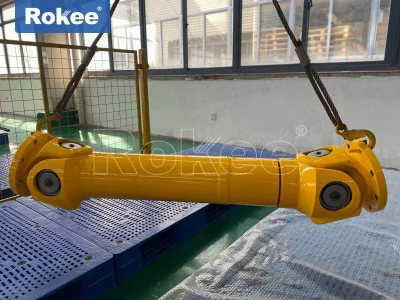
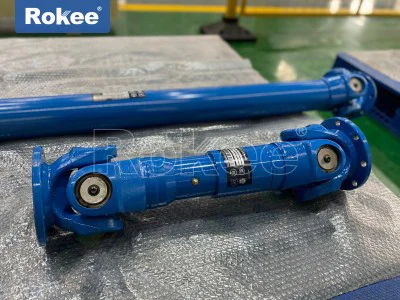
The inherent working principle of a cardan shaft lays a solid foundation for personalized customization. Primarily composed of yoke joints, cross shafts, rolling bearings, spline pairs, and sealing components, a standard cardan shaft relies on the flexible rotation of cross shaft structures to achieve angular compensation between two connected shafts. This structural characteristic enables continuous torque and motion transmission even when the input shaft and output shaft have obvious axis deflection, with a common angular compensation range spanning from five degrees to forty-five degrees based on structural differences. Customization starts with an in-depth analysis of this transmission mechanism. Engineers first evaluate the actual operating angle, rotation speed, torque load, and axial displacement range of the target equipment to adjust the internal structural proportions of the cardan shaft. For mechanical systems requiring frequent angle changes, the movable clearance of cross shaft assemblies is precisely optimized to reduce rotation resistance and motion jitter; for equipment with significant axial displacement during operation, the telescopic stroke of spline pairs is reasonably extended to ensure stable power transmission without structural jamming. Such targeted structural adjustments make customized cardan shafts highly compatible with non-standard mechanical installation spaces and irregular motion trajectories.
Material selection constitutes the core link of cardan shaft customization, directly determining the mechanical strength, wear resistance, and service life of finished products. Industrial-grade customized cardan shafts predominantly adopt high-strength alloy steels as raw materials, abandoning ordinary carbon steels with insufficient bearing capacity. Common alloy materials include chromium-molybdenum alloy steels with excellent mechanical properties, which possess twice the yield strength of conventional carbon steels and maintain stable structural toughness under heavy loads and alternating stress. Different customizable components adopt differentiated material matching schemes: cross shafts bearing concentrated friction and impact loads are made of high-hardness alloy steel to enhance surface wear resistance and anti-fatigue performance; shaft bodies undertaking overall torque transmission use tempered alloy steel to balance rigidity and toughness, avoiding brittle fracture under extreme pressure; external protective shells and connecting flanges select medium-carbon alloy steel to reduce production costs while guaranteeing assembly structural stability. Beyond material selection, customized thermal treatment processes further optimize material performance. Precise quenching and tempering treatments are applied to key components to control surface hardness within a reasonable range, while retaining sufficient toughness in the core material to prevent structural damage caused by sudden load fluctuations. Partial carburizing treatment is conducted on friction contact surfaces to improve surface smoothness and reduce operating friction coefficient, effectively lowering mechanical energy consumption during power transmission.
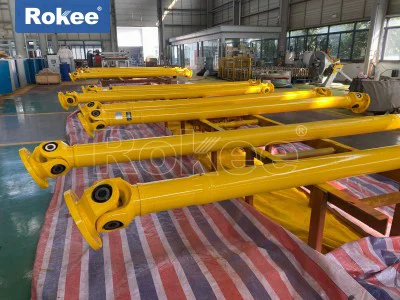
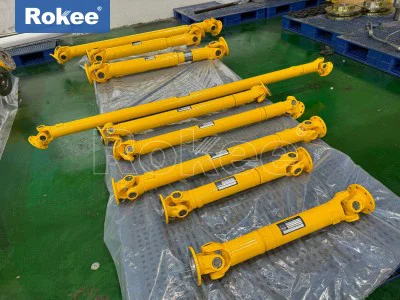
The processing and manufacturing procedures of customized cardan shafts emphasize precision control and personalized modification, distinguishing them from mass-produced standard products. The entire production flow starts with three-dimensional modeling and structural simulation. Engineers establish digital models based on customer-provided equipment parameters and installation space drawings, conducting finite element analysis to simulate stress distribution, vibration frequency, and fatigue loss of the cardan shaft under various working conditions. Potential structural weaknesses are identified and optimized in the design stage to eliminate hidden operational risks. In the machining stage, high-precision CNC machine tools process key components such as shaft bodies and cross shafts, strictly controlling dimensional tolerances to minimize assembly gaps. For special-shaped connecting ends and non-standard flange structures, customized cutting and forging processes are adopted to meet unique installation requirements of different mechanical equipment. Welding procedures for integrated shaft bodies apply automatic welding technology to ensure uniform weld texture and high connection strength, avoiding weld cracking under long-term high-load operation. Dynamic balance calibration is an indispensable post-processing step. All finished cardan shafts undergo high-speed dynamic balance testing, with residual vibration amplitude controlled within a low range to suppress noise and vibration during high-speed rotation, improving the smoothness of the entire transmission system. Additionally, personalized surface treatment technologies are selected according to service environments: anti-corrosion coatings are applied for humid and corrosive working scenarios, while wear-resistant spraying treatment is adopted for dusty and high-friction industrial environments to extend component service life.
Customized cardan shafts are widely applied in multiple industrial sectors, adapting to diversified and complex working conditions that standard transmission parts cannot accommodate. In heavy mining machinery, large crushing equipment and vibrating screens endure severe vibration, impact loads, and uneven ground installation conditions. Customized cardan shafts with enhanced torsional strength and widened angular compensation ranges are configured to maintain stable power output in harsh mining environments and reduce component replacement frequency. In metallurgical industrial equipment, high-temperature operating workshops require transmission components to resist thermal deformation. Customized products adopt high-temperature resistant alloy materials and optimized sealing structures to isolate high-temperature gas and dust, ensuring continuous operation of rolling and smelting equipment. In engineering machinery such as heavy-duty excavators and cranes, the frequent movement of mechanical arms leads to real-time changes in transmission shaft angles and distances. Customized telescopic cardan shafts with flexible stroke adjustment functions efficiently adapt to variable motion postures and improve the operational flexibility of engineering equipment. Moreover, customized cardan shafts play a vital role in agricultural machinery, port handling equipment, and special industrial automation devices, providing reliable power transmission solutions for non-standard mechanical equipment in various professional fields.
The performance optimization design of customized cardan shafts focuses on operational stability, energy efficiency, and maintenance convenience, constantly adapting to the upgrading demands of modern industrial equipment. In terms of vibration and noise reduction, customized products optimize the internal matching clearance of universal joint structures and adopt precision-polished contact surfaces to minimize mechanical backlash during rotation, effectively lowering vibration amplitude and operating noise. For high-speed operating mechanical systems, engineers reduce the overall weight of cardan shafts by optimizing hollow shaft body structures and lightweight alloy materials, cutting rotational inertia and improving power transmission efficiency. Sealing performance is also a key optimization direction for customized design. Multi-layer composite sealing structures are adopted at movable joints to prevent external dust, moisture, and impurities from entering friction pairs, reducing component wear and avoiding lubricant leakage. In terms of daily maintenance, modular assembly design is widely applied to customized cardan shafts. Independent detachable structures are used for vulnerable parts such as bearings and sealing rings, enabling quick disassembly and replacement without integral dismounting of the transmission shaft. This design greatly shortens equipment maintenance downtime and reduces the comprehensive operating cost of mechanical systems.
In the context of continuous industrial technological advancement, the customization technology of cardan shafts is evolving toward intelligence, high precision, and environmental friendliness. Digital simulation technology is deeply integrated into the customization design process. More accurate working condition simulation models can predict component fatigue loss and service life, providing data support for structural optimization and material iteration. Intelligent monitoring modules are gradually embedded into customized cardan shafts to collect real-time data such as operating torque, rotation speed, and vibration frequency, facilitating intelligent early warning of potential failures and realizing predictive maintenance of transmission components. In terms of manufacturing technology, advanced precision forging and 3D printing technologies are applied to the production of special-shaped customized parts, breaking through the processing limitations of traditional machinery and meeting more complex personalized structural demands. Meanwhile, driven by energy-saving and emission-reduction policies, customized cardan shafts pay more attention to energy consumption optimization. Low-friction structural designs and high-efficiency lubrication systems are adopted to reduce mechanical energy loss during transmission, contributing to the energy-saving upgrading of industrial mechanical equipment.
In conclusion, customized cardan shafts, as highly personalized mechanical transmission components, deliver irreplaceable application value through targeted optimization in structural design, material selection, processing technology, and performance adaptation. They not only solve the power transmission difficulties of non-standard mechanical equipment under complex working conditions but also improve the overall operational stability, service life, and energy utilization efficiency of mechanical systems. With the continuous development of industrial manufacturing toward refinement and specialization, the market demand for customized cardan shafts will keep growing, and related customization technologies will achieve further breakthroughs. In the future, customized cardan shafts will evolve in a more intelligent, precise, and efficient direction, providing more reliable and professional transmission support for the upgrading of various industrial machinery and promoting the steady progress of the entire mechanical manufacturing industry.