Types Of Universal Joint Couplings
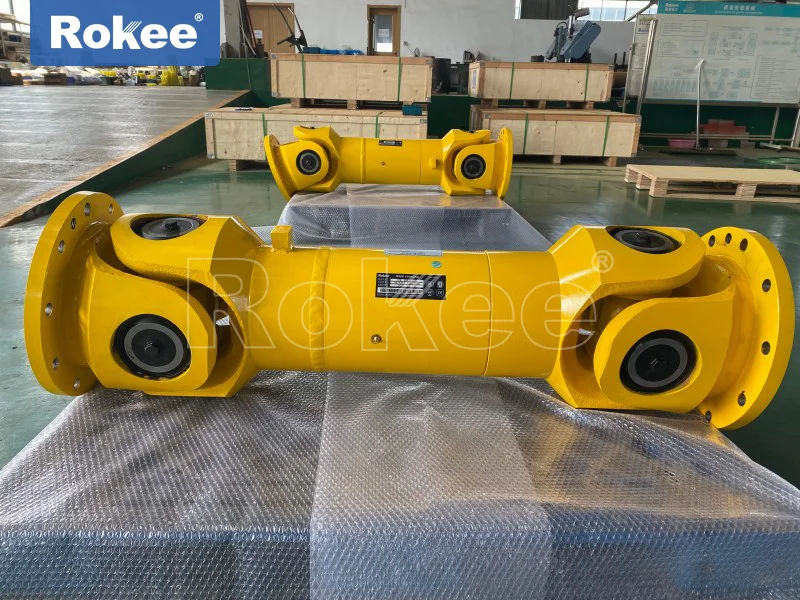
As a core component in mechanical transmission systems, universal joint couplings can achieve variable angle power transmission and compensate for axis deviation, and are widely used in fields such as automobiles, industrial equipment, and agricultural machinery.
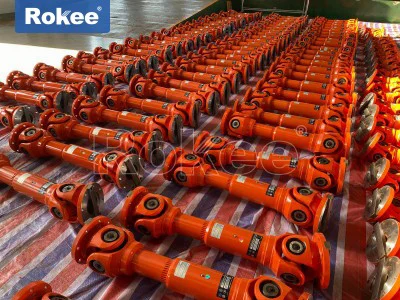
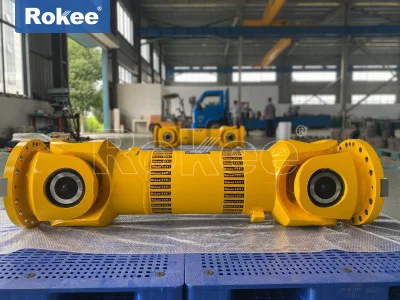
Rigid universal joint coupling
Cross axis universal joint (non constant velocity type)
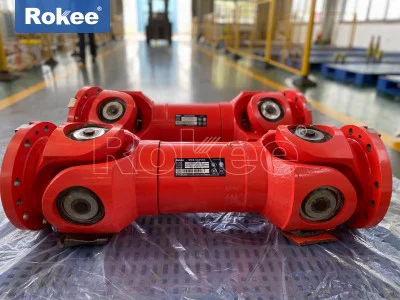
Features: Articulation is achieved through a cross shaft and bearing seat, with a simple structure and low cost, but there are instantaneous angular velocity fluctuations during transmission.
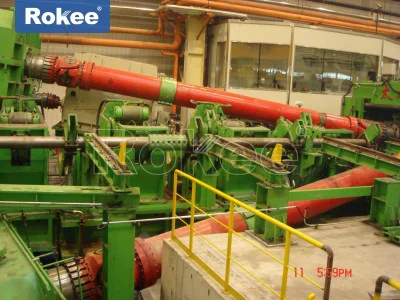
Application: Low speed heavy-duty scenarios, such as agricultural machinery transmission shafts and metallurgical equipment.
Representative models: SWP type (partially split bearing seat), SWC type (integral fork head), SWZ type (integral bearing seat).Double/triple pin universal joint (quasi constant velocity type)
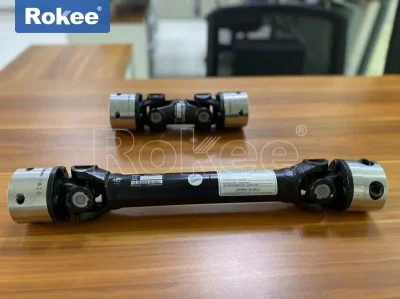
Characteristics: The approximate constant speed transmission within a limited angle is achieved through the combination of double cross shafts, which must meet the conditions of co planar main and slave shafts, and equal angles between the intermediate shaft.
Application: Scenarios requiring medium precision transmission, such as construction vehicles and oil drilling rigs.
Constant velocity universal joint coupling
Ball cage universal joint coupling
Advantages: Good sealing, maintenance free, overload protection.
Applications: Automotive steering systems, precision machine tool spindles.Ball fork universal joint coupling
Features: The structure is simpler than that of a ball cage, but the load-bearing capacity and swing angle are smaller, making it suitable for light vehicles or medium to low speed transmissions.
Flexible universal joint coupling
Features: It uses rubber or metal elastic elements to transmit torque, can absorb vibration and impact, and does not require lubrication.
Applications: Food machinery (made of stainless steel), chemical pumps, high-speed fans.
Special structure universal joint coupling
Scalable universal joint coupling
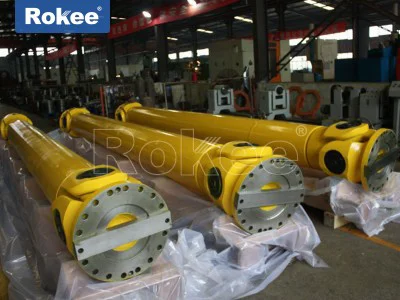
Features: Built in spline or sliding sleeve, allowing axial displacement compensation, suitable for thermal expansion conditions.
Representative models: SWC-BH (standard expansion welding type), SWP-A (expandable long type).Flange quick installation universal joint coupling
Features: Flange bolt connection, easy installation, suitable for modular equipment.Drum gear coupling
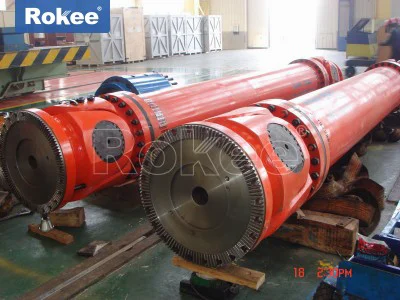
Features: The outer teeth are made into a spherical surface, with a 50% higher angular displacement compensation than the straight tooth type, and a 15-20% increase in load-bearing capacity.
Application: Low speed and heavy-duty fields such as metallurgy and mining.
In the realm of mechanical power transmission, universal joint couplings stand as indispensable components that bridge the gap between misaligned rotating shafts, enabling seamless torque transfer and operational flexibility across countless industrial and mechanical systems. Unlike rigid couplings that demand perfect shaft alignment, these specialized connectors are engineered to accommodate angular, parallel, and axial misalignments that arise from manufacturing tolerances, thermal expansion, mechanical vibration, or dynamic movement during operation. Their versatility has cemented their role in everything from heavy industrial machinery to precision automotive systems, agricultural equipment, marine propulsion units, and aerospace control mechanisms, making a deep understanding of their various types, structural designs, working principles, and practical applications essential for engineers, technicians, and anyone involved in mechanical system design and maintenance. Every category of universal joint coupling is crafted to address specific operational challenges, with distinct structural features that dictate its load-bearing capacity, speed tolerance, misalignment compensation range, and overall durability, ensuring that there is a tailored solution for nearly every power transmission scenario.
The most fundamental and widely utilized variant is the single cross-type universal joint coupling, often referred to as the Cardan joint or Hooke’s joint, a design that has stood the test of time due to its simplicity and robust performance. At its core, this coupling consists of two yoke-shaped end fittings, one attached to the driving shaft and the other to the driven shaft, connected by a rigid cross-shaped spider component. Each arm of the cross is fitted with precision bearings—typically needle roller bearings for reduced friction and enhanced load handling—that allow smooth pivoting motion between the yokes and the spider. This basic structure enables the coupling to compensate for moderate angular misalignment between the two shafts, generally ranging from a few degrees up to approximately 45 degrees in optimal operating conditions, though performance is most efficient at angles between 15 and 25 degrees. One key characteristic of the single cross-type joint is its non-constant velocity transmission; as the shafts rotate at an offset angle, the driven shaft experiences slight fluctuations in rotational speed, even as the driving shaft maintains a steady pace. This speed variation is negligible in low-speed, high-torque applications but becomes a consideration in high-speed systems requiring uniform motion. Despite this trait, its straightforward construction, high load-bearing capacity, ease of installation, and minimal maintenance requirements make it the go-to choice for heavy-duty operations such as industrial conveyor systems, large-scale pumping units, metallurgical processing machinery, agricultural power take-off shafts, and basic automotive drive line components where speed uniformity is not a critical priority. The materials used for these joints are typically high-strength alloy steels, heat-treated to boost wear resistance and tensile strength, ensuring they can withstand heavy radial and thrust loads without premature failure.
Building on the foundation of the single cross-type design, the double universal joint coupling was developed to overcome the non-constant velocity limitation and expand misalignment compensation capabilities. This design integrates two single cross-type joints connected by an intermediate shaft, aligning the joint angles in a way that cancels out the speed fluctuations inherent to single joints, resulting in near-constant velocity transmission between the driving and driven shafts. The intermediate shaft acts as a stabilizing link, allowing the assembly to compensate for both angular misalignment and parallel offset misalignment, a capability that single joints lack entirely. The combined angular misalignment tolerance of double universal joints is significantly higher than that of single variants, with some configurations accommodating up to 75 degrees of total offset, making them ideal for systems where shafts are not only angled but also laterally displaced. The bearing and yoke construction mirrors that of single joints, with durable needle roller bearings supporting the cross spiders to minimize friction and wear during continuous operation. Double universal joint couplings find extensive use in applications demanding consistent rotational speed and greater flexibility, such as medium-to-high speed industrial machinery, precision manufacturing equipment, marine propulsion systems connecting engines to propellers, off-road construction vehicles, and long-distance power transmission lines where shaft alignment is difficult to maintain. Their ability to handle combined misalignments while delivering smooth torque transfer makes them a versatile upgrade from single joints, striking a balance between performance complexity and operational reliability. Additionally, many double joint designs feature modular construction, allowing for easy replacement of worn components and adaptability to different shaft sizes and mounting configurations.
For high-speed, high-precision applications where constant velocity transmission is non-negotiable, constant velocity (CV) universal joint couplings represent the pinnacle of design innovation. Unlike cross-type joints, CV joints eliminate speed fluctuations entirely, ensuring that the driven shaft rotates at the exact same speed as the driving shaft regardless of the operating angle, a critical feature for systems requiring smooth, vibration-free motion. There are several sub-types of CV universal joints, each with a unique structural design tailored to specific operational demands, but the most prevalent are the ball cage CV joint and the tripod CV joint. The ball cage CV joint, also known as the Rzeppa joint, features a spherical outer race, a star-shaped inner race attached to the drive shaft, a set of precision steel balls positioned between the inner and outer races, and a cage that keeps the balls aligned along the angle bisector of the two shafts. This arrangement ensures that torque is transmitted through rolling contact rather than pivoting friction, enabling smooth operation at high speeds and large deflection angles, often exceeding 40 degrees. The tripod CV joint, on the other hand, utilizes a three-armed spider with roller bearings that slide within curved tracks in the outer housing, offering exceptional axial flexibility alongside constant velocity transmission, making it well-suited for applications with both angular and axial shaft movement. CV universal joints are predominantly used in scenarios where precision and smoothness are paramount, such as front-wheel drive automotive axle shafts, high-speed precision machinery, robotic arm articulation systems, aerospace flight control mechanisms, and medical diagnostic equipment. These joints are typically manufactured with tight tolerances and premium materials, including hardened alloy steels and specialized lubricants sealed within the assembly to reduce friction and prevent contamination, though their complex construction means they require more careful handling and maintenance than cross-type joints to preserve performance over time.
Another distinct category is the ball and socket universal joint coupling, a design that prioritizes multidirectional flexibility and compactness over extreme load-bearing capacity. As the name suggests, this joint consists of a spherical ball attached to one shaft and a matching socket integrated into the other shaft, creating a ball-and-socket articulation that allows for universal movement—angular deflection in multiple planes simultaneously, as well as limited axial movement. This design offers unparalleled flexibility, making it ideal for systems with complex, multi-axis misalignment or dynamic motion requirements, such as small-scale control linkages, portable mechanical devices, light-duty automotive steering components, and precision instrumentation. The spherical contact surface distributes stress evenly across the joint, reducing wear in low-load applications, while the compact footprint allows for installation in tight spaces where larger cross-type or CV joints cannot fit. While ball and socket joints are not designed for heavy torque loads or extremely high speeds, their simplicity, compact design, and ability to accommodate irregular misalignments make them invaluable in specialized mechanical systems. Many ball and socket joints incorporate polymer bushings or cushioning elements between the ball and socket to dampen vibration, reduce noise, and extend service life, enhancing their suitability for applications requiring quiet, smooth operation with minimal maintenance.
For applications involving significant axial movement alongside angular misalignment, telescopic universal joint couplings offer a unique combination of flexibility and adjustability. These couplings integrate the core design of cross-type or CV joints with a telescoping shaft assembly, allowing the overall length of the coupling to change dynamically during operation while maintaining consistent torque transmission. The telescopic section typically features splined or grooved shafts that slide within one another, enabling axial compensation of several inches in some configurations, while the universal joint end handles angular misalignment. This dual functionality makes telescopic universal joints perfect for systems where shafts experience thermal expansion and contraction, mechanical shifting, or variable positioning during use, such as construction machinery, agricultural harvesting equipment, marine steering systems, and industrial machinery with adjustable components. The telescopic design eliminates the need for separate axial compensation devices, streamlining the power transmission system and reducing the number of components prone to failure. Like other universal joint variants, telescopic joints are available in both single and double cross-type configurations, as well as CV joint variants for high-speed applications, with bearing and material specifications tailored to the expected load, speed, and environmental conditions. Proper lubrication of the telescopic splines is critical to prevent binding and wear, ensuring smooth axial movement and long-term durability even in harsh operating environments.
Beyond these primary classifications, universal joint couplings can also be categorized based on their mounting styles, bearing types, and material compositions, each variation further refining their performance for specific use cases. Mounting styles include solid hubs, bored hubs for round or hexagonal shafts, splined hubs for enhanced torque transfer, and keyed hubs that prevent slippage between the coupling and shaft, allowing for seamless integration with a wide range of shaft designs. Bearing selection plays a pivotal role in joint performance: plain bearings are suitable for low-speed, high-shock-load applications, while needle roller bearings are preferred for high-speed, low-friction operation, and ball bearings offer a balance of load capacity and speed tolerance for medium-duty systems. Material choices range from standard carbon steels for general-purpose applications to alloy steels with heat treatment for heavy-duty, high-wear environments, stainless steels for corrosion resistance in marine or chemical exposure settings, and even engineered polymers for lightweight, low-load, non-conductive applications. Each material and bearing combination is selected to optimize performance, durability, and cost-effectiveness without compromising the core function of the universal joint: reliable torque transmission across misaligned shafts.
The selection of the appropriate universal joint coupling is a critical decision that hinges on a thorough analysis of several key operational parameters, ensuring optimal performance and longevity. First and foremost is the torque requirement: the joint must be rated to handle the peak torque output of the driving system without deformation or failure, with a safety margin included for shock loads and sudden torque spikes. Operating speed is another vital factor, as high-speed applications demand precision-balanced joints with low-friction bearings to prevent vibration, heat buildup, and premature wear, while low-speed systems can prioritize load capacity over speed tolerance. Misalignment type and magnitude—whether angular, parallel, axial, or a combination—dictate the joint category: single cross-type for moderate angular misalignment, double cross-type for combined misalignment, CV joints for high-speed constant velocity needs, ball and socket for multidirectional flexibility, and telescopic joints for axial movement. Environmental conditions also play a major role: joints used in dusty, wet, or corrosive environments require sealed designs and corrosion-resistant materials, while those in high-temperature settings need heat-stable lubricants and materials that can withstand thermal stress without degradation. Additionally, installation space, maintenance accessibility, and expected service life are all factors that influence the final selection, ensuring that the chosen coupling aligns with the unique demands of the mechanical system.
Proper maintenance practices are essential to maximize the service life of any universal joint coupling, regardless of type, as wear and tear are inevitable with continuous operation. Regular lubrication is the cornerstone of effective maintenance, with the appropriate lubricant applied at recommended intervals to reduce friction between moving components, prevent metal-on-metal contact, and dissipate heat. Sealed universal joints, particularly CV joints and many ball and socket joints, are pre-lubricated and require no periodic lubrication, offering maintenance-free operation for extended periods, though they may need replacement once the internal lubricant breaks down. Unsealed cross-type joints require more frequent lubrication, especially in harsh environments, to prevent contamination from dust, debris, or moisture that can accelerate bearing wear. Routine inspections are also critical, focusing on checking for excessive play, worn bearings, cracked yokes, or loose fasteners; addressing these issues early can prevent catastrophic failure that could damage the entire power transmission system. For joints in high-vibration applications, checking for loose mounting bolts and ensuring proper alignment during installation can reduce stress on the joint and extend its lifespan. Even the most durable universal joint couplings will fail prematurely without consistent maintenance, making proactive care a key part of operational efficiency and system reliability.
In summary, universal joint couplings are a diverse family of mechanical components, each type engineered to solve specific challenges in power transmission and shaft alignment. From the simple, robust single cross-type joint for heavy-duty low-speed applications to the precision-engineered CV joint for high-speed constant velocity operation, and from the flexible ball and socket joint for multidirectional movement to the telescopic joint for axial compensation, these connectors play an irreplaceable role in modern mechanical systems. Their ability to adapt to misalignment, transmit torque reliably, and operate in diverse environments makes them a staple across industries, driving functionality in machinery that powers daily life, industrial production, transportation, and technological innovation. Understanding the unique characteristics, strengths, and limitations of each type of universal joint coupling is not only essential for proper system design and component selection but also for ensuring efficient, safe, and long-lasting operation of mechanical power transmission systems worldwide. As mechanical engineering continues to evolve, the design and performance of universal joint couplings will advance alongside it, with new materials, manufacturing techniques, and structural innovations further enhancing their flexibility, durability, and efficiency to meet the ever-growing demands of modern industry and technology.