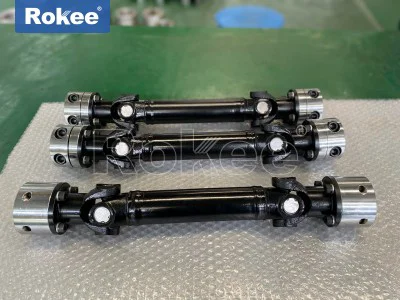
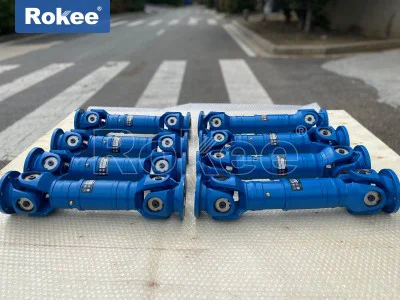
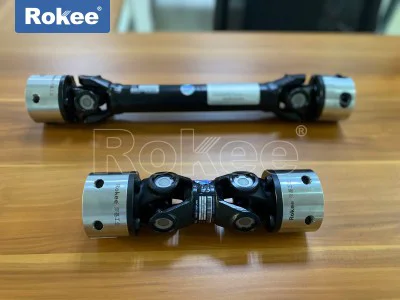
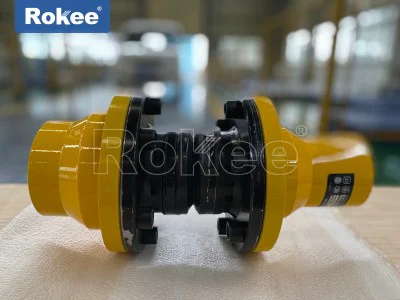
Types Of Universal Shaft Couplings
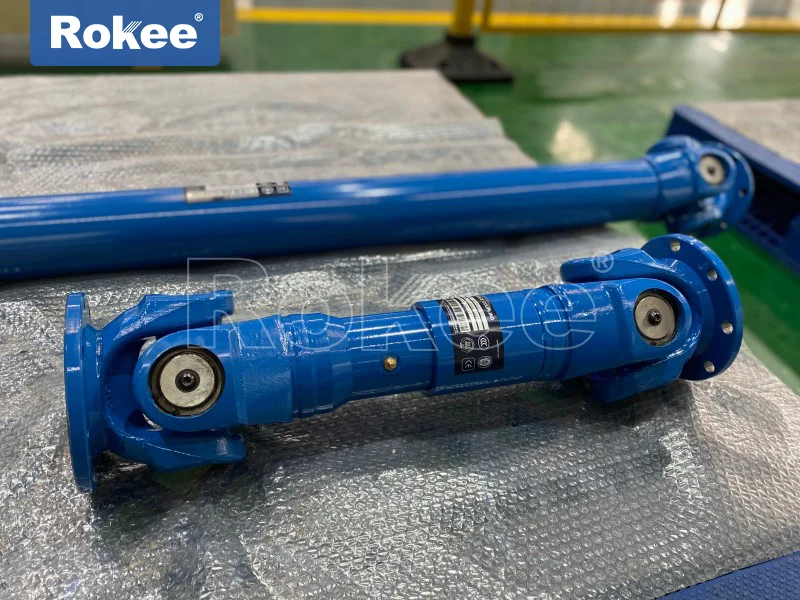
Universal shaft coupling is a mechanical device that can transmit torque and motion in the presence of an angle or non coaxial situation between two shafts, and is widely used in metallurgy, engineering machinery, ships, petrochemicals, and other fields. According to different structures and working principles, universal joint couplings are mainly divided into the following categories:
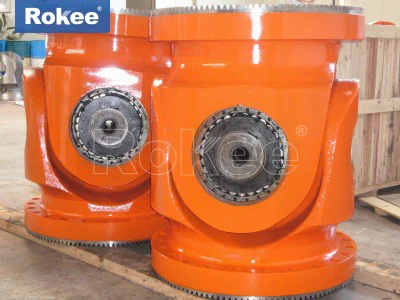
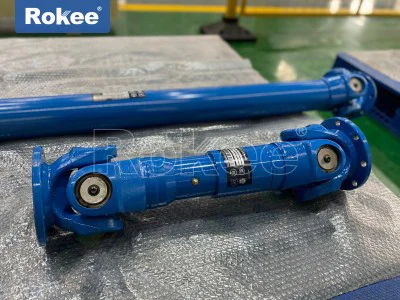
Cross axis universal joint
Features: By using a cross axis structure to connect two shafts, it has a large angular compensation ability, high transmission efficiency, and strong load-bearing capacity..
Classification:
SWC type: Integral fork head design, suitable for heavy equipment such as metallurgical rolling mills.
. SWP type: Split bearing seat structure, easy to maintain, suitable for rolling machinery. WS/WSD type: small and lightweight design, suitable for light industrial scenarios with an angle ≤ 45 °. Applications: lifting machinery, mining equipment, ship power systems, etc.Ball cage universal joint
Features: Synchronous transmission is achieved through a steel ball cage, with stronger angular compensation ability and smooth transmission, suitable for high-speed precision transmission.. Advantages: Low vibration and noise, suitable for industrial robots, precision machine tools and other scenarios that require high synchronization. Technical parameters: Transmission efficiency ≥ 98%, high dynamic balance accuracy.Ball joint universal joint
Features: Adopting a ball joint structure, the overall strength is high, and the radial bearing capacity is improved compared to the cross shaft type..
Classification:
Single ball joint type: suitable for continuous operation with an angle ≤ 10 °.
. Double ball joint type: stronger compatibility, but slightly lower transmission capacity. Application: Space constrained scenarios such as petroleum machinery and ship propulsion systems.Ball joint plunger universal joint
Features: Combining ball joint and plunger structure, it has buffering and vibration reduction performance, large axial and radial compensation, and is suitable for large inclination or radial restricted working conditions..
Transmission mode:
Sliding mode: using polymer buffer sleeve for vibration reduction.
. Rolling mode: rigid transmission, suitable for high-speed scenes. Applications: metallurgical rolling mills, mining hoisting machinery, etc.Three pin and trident universal joint
Features: Multi angle transmission is achieved through a three pin or trident structure, which is compact and suitable for medium and low-speed heavy-duty working conditions.. Advantages: It occupies less space and has a larger swing angle than the cross axis type.Sliding bearing cross axis universal joint (WSH type)
Features: Using sliding bearings instead of rolling bearings, suitable for low-speed heavy load or harsh environments with a lot of dust..
Selection suggestions
Heavy duty low-speed: Priority should be given to the cross axis type (such as SWC type) or ball joint plunger type.
High speed precision: The cage type is better, and the axis deviation needs to be controlled to be ≤ 0.01mm
Large tilt angle compensation: Ball joint or ball joint plunger type is more suitable.
Harsh environment: models with sliding bearing structure (WSH type) or well sealed design.
Each type has its unique advantages and application scenarios, and the actual selection needs to comprehensively consider factors such as torque, speed, installation space, and environmental conditions.
A universal shaft coupling, also commonly referred to as a universal joint or U-joint, is a critical mechanical component designed to transmit torque and rotational motion between two shafts that are not perfectly aligned or are positioned at an angle to each other. This versatility makes it an indispensable part in a wide range of industrial, automotive, and mechanical applications, where it compensates for angular, radial, and axial misalignments that often occur due to installation errors, structural deformation, or dynamic movement during operation. Unlike rigid couplings that require precise alignment of the connected shafts, universal shaft couplings offer flexibility while maintaining efficient power transmission, ensuring the smooth and reliable operation of machinery and equipment. The design and functionality of universal shaft couplings vary significantly based on their intended use, with different types optimized for specific conditions such as load capacity, rotational speed, angular misalignment range, and environmental factors. Understanding the different types of universal shaft couplings, their working principles, and their unique characteristics is essential for selecting the right component for a given application, as each type offers distinct advantages and limitations that make it suitable for particular operating conditions.
One of the most widely used types of universal shaft couplings is the cross-shaft universal coupling, which is also known as the Hooke’s joint or Cardan joint. This type of coupling features a simple yet robust design consisting of two yokes (fork-shaped components) attached to the ends of the shafts that need to be connected, and a cross-shaped intermediate component (the cross shaft) that links the two yokes. The cross shaft is equipped with bearings at each of its four ends, allowing it to rotate freely within the yokes and accommodate angular misalignment between the two shafts. The cross-shaft universal coupling operates on the principle of transferring torque through the cross shaft, which acts as a pivot point between the two yokes. When one shaft rotates, it drives the cross shaft, which in turn rotates the second yoke and the connected shaft. This design enables the coupling to handle moderate angular misalignments, typically up to 45 degrees, depending on the specific configuration and size of the coupling. One of the key characteristics of the cross-shaft universal coupling is its high load-carrying capacity, making it suitable for heavy-duty applications such as metallurgy machinery, mining equipment, construction machinery, and ship propulsion systems. It is also valued for its simplicity, durability, and relatively low maintenance requirements, as the bearings can be easily lubricated and replaced when necessary. However, a notable limitation of the single cross-shaft universal coupling is that it does not provide constant velocity transmission when the shafts are misaligned. This means that the rotational speed of the driven shaft may fluctuate slightly as the coupling rotates, which can cause vibration and noise in high-speed applications. To address this issue, a double cross-shaft universal coupling is often used, which consists of two single cross-shaft couplings connected by an intermediate shaft. This configuration ensures that the fluctuations in rotational speed from the first coupling are canceled out by the second, resulting in constant velocity transmission between the input and output shafts. Double cross-shaft universal couplings are commonly used in automotive drive shafts, where constant velocity is essential for smooth operation, as well as in other high-speed applications where vibration and noise must be minimized.
Another important type of universal shaft coupling is the ball cage universal coupling, which is designed to provide constant velocity transmission even when the connected shafts are misaligned. This type of coupling, also known as a CV joint (constant velocity joint), features a more complex design compared to the cross-shaft coupling, consisting of an outer race (housing), an inner race (hub), a set of steel balls, and a ball cage (retainer) that holds the steel balls in place. The inner and outer races are designed with curved grooves (raceways) that are shaped to ensure that the steel balls always lie in the plane that bisects the angle between the two shafts. This design ensures that the rotational speed of the input and output shafts remains constant, regardless of the angular misalignment between them, eliminating the vibration and noise associated with non-constant velocity couplings. Ball cage universal couplings are capable of handling larger angular misalignments than cross-shaft couplings, often up to 42 degrees or more, depending on the design. They also offer high rotational speeds, making them suitable for applications such as automotive steering systems, industrial robots, precision machine tools, and aerospace equipment, where high precision and smooth operation are critical. The ball cage design also provides excellent radial and axial compensation, allowing for slight movements of the shafts along their axes and lateral displacements. One of the key advantages of ball cage universal couplings is their low friction and wear, as the steel balls roll smoothly within the raceways, reducing energy loss and extending the service life of the coupling. However, they are generally more complex and costly to manufacture than cross-shaft couplings, and they may not be suitable for extremely heavy-duty applications due to their lower load-carrying capacity compared to cross-shaft designs.
The ball hinge universal coupling is a specialized type of universal shaft coupling that uses a ball-and-socket joint instead of a cross shaft to accommodate misalignment. This design consists of a ball-shaped component attached to one shaft and a socket-shaped component attached to the other shaft, with the ball fitting snugly within the socket. The ball and socket are precision-machined to allow for smooth rotation and angular movement, while also transmitting torque efficiently. Ball hinge universal couplings offer several advantages over cross-shaft couplings, including higher radial load capacity, better resistance to shock loads, and a more compact design. They are particularly suitable for applications where space is limited, such as in marine propulsion systems, oil drilling equipment, and heavy-duty industrial machinery. Depending on the number of ball hinges used, this type of coupling can be categorized into single ball hinge and double ball hinge designs. Single ball hinge universal couplings are suitable for applications with small angular misalignments (typically up to 10 degrees) and continuous operation, while double ball hinge designs offer greater angular flexibility and can accommodate larger misalignments, although they may have a slightly lower torque transmission capacity. The ball hinge design also provides good axial and radial compensation, making it ideal for applications where the shafts may experience slight axial movement or lateral displacement during operation. However, ball hinge universal couplings require precise machining to ensure a tight fit between the ball and socket, which can increase manufacturing costs. They also require regular lubrication to prevent wear and ensure smooth operation, especially in high-load or high-speed applications.
Combining the advantages of ball hinge and plunger designs, the ball hinge plunger universal coupling is a versatile type that offers both angular flexibility and shock absorption. This coupling features a ball hinge structure for accommodating angular misalignment, combined with plunger elements that provide axial and radial compensation, as well as damping of shock loads and vibrations. The plunger elements are typically equipped with polymer or rubber buffers that absorb shocks and reduce vibration, making this type of coupling suitable for applications with high impact loads, such as metallurgy rolling mills,矿山 hoisting equipment, and heavy-duty construction machinery. The ball hinge plunger universal coupling can operate in two different transmission modes: sliding mode and rolling mode. In sliding mode, the plunger elements slide within their housings, using the polymer buffers to absorb vibrations and shocks, making it ideal for applications with variable loads or frequent start-stop operations. In rolling mode, the plunger elements roll within their housings, providing a more rigid transmission with lower friction, which is suitable for high-speed applications where precision and stability are important. This dual-mode capability makes the ball hinge plunger universal coupling highly adaptable to a wide range of operating conditions. Additionally, this type of coupling offers large axial and radial compensation, allowing for significant misalignments between the connected shafts, which is particularly useful in large industrial equipment where installation errors or structural deformation are common. However, like ball hinge couplings, the ball hinge plunger design requires regular maintenance to ensure the proper functioning of the plunger elements and buffers, and it may be more complex and costly than basic cross-shaft couplings.
The three-pin and three-fork universal couplings are specialized designs that offer compactness and high angular flexibility, making them suitable for applications where installation space is limited. The three-pin universal coupling consists of two yokes with three pins each, connected by a central component that allows for rotational movement and angular misalignment. The three-fork universal coupling, on the other hand, features a three-pronged (fork) design that engages with a corresponding socket, providing a compact and robust connection. Both types of couplings are designed for medium to low-speed, heavy-duty applications, such as agricultural machinery, construction equipment, and industrial conveyors, where space is at a premium and large angular misalignments may occur. One of the key advantages of three-pin and three-fork universal couplings is their compact size, which allows them to be installed in tight spaces where other types of couplings would not fit. They also offer a larger swing angle than cross-shaft couplings, making them ideal for applications where the shafts need to move through a wide range of angles. Additionally, these couplings are relatively simple to manufacture and maintain, with low wear rates and high durability. However, they may not be suitable for high-speed applications, as they can produce more vibration than ball cage couplings, and their load-carrying capacity is generally lower than that of cross-shaft or ball hinge plunger couplings.
A variation of the cross-shaft universal coupling is the sliding bearing cross-shaft universal coupling, which uses sliding bearings instead of rolling bearings to support the cross shaft. This design is specifically optimized for harsh operating environments, such as those with high levels of dust, dirt, or corrosion, or for low-speed, heavy-duty applications where rolling bearings may be prone to failure. Sliding bearings are made from materials such as bronze, graphite, or self-lubricating polymers, which can withstand harsh conditions and require less frequent lubrication than rolling bearings. The sliding bearing cross-shaft universal coupling offers the same angular flexibility and load-carrying capacity as the standard cross-shaft coupling but with improved durability in harsh environments. It is commonly used in矿山 equipment, coal processing machinery, and other industrial applications where the coupling is exposed to dust, moisture, or corrosive substances. However, sliding bearings have higher friction than rolling bearings, which can result in slightly lower transmission efficiency and may generate more heat during operation. This means that they are not suitable for high-speed applications, where friction and heat can become problematic.
In addition to these main types, there are also specialized universal shaft couplings designed for specific applications. For example, flexible universal couplings incorporate elastic elements such as rubber or polyurethane to provide additional damping and vibration absorption, making them suitable for applications where shock loads or vibrations are a concern, such as in automotive engines or electrical generators. These flexible couplings can also accommodate larger axial and radial misalignments than rigid designs, while reducing the transmission of vibrations from one shaft to another. Another specialized type is the miniature universal coupling, which is designed for small-scale applications such as precision instruments, medical equipment, and small motors. These couplings are compact, lightweight, and offer high precision, with angular misalignment capabilities suitable for the specific needs of small machinery. High-speed universal couplings, on the other hand, are designed to operate at extremely high rotational speeds, often exceeding 10,000 revolutions per minute, and are used in applications such as aerospace equipment, high-speed turbines, and precision machine tools. These couplings are typically made from high-strength materials such as titanium or alloy steel, with precision machining to ensure balance and minimize vibration at high speeds.
The selection of the appropriate universal shaft coupling type depends on a variety of factors, including the torque and load requirements, rotational speed, angular misalignment range, axial and radial displacement, environmental conditions, and installation space. For heavy-duty, low-speed applications with moderate angular misalignments, the cross-shaft universal coupling (either single or double) is often the most suitable choice due to its high load-carrying capacity and durability. For high-speed, precision applications where constant velocity transmission is essential, the ball cage universal coupling is preferred, as it eliminates vibration and ensures smooth operation. In applications with limited space or high radial loads, the ball hinge or three-pin/three-fork universal couplings may be more appropriate. For harsh environments, the sliding bearing cross-shaft coupling offers improved durability, while flexible universal couplings are ideal for applications with shock loads or vibrations. It is also important to consider the maintenance requirements of each type, as some couplings (such as ball cage and ball hinge designs) require more regular lubrication and inspection than others (such as standard cross-shaft couplings).
Regardless of the type, all universal shaft couplings play a critical role in ensuring the efficient and reliable transmission of power between misaligned shafts. They are essential components in a wide range of industries, from automotive and aerospace to manufacturing and mining, and their design continues to evolve to meet the changing needs of modern machinery. Advances in materials science and manufacturing technology have led to the development of more durable, efficient, and versatile universal shaft couplings, with improved load-carrying capacity, higher rotational speeds, and better resistance to harsh environments. For example, the use of high-strength alloys and composite materials has allowed for the development of lighter, more compact couplings that can handle higher torques, while precision machining techniques have improved the accuracy and performance of ball cage and ball hinge designs. Additionally, the integration of advanced lubrication systems has extended the service life of couplings and reduced maintenance requirements, making them more cost-effective for long-term use.
In conclusion, the variety of universal shaft coupling types reflects the diverse needs of mechanical systems, with each type optimized for specific operating conditions and applications. From the simple and robust cross-shaft coupling to the precision ball cage coupling, each design offers unique advantages that make it suitable for particular tasks. Understanding the characteristics, working principles, and applications of each type is essential for selecting the right coupling for a given system, ensuring optimal performance, reliability, and longevity. As industrial technology continues to advance, the development of new and improved universal shaft coupling designs will continue to play a key role in enabling the efficient operation of modern machinery and equipment, supporting the growth and innovation of various industries around the world.