Cardan Coupling for Engine
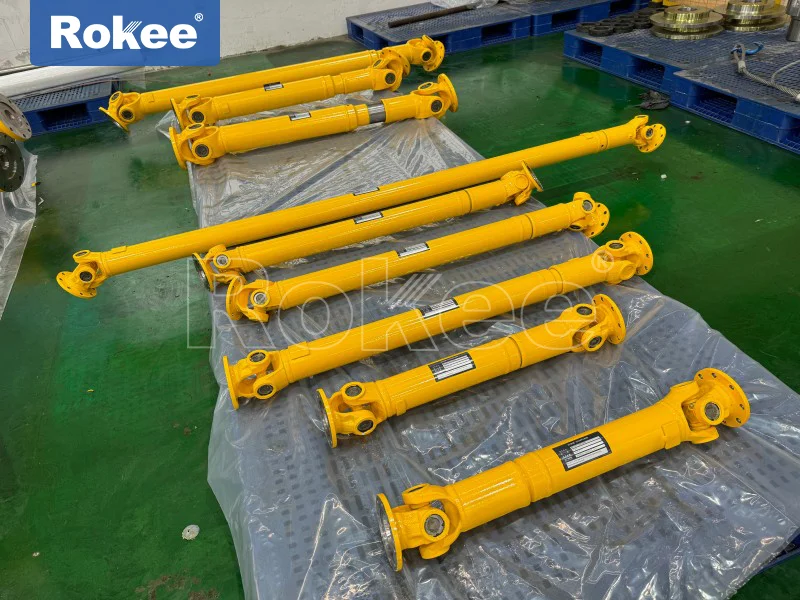
In modern mechanical power systems, the stable transmission of engine power serves as the core foundation for the normal operation of various mechanical equipment. A cardan coupling, also universally recognized as a universal joint coupling, stands out as an indispensable mechanical component in engine assembly systems. It is specially designed to transmit torque and rotational power between two shafts that form an angular deviation, axial displacement or spatial offset. This mechanical structure effectively solves the power transmission difficulties caused by non-coaxial installation of engine power output ends and driven components. It has become a key connecting part widely applied in vehicle power systems, engineering machinery power assemblies and stationary engine transmission structures. With unique structural adaptability and reliable transmission performance, cardan couplings continuously maintain efficient power output for engines under complex operating conditions, ensuring the coordination and stability of the entire mechanical transmission system.
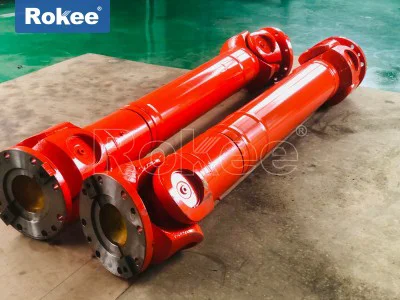
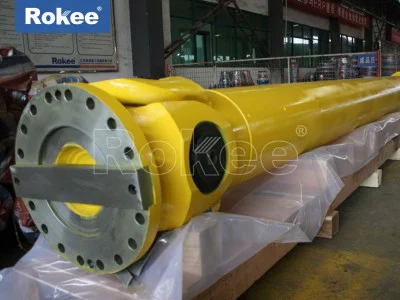
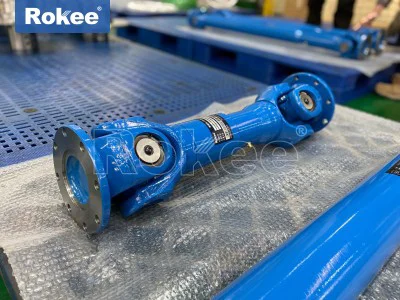
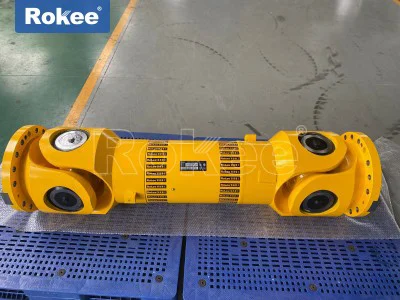
The basic structural composition of a cardan coupling for engine use follows mature mechanical design logic, featuring a compact and rugged assembly structure suitable for long-term high-load operation. The core components mainly include joint yokes, a cross shaft, needle bearings, sealing components and connecting sleeves. Two symmetrically distributed joint yokes are respectively fixed on the engine output shaft and the driven shaft. The cross shaft is installed at the intersection of the two yokes, forming a flexible movable connection structure. Needle bearings are embedded at the matching positions between the cross shaft and the yokes. These rolling bearings can convert sliding friction into rolling friction during shaft rotation, greatly reducing friction resistance and mechanical wear in the power transmission process. Sealing accessories such as oil seals and protective sleeves are arranged on the outer side of the bearings to isolate external dust, moisture and corrosive impurities, while locking internal lubricating grease to ensure long-term lubrication of moving parts. All structural parts are made of high-strength alloy materials with excellent torsion resistance, fatigue resistance and impact resistance, which can adapt to the vibration and torque impact generated during engine operation.
The working principle of engine cardan couplings revolves around flexible angle transmission and torque conversion. When the engine starts to operate, the output shaft drives the active joint yoke to perform continuous rotational motion. Driven by the active yoke, the cross shaft rotates synchronously and transmits rotational torque to the passive joint yoke, thereby realizing power transfer between the two shafts. Thanks to the flexible connection characteristics of the cross shaft, a certain deflection angle can be formed between the active shaft and the passive shaft. Normally, the allowable deflection angle of a single cardan coupling ranges from 15 degrees to 25 degrees, and the specific angle tolerance depends on structural specifications and mechanical design parameters. In actual engine matching scenarios, the installation positions of the engine and the driven mechanism are often limited by spatial layout. The two connecting shafts cannot maintain an absolute collinear state, and slight spatial displacement and angle deviation will inevitably occur. The cardan coupling can automatically adapt to such position changes, ensuring uninterrupted power transmission even when the shaft axis is not completely aligned.
It is worth noting that a single cardan coupling has the characteristic of non-uniform instantaneous angular velocity during operation. When there is an included angle between the two shafts, the rotational speed of the passive shaft will fluctuate periodically within a single rotation cycle. This speed fluctuation may cause torsional vibration and power pulsation in the engine transmission system, affecting the stability of mechanical operation. To eliminate this defect, most engine power transmission systems adopt a double cardan coupling combination structure. Two single couplings are installed at both ends of the intermediate transmission shaft, and the spatial angle of the two couplings is reasonably arranged to keep the deflection angles consistent. This structural design can offset the speed fluctuation generated by a single coupling, realizing approximate constant angular velocity transmission between the engine output shaft and the driven shaft. The double-section coupling structure significantly optimizes transmission smoothness, reduces mechanical vibration and noise, and makes the engine power output more stable and continuous.
Cardan couplings possess multiple inherent advantages that make them highly compatible with engine operating characteristics. First of all, they have outstanding spatial adaptability. Different from rigid couplings that can only transmit power under coaxial conditions, cardan couplings can tolerate angle deviation, axial displacement and radial offset between shafts, which perfectly adapts to the installation limitations of engines in complex mechanical layouts. Secondly, the coupling has strong vibration damping performance. During the combustion and power stroke of an engine, periodic mechanical vibration and instantaneous torque impact will be generated. The flexible movable structure of the cardan coupling can absorb part of the vibration energy, weaken the vibration transmission between the engine and the driven equipment, and protect other precision components in the transmission system from vibration damage. In addition, the overall structural rigidity of the coupling is high. After heat treatment and precision processing, the alloy structural parts can bear large torque loads, meeting the high-power transmission demands of internal combustion engines for a long time.
In terms of application scenarios, engine-matched cardan couplings cover a wide range of mechanical fields. In road transportation machinery, they are widely used in rear-wheel-drive and mid-engine rear-drive vehicle power systems. The engine is installed at the front or middle of the vehicle body, while the driving axle is located at the rear. The transmission shaft equipped with double cardan couplings connects the gearbox and the driving axle. When the vehicle travels on uneven roads, the suspension structure will compress and rebound, causing real-time changes in the relative position and angle between the gearbox output shaft and the driving axle input shaft. The cardan coupling can flexibly adapt to such dynamic changes to ensure uninterrupted power transmission. In engineering machinery such as loaders and excavators, the working environment is harsh with frequent bumping and heavy load operation. The rugged structure of cardan couplings can resist complex external impacts and maintain stable power output of the engine.
Besides mobile mechanical equipment, cardan couplings also play an important role in stationary engine assemblies. In industrial production, many fixed power generation and transmission equipment use internal combustion engines as power sources. Due to the limitation of equipment layout, the engine needs to be connected with water pumps, generators and other auxiliary equipment through transmission components. Cardan couplings can compensate for the installation errors generated during equipment assembly and avoid mechanical jamming or component damage caused by tiny position deviations. In agricultural machinery such as tractors and harvesters, the muddy and bumpy working environment puts forward high requirements on the environmental adaptability of transmission parts. The sealed structure of cardan couplings can effectively prevent sediment and sewage from entering the moving gaps, reducing component corrosion and wear, and improving the service life of the transmission system.
Despite the excellent comprehensive performance, cardan couplings will still suffer from natural wear and aging during long-term matching operation with engines. The high-frequency rotation and friction of internal needle bearings are the main causes of component loss. Long-term torque load will also lead to slight deformation of the cross shaft and joint yokes. In addition, the aging of sealing rings will cause grease leakage, resulting in insufficient internal lubrication and accelerated wear of moving parts. High-temperature working conditions around the engine will also reduce the mechanical toughness of partial structural materials, affecting the overall fatigue resistance. To extend the service life of cardan couplings and maintain the stable operation of the engine transmission system, standardized daily maintenance measures are essential. Regularly checking the tightness of connecting fasteners to avoid component loosening caused by engine vibration is a basic maintenance operation. It is also necessary to periodically replace internal lubricating grease to ensure sufficient lubrication of bearing friction pairs. Meanwhile, inspecting the integrity of sealing components to prevent impurity infiltration can effectively reduce abnormal wear.
With the continuous progress of mechanical manufacturing technology, the production and design of engine cardan couplings are also constantly optimized and upgraded. In terms of material selection, new high-strength and wear-resistant alloy materials are gradually replacing traditional raw materials. These optimized materials have higher temperature resistance and corrosion resistance, and can maintain stable mechanical properties in high-temperature engine working environments. In terms of structural design, the internal gap of the coupling is further optimized to reduce mechanical clearance and improve transmission accuracy. The curved transition design of the joint yoke reduces stress concentration during torque transmission and avoids structural fracture under extreme load conditions. In terms of processing technology, precision forging and CNC machining technologies are widely used to improve the surface finish and assembly accuracy of parts, making the rotation operation of the coupling smoother and reducing transmission noise and vibration.
In the context of the continuous development of the modern machinery industry, the performance requirements for engine supporting components are becoming increasingly stringent. As a core transmission component, the cardan coupling bears the important task of connecting engine power output and mechanical execution components. Its operating state directly affects the power transmission efficiency, operating stability and service life of the entire mechanical system. In the future, with the integration of intelligent detection technology and lightweight manufacturing concepts, engine cardan couplings will develop towards miniaturization, high precision and intelligent monitoring. The built-in sensing modules can monitor the operating temperature, torque load and wear degree of the coupling in real time, providing data support for equipment maintenance and fault early warning. The lightweight structural design will effectively reduce the self-weight of the coupling, lower the power consumption of the engine during driving, and improve the overall energy utilization efficiency.
In conclusion, the cardan coupling, as a simple and efficient mechanical transmission component, has irreplaceable application value in engine matching systems. Its unique flexible transmission structure solves various power transmission problems caused by spatial position changes and installation deviations of engines. It provides stable, reliable and adaptable power connection solutions for different types of mechanical equipment. From basic structural composition and transmission principles to diverse application scenarios and daily maintenance methods, every design detail of the cardan coupling is closely combined with the operating characteristics of the engine. With the continuous innovation of mechanical technology, this classic mechanical component will keep iterating and optimizing, continuously adapting to the upgrading demands of modern engine power systems, and providing solid technical support for the stable operation of various mechanical power equipment.