Cardan Shaft for Gearbox
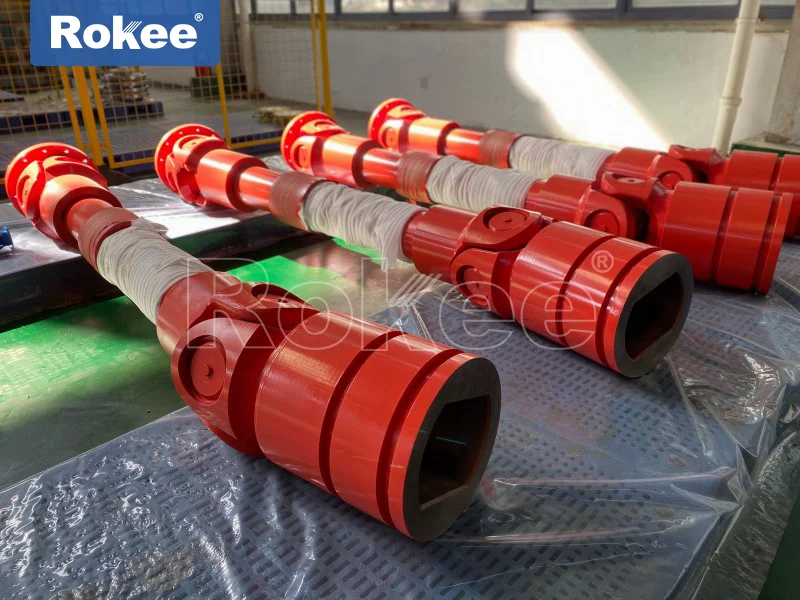
In modern mechanical transmission systems, the coordination between gearboxes and power transmission components determines the overall operating stability and energy utilization efficiency of mechanical equipment. As an indispensable transmission component matched with gearboxes, the cardan shaft undertakes the core task of torque transmission between discontinuous and spatially offset shaft sections. It can maintain stable power output under complex working conditions such as axis deflection, distance deviation and angular displacement between connecting shafts, making it widely applied in heavy machinery, transportation equipment, industrial production lines and other mechanical scenarios equipped with gearboxes. Unlike rigid connecting shafts, the structural characteristics of the cardan shaft endow it with unique adaptive capabilities, which effectively compensate for installation errors and mechanical displacement generated during equipment operation, ensuring that the power output by the gearbox can be accurately and continuously transmitted to the executing mechanism.
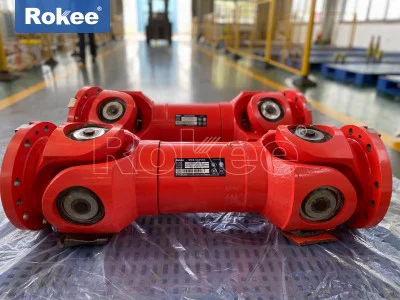
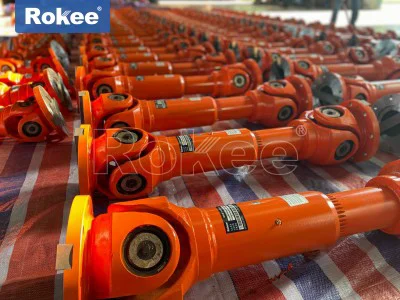
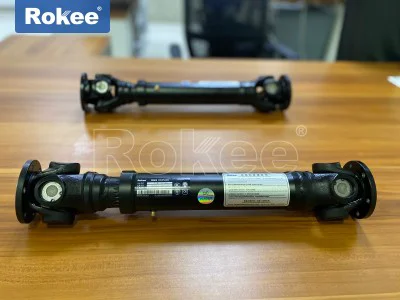
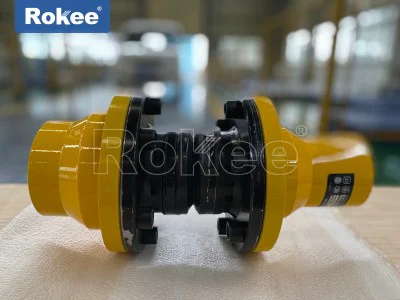
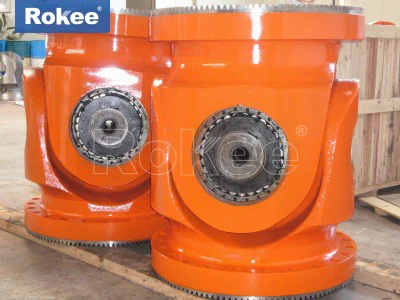
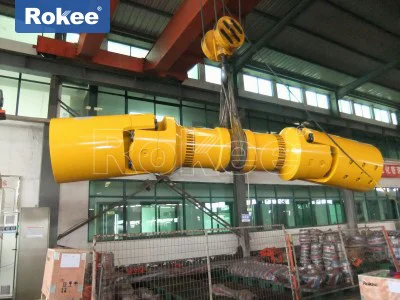
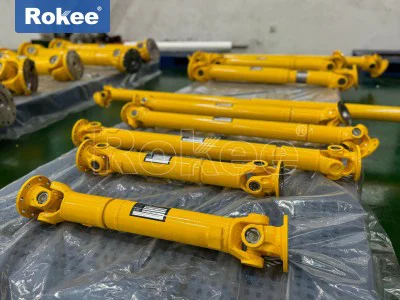
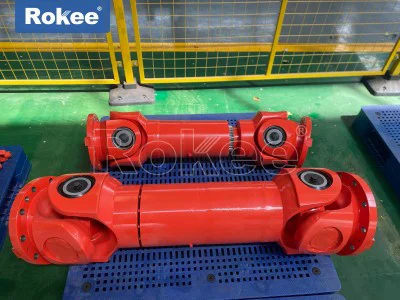
The basic structural composition of a cardan shaft matched with a gearbox follows mature mechanical design logic, and each component bears distinct functional responsibilities to jointly complete the power transmission process. The main body of the cardan shaft is composed of a hollow shaft tube, which is usually made of high-strength alloy materials. The hollow structure effectively reduces the overall weight of the shaft body while ensuring torsional resistance, avoiding additional mechanical load caused by self-weight during high-speed rotation. Both ends of the shaft tube are connected with universal joint yokes through welding or integral forging molding, and the precision-machined yoke structures provide stable connecting interfaces for the universal joints. The core moving part of the universal joint is the cross shaft, which is equipped with rolling bearings at each end. The rolling bearings can reduce friction resistance during relative rotation between components and minimize mechanical wear caused by frequent angular changes. In addition, some cardan shafts are designed with telescopic structures, which rely on the matching of spline shafts and spline sleeves to realize free adjustment of the shaft body length. This structural design can adapt to the linear displacement between the gearbox output shaft and the driven shaft caused by mechanical vibration and component deformation.
The working principle of the cardan shaft serving the gearbox is based on the kinematic characteristics of the universal joint, realizing flexible transmission of torque and rotational motion under variable angle conditions. When the gearbox operates, the internal gear set converts the input power into stable rotational torque and outputs it through the output shaft. The torque is transmitted to the universal joint yoke of the cardan shaft, and the cross shaft acts as a force transmission medium to transfer the rotational force from the driving yoke to the driven yoke. Even if a certain included angle exists between the gearbox output shaft and the driven shaft, the cross shaft can rotate freely in multiple directions within the bearing range, ensuring that the rotational motion is not interrupted. A single universal joint has the characteristic of non-uniform angular velocity transmission under large deflection angles, so most cardan shafts for medium and heavy-duty gearboxes adopt a double universal joint structure. The two universal joints are symmetrically arranged, and the phase difference generated by the rotation of a single universal joint is offset mutually. This balance mechanism realizes approximate constant angular velocity transmission, effectively reducing rotational vibration and torque fluctuation during power transmission.
The rational matching between the cardan shaft and the gearbox needs to comprehensively consider multiple mechanical parameters to ensure the compatibility and operational reliability of the transmission system. Torque bearing capacity is the primary matching index. The maximum torsional load that the cardan shaft can withstand must be higher than the peak torque output by the gearbox, so as to prevent plastic deformation or structural fracture of the shaft body under instantaneous high load. The deflection angle range is another key parameter. Different working scenarios put forward different requirements for the movable angle of the cardan shaft. General industrial gearbox supporting equipment usually requires the shaft to adapt to an angular deviation of several degrees, while mobile mechanical equipment needs a larger deflection angle to cope with the position change of components during movement. Besides, the rotation speed grade of the cardan shaft should be compatible with the speed regulation range of the gearbox. The dynamic balance of the shaft body needs to be optimized for high-speed operating conditions to avoid resonance phenomenon caused by inconsistent centrifugal force during rotation, which would lead to increased vibration amplitude of the gearbox and abnormal wear of internal gears.
In actual mechanical operation, the cardan shaft makes up for the inherent defects of rigid transmission structures and optimizes the overall operating performance of the gearbox transmission system. During the assembly process of mechanical equipment, it is difficult to achieve absolute coaxial alignment between the gearbox output shaft and the driven shaft due to processing errors of parts, assembly deviation and chassis deformation. The cardan shaft can tolerate minor coaxial errors through the flexible rotation of universal joints, reducing the assembly accuracy threshold of the equipment and lowering the assembly difficulty. When the equipment is running, factors such as mechanical vibration, temperature change and load fluctuation will cause tiny displacement and deformation of the gearbox fixing base and the connecting support. The telescopic structure and universal joint of the cardan shaft can dynamically adapt to these position changes, avoiding additional shear stress and tensile stress on the gearbox shaft end, and protecting the precision matching relationship of internal gear meshing. Moreover, the cardan shaft has a certain vibration damping effect. The clearance fit between internal bearings and elastic deformation of metal components can absorb part of the vibration energy generated by gear meshing and load impact, making the power transmission process smoother.
Cardan shafts for gearboxes are widely used in diverse industrial and mechanical scenarios, showing strong environmental adaptability and functional universality. In heavy engineering machinery, gearboxes are used to adjust the output torque of walking and rotating mechanisms, and cardan shafts connect the gearboxes with driving components to complete power transmission under complex working conditions such as uneven ground and variable load. In transportation machinery, the transmission system takes the gearbox as the power adjustment core, and the cardan shaft transmits power to the driving axle, adapting to the chassis jitter and component displacement during driving. In industrial production equipment such as mixing machinery and screening equipment, the gearbox adjusts the operating speed of the executing component, and the cardan shaft ensures continuous power transmission in a vibrating working environment. In addition, in agricultural machinery and mining machinery with harsh operating environments, the rugged mechanical structure of the cardan shaft can resist dust erosion and mechanical impact, maintaining stable coordination with the gearbox for a long time.
During long-term operation, the cardan shaft will be affected by load changes, environmental factors and structural fatigue, resulting in different degrees of performance degradation and wear failure. The most common wear part is the universal joint bearing. Long-term friction between the roller and the bearing inner and outer rings will cause gaps inside the bearing, leading to axial and radial runout of the shaft body. This abnormal vibration will be transmitted to the gearbox, aggravating the meshing wear of gears and increasing the operating noise of the equipment. The spline matching part of the telescopic structure is prone to abrasive wear due to frequent stretching and sliding, resulting in reduced telescopic sensitivity and even jamming of the shaft body. For the shaft tube part, long-term torsional load will cause metal fatigue, and subtle cracks will appear on the surface of the shaft tube in severe cases, which will gradually expand and lead to shaft body fracture. In addition, in humid and corrosive working environments, the surface of the cardan shaft is easy to rust, which will reduce the surface hardness of the metal and accelerate the aging and damage of components.
Scientific daily maintenance and regular inspection can effectively extend the service life of the cardan shaft and maintain the stable matching state with the gearbox. Lubrication maintenance is the most basic maintenance measure. It is necessary to regularly inject high-performance lubricating grease into the universal joint bearing and spline matching part. The lubricating layer can reduce metal friction and avoid dry wear of components. At the same time, lubricants can play a sealing role to prevent external dust and impurities from entering the moving gap. During the regular inspection process, staff need to check the tightness of the connecting fasteners at both ends of the cardan shaft to prevent bolt loosening caused by long-term vibration, which would lead to poor connection between the shaft body and the gearbox shaft end. It is also necessary to observe the surface state of the shaft tube to check for cracks, deformation and corrosion spots. For the universal joint with excessive rotation gap and severely worn bearings, it should be replaced in a timely manner to avoid latent failure risks. After the equipment runs for a long time, the dynamic balance of the cardan shaft will decrease, so regular dynamic balance calibration is required to ensure that the shaft body maintains a stable rotation state and reduce the vibration impact on the gearbox.
With the continuous progress of mechanical manufacturing technology, the optimization and upgrading of cardan shafts for gearboxes are constantly advancing, focusing on material improvement, structural optimization and intelligent adaptation. In terms of materials, new alloy materials with higher strength and corrosion resistance are gradually applied to the processing of shaft bodies and universal joints. These materials can withstand higher torsional loads and adapt to harsher working environments, reducing the frequency of component replacement. In terms of structure, the optimized universal joint yoke and cross shaft structure adopt integrated forging technology to reduce assembly gaps and improve the overall structural rigidity. The improved sealing structure can effectively isolate external pollutants and enhance the environmental protection performance of internal moving parts. In terms of performance optimization, some cardan shafts are designed with buffer structures, which can absorb instantaneous impact load, reduce the torque shock transmitted to the gearbox, and protect the internal precision transmission parts. In addition, with the development of intelligent mechanical equipment, some cardan shafts are equipped with simple sensing components to monitor the rotation state, temperature and vibration amplitude of the shaft body in real time, providing data support for equipment maintenance and fault early warning.
In the entire mechanical transmission system composed of gearboxes and cardan shafts, the two components restrict and promote each other to jointly complete the power transmission function. The gearbox undertakes the tasks of speed regulation, torque amplification and power shunting, while the cardan shaft acts as a flexible connecting carrier to break the spatial limitation of rigid transmission. The operating state of the cardan shaft directly affects the transmission efficiency and operating stability of the gearbox. A well-matched cardan shaft can reduce the operating load of the gearbox and delay the wear aging of internal parts; conversely, damaged or mismatched cardan shafts will cause abnormal vibration and torque loss, reducing the overall working efficiency of the mechanical equipment. Therefore, in the process of mechanical equipment design, manufacturing and use, it is necessary to pay equal attention to the parameter matching, installation debugging and daily maintenance of the cardan shaft and gearbox, so as to maximize the mechanical performance of the transmission system.
Looking ahead, with the continuous development of high-precision, high-load and intelligent mechanical equipment, the performance requirements for cardan shafts supporting gearboxes will be further improved. Future research and development directions will focus on lightweight design, high-temperature resistance, fatigue resistance and intelligent monitoring functions. Through the optimization of material formula and structural process, the weight of the shaft body will be reduced on the premise of ensuring mechanical strength, so as to meet the energy-saving and consumption-reducing needs of mechanical equipment. The upgraded sealing and lubricating technology will enable the cardan shaft to operate stably in extreme environments such as high temperature, low temperature and strong corrosion. At the same time, combined with intelligent sensing technology and data analysis technology, the real-time monitoring and automatic early warning of the operating state of the cardan shaft will be realized, which will provide more reliable guarantee for the long-term stable operation of the gearbox transmission system. As an indispensable basic transmission component, the cardan shaft will continue to play an important role in the mechanical industry, constantly adapting to the iterative upgrading of gearbox technology and promoting the overall development level of modern mechanical transmission systems.