Cold Rolled Steel Universal Shaft
In the intricate ecosystem of modern mechanical transmission systems, universal shafts stand as indispensable fundamental components that ensure stable power conveyance between disjointed mechanical parts. Among diverse manufacturing material options for such transmission components, cold rolled steel has gradually become a preferred raw material for universal shaft production due to its unique physical attributes and structural superiority. A cold rolled steel universal shaft refers to a transmission shaft fabricated through cold rolling processing techniques, featuring a refined surface structure, precise dimensional tolerance, and optimized mechanical performance. This type of universal shaft is widely deployed in complex mechanical operating scenarios where angle deviation, spatial displacement, and continuous torque transmission are required, covering industrial manufacturing, transportation machinery, and engineering equipment sectors. The integration of cold rolling technology and universal shaft manufacturing not only elevates the overall usability of transmission components but also consolidates the operational stability of complete mechanical equipment under diverse working conditions.
The inherent material advantages of cold rolled steel lay a solid foundation for the reliable performance of universal shafts. Different from hot rolled steel that undergoes high-temperature rolling processing, cold rolled steel is processed at room temperature without experiencing high-temperature heating procedures. This processing method eliminates common defects such as surface oxide scales, pitting, and uneven texture that frequently appear on hot rolled steel surfaces. The smooth and flawless surface of cold rolled steel enables the finished universal shaft to reduce friction resistance during rotation and minimize abrasive wear between matching parts. Meanwhile, the cold working hardening effect generated in the cold rolling process effectively enhances the yield strength and fatigue limit of steel materials. Relevant material performance data indicates that cold rolling treatment can increase the structural strength of steel by 20% to 40% compared with untreated raw steel, and the fatigue resistance is significantly improved, which is crucial for universal shafts that bear long-term cyclic torsion and alternating loads. In addition, cold rolled steel boasts outstanding dimensional uniformity and machining accuracy. The consistent thickness and compact internal metal organization avoid structural deformation or local stress concentration during the service period of the universal shaft, ensuring that each component maintains high fitting accuracy during assembly and operation.
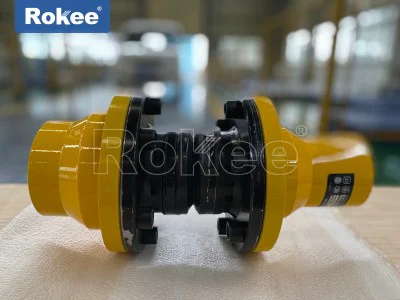
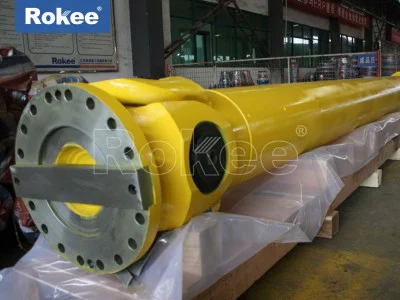
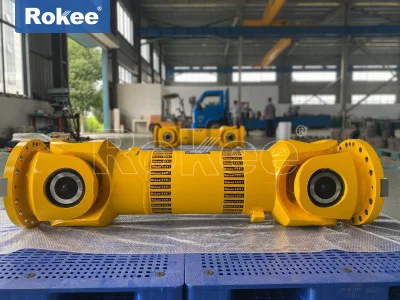
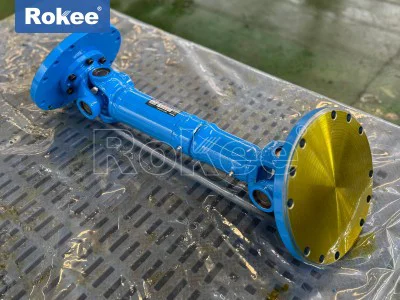
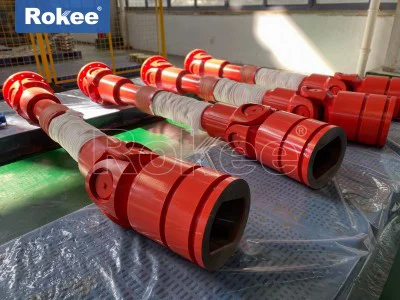
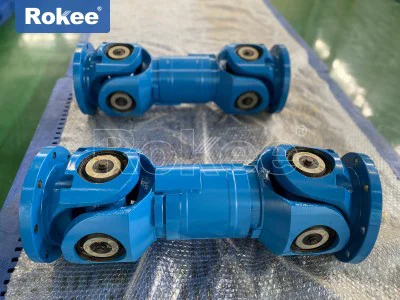
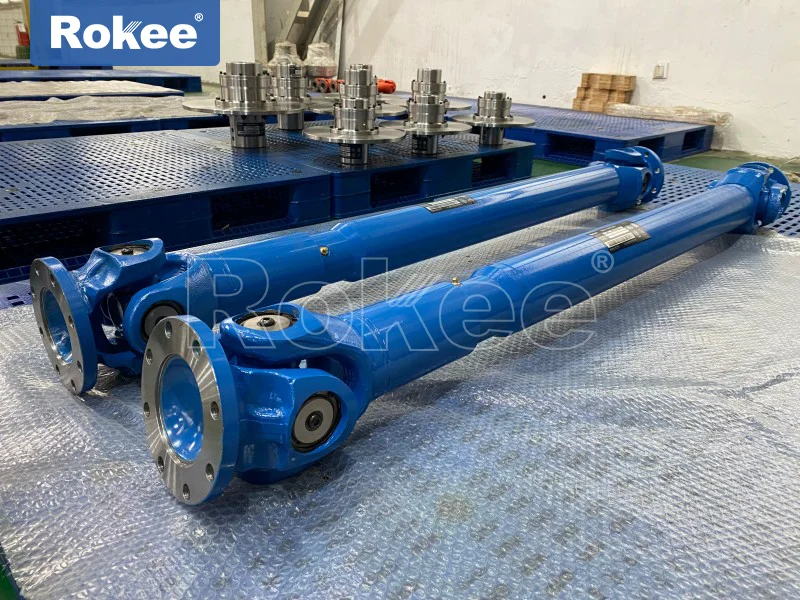
The structural design of cold rolled steel universal shafts follows mature mechanical transmission principles, and the classic cross-axis structure remains the mainstream design form in the industry. A complete cold rolled steel universal shaft mainly consists of a main shaft body, cross shaft joints, bearing components, and connecting end structures. The cross shaft joint acts as the core moving part, enabling the shaft body to transmit torque stably within a certain spatial angle range. This flexible connection structure can effectively compensate for installation errors, axial displacement, and angular deflection between driving and driven equipment, solving the transmission bottleneck of rigid shafts that cannot adapt to non-coaxial operation. The main shaft body forged from cold rolled steel features a dense internal metal grain structure, with excellent toughness and torsional resistance. Under extreme working conditions such as heavy load rotation and frequent start-stop operation, the shaft body is not prone to brittle fracture or permanent torsion deformation. The bearing parts matched with the universal shaft adopt wear-resistant structural design, which cooperates with the smooth surface characteristics of cold rolled steel to reduce mechanical friction loss in the movement process and extend the continuous service cycle of the assembly. All structural parts are processed with integrated molding and fine polishing techniques to ensure seamless coordination between components and avoid transmission jitter or noise caused by assembly gaps.
The production and processing flow of cold rolled steel universal shafts covers multiple precision working procedures, strictly controlling every link from raw material selection to finished product molding. The initial stage focuses on raw material screening, where high-quality carbon structural steel with good ductility and plasticity is selected as the base material. Such steel materials are easy to undergo cold rolling deformation processing and can maintain stable mechanical properties after molding. Subsequently, the raw steel materials are subjected to continuous cold rolling treatment at room temperature. Through the extrusion and rolling of professional rolling equipment, the internal metal structure of the steel is optimized, and the surface roughness is reduced to form a smooth and compact steel substrate suitable for shaft body processing. After the cold rolling procedure, the steel materials undergo stress relief annealing treatment to eliminate internal processing stress generated during cold rolling, preventing structural warping or performance attenuation of the universal shaft during long-term use. Then, numerical control machining equipment is used for cutting, turning, and drilling to shape the shaft body and connecting parts, ensuring that the dimensional error of each component is controlled within a tiny tolerance range. Finally, surface polishing and anti-oxidation treatment are carried out to remove tiny burrs on the surface and form a protective layer, enhancing the corrosion resistance and wear resistance of the universal shaft.
Cold rolled steel universal shafts exhibit irreplaceable performance advantages compared with universal shafts made of other materials and processing technologies. First of all, they have excellent surface quality. Without high-temperature oxidation in the production process, the surface of cold rolled steel universal shafts has no oxide layer, with smooth texture and low roughness, which can effectively reduce friction loss during mechanical operation and lower the energy consumption of equipment transmission. Secondly, the dimensional accuracy is superior. The precise rolling and machining technology enables the shaft body and matching parts to achieve high-precision assembly, reducing vibration and amplitude during high-speed rotation and improving the operational stability of mechanical equipment. In terms of mechanical performance, the cold working hardening characteristic makes the universal shaft have strong torsional resistance and load-bearing capacity, which can withstand complex combined loads such as axial force, radial force, and torsional moment in industrial operation. Moreover, cold rolled steel has good plasticity and processing adaptability, allowing the universal shaft to be made into diversified specifications and structural shapes to meet the customized use needs of different mechanical equipment. In terms of service life, the compact internal structure and excellent anti-fatigue performance enable cold rolled steel universal shafts to maintain stable working performance under long-term continuous operation, reducing the frequency of equipment replacement and maintenance costs.
The application scenarios of cold rolled steel universal shafts cover a wide range of industrial fields, showing strong environmental adaptability and functional compatibility. In the metal rolling industry, this type of universal shaft serves as a key transmission component of rolling mills, undertaking the torque transmission task between power motors and rolling rollers. During the rolling process, the equipment operates continuously with heavy loads, and the cold rolled steel material can resist torsional impact and mechanical wear, ensuring the consistent operation of the rolling production line. In the field of automobile manufacturing, cold rolled steel universal shafts are applied to automobile chassis transmission systems, adapting to the jitter and displacement generated by automobile driving on complex road surfaces, realizing flexible power transmission between the engine and wheels, and improving the stability of automobile driving. In engineering machinery such as excavators and loaders, universal shafts need to cope with harsh working environments including dust, humidity, and heavy loads. The corrosion resistance and structural strength of cold rolled steel can effectively resist external environmental erosion and mechanical damage. In addition, they are also widely used in agricultural machinery, textile equipment, and mining machinery, providing reliable transmission support for various medium and heavy-duty mechanical equipment.
To maintain the long-term stable operation of cold rolled steel universal shafts, standardized daily maintenance and scientific usage management are essential. In the daily operation process, regular lubrication treatment should be carried out on the bearing parts and cross shaft joints of the universal shaft. High-quality lubricating grease can form a uniform protective film on the metal surface, reducing direct friction between metal parts and avoiding wear and ablation caused by dry friction. It is necessary to regularly check the connection tightness of each assembly component to prevent component loosening and transmission failure caused by mechanical vibration during long-term operation. For universal shafts working in humid and corrosive environments, surface dust and dirt should be cleaned regularly, and anti-rust oil should be applied appropriately to avoid surface oxidation and corrosion. During equipment startup and operation, sudden overload operation should be avoided. Instant excessive torque will cause irreversible structural damage to the internal metal structure of the universal shaft and shorten its service life. Meanwhile, regular dynamic balance detection should be conducted on the universal shaft. For the shaft body with slight deformation or unbalanced rotation, calibration and correction should be carried out in a timely manner to ensure the rotational stability of the transmission system.
With the continuous upgrading of modern industrial manufacturing technology, the production and application technology of cold rolled steel universal shafts is also undergoing continuous optimization and innovation. In terms of production technology, intelligent rolling equipment and automated machining systems have gradually replaced traditional manual processing methods. The introduction of digital control technology further improves the machining accuracy and production efficiency of universal shafts, realizing batch standardized production of components. In terms of material optimization, by adjusting the internal element ratio of cold rolled steel and combining with composite heat treatment processes, the structural toughness and high-temperature resistance of the steel are further enhanced, enabling the universal shaft to adapt to more extreme working conditions such as high temperature and high pressure. In terms of structural design, lightweight optimization is carried out on the premise of ensuring load-bearing performance. The hollow shaft body structure and streamlined connecting parts reduce the overall weight of the universal shaft, lower the energy consumption of mechanical transmission, and conform to the energy-saving and emission-reduction development trend of modern industry. In addition, the surface modification technology of cold rolled steel is constantly iterated. New anti-wear and anti-corrosion coating materials are applied to the surface treatment of universal shafts, further improving the environmental adaptability and service durability of products.
In the future development of the mechanical transmission industry, cold rolled steel universal shafts will still maintain broad market application prospects. As industrial equipment develops towards high precision, high efficiency, and intelligence, the performance requirements for transmission components such as universal shafts are constantly escalating. The inherent advantages of cold rolled steel in surface quality, structural strength, and machining accuracy make it an irreplaceable core material for manufacturing high-performance universal shafts. With the continuous progress of material science and mechanical processing technology, the production cost control of cold rolled steel will be more reasonable, and the comprehensive performance of universal shafts will be further improved. At the same time, driven by the intelligent manufacturing trend, the detection and maintenance technology of cold rolled steel universal shafts will also become more intelligent. Real-time monitoring of operating parameters such as rotating torque and operating temperature will be realized, providing data support for equipment fault early warning and predictive maintenance. In the long run, cold rolled steel universal shafts will continuously empower the stable operation of various mechanical equipment and make important contributions to the high-quality development of the global manufacturing industry with their reliable performance and mature manufacturing technology.