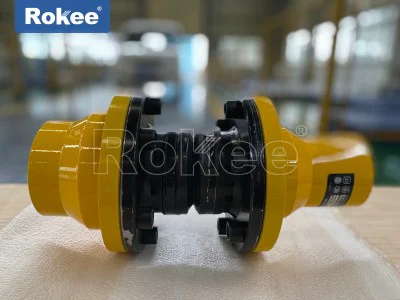
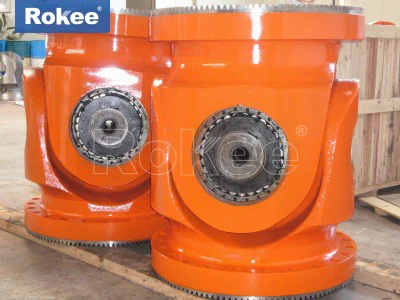
Hot Rolled Steel Universal Shaft
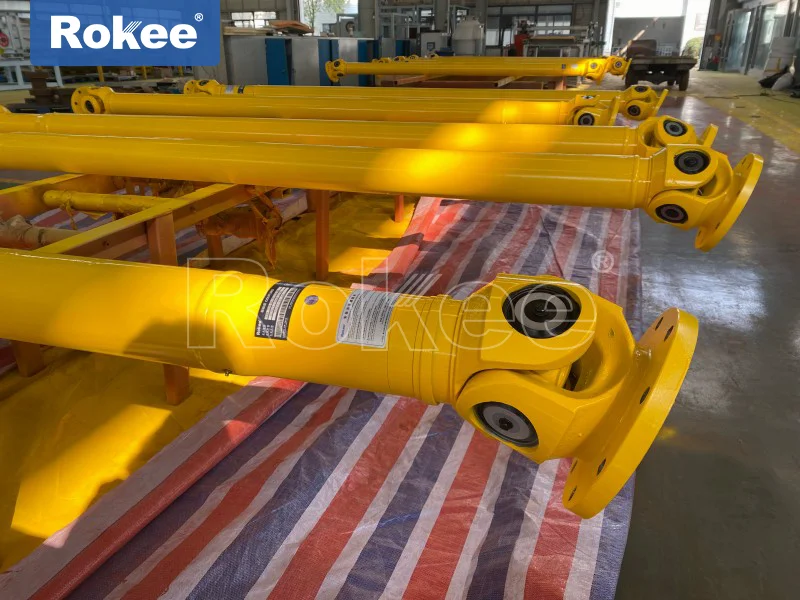
Hot rolled steel universal shaft stands as an indispensable mechanical component in modern industrial transmission systems, gaining widespread recognition for its exceptional structural stability, reliable mechanical performance and excellent environmental adaptability. Manufactured through high-temperature hot rolling processes, this type of universal shaft integrates the inherent advantages of hot rolled steel with optimized mechanical structural design, enabling it to efficiently transmit torque under complex working conditions such as variable angles, offset distances and dynamic loads. Unlike cold-processed shaft components, hot rolled steel blanks undergo continuous plastic deformation at elevated temperatures, which refines the internal metal grain structure, eliminates microscopic defects inside the steel, and lays a solid foundation for the comprehensive mechanical properties of the finished universal shaft. In diverse industrial scenarios ranging from heavy machinery transmission to conventional industrial equipment connection, hot rolled steel universal shafts maintain stable operating states, effectively alleviating vibration and torque loss during power transmission, and continuously supporting the smooth operation of mechanical systems.
The core manufacturing logic of hot rolled steel universal shaft originates from the unique physical and chemical characteristics of hot rolled steel materials. During the hot rolling production stage, raw steel materials are heated to a specific high temperature range, reaching a thermoplastic state with reduced hardness and enhanced ductility. Under the continuous extrusion and rolling of professional rolling equipment, the metal structure undergoes directional stretching and rearrangement, which effectively reduces internal voids and inclusions in the steel. This high-temperature processing method endows the steel material with uniform density and consistent metallographic structure, avoiding the residual stress concentration commonly found in cold-processed steel parts. For universal shafts that need to bear alternating torque and frequent mechanical friction, uniform internal structure means more stable fatigue resistance and deformation resistance. The natural surface oxide layer formed during hot rolling also provides preliminary anti-corrosion protection for the shaft body, lowering the sensitivity of the component to minor environmental humidity changes in daily service environments. Moreover, hot rolled steel retains moderate toughness while ensuring high strength, which enables the universal shaft to buffer instantaneous impact loads generated during mechanical startup and shutdown, and prevent brittle fracture under sudden load fluctuations.
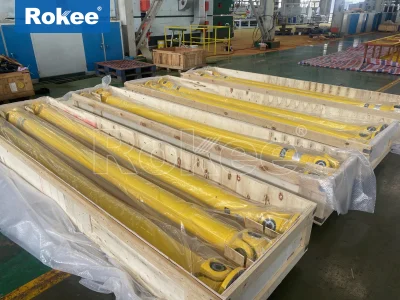
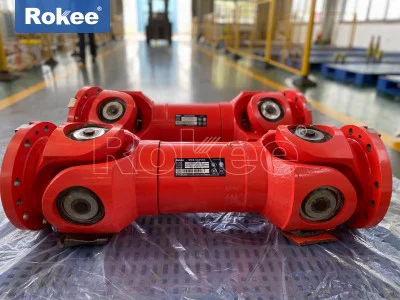
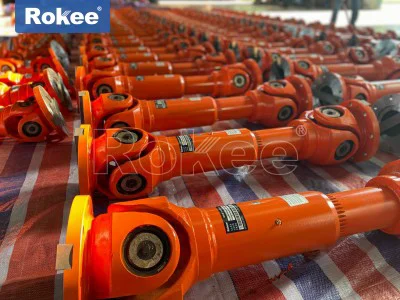
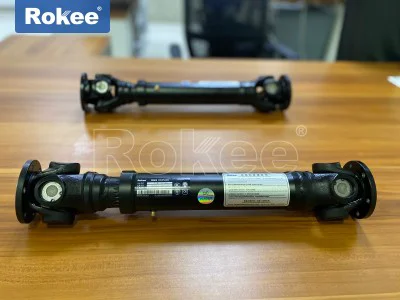
The structural composition of hot rolled steel universal shaft follows the mechanical transmission principle of universal angle compensation, and its overall structure is concise and practical without redundant auxiliary designs. The complete component is mainly composed of a hot rolled steel shaft body, universal joint assemblies, connecting clamping parts and buffer structures. The shaft body is forged and rolled from integral hot rolled steel blanks, with smooth and regular outer diameter dimensions and symmetrical cross-sectional structure. This integral forming processing mode avoids the mechanical performance attenuation caused by welding assembly, ensuring the continuity of metal fiber lines along the shaft body. The universal joint parts adopt a curved surface matching structure, which can flexibly adapt to the angular deviation between the driving end and the driven end of mechanical equipment. In the working process, the universal joint can realize multi-directional rotation and angle adjustment, effectively solving the power transmission problem under non-coaxial connection conditions. The internal connecting parts are tightly fitted with the shaft body through precision machining, which reduces the assembly gap between components and minimizes mechanical vibration and noise during high-speed operation. The overall structural design takes into account both transmission efficiency and structural durability, making the hot rolled steel universal shaft compatible with various connection installation methods and adaptable to different mechanical layout spaces.
The processing flow of hot rolled steel universal shaft covers multiple precise working procedures from raw material pretreatment to finished product inspection, and each link strictly controls processing parameters to ensure consistent product quality. The initial stage focuses on raw material screening and high-temperature heating, where qualified steel blanks are selected and sent to heating equipment to reach the optimal rolling temperature. Subsequent multi-pass rolling operations gradually shape the shaft blank into a preliminary cylindrical structure with uniform wall thickness and smooth surface. After rolling forming, the shaft blank undergoes natural cooling and stress relief treatment to eliminate residual internal stress generated during high-temperature plastic deformation, preventing structural distortion and performance degradation in subsequent use. Then, precision machining processes such as turning, grinding and grooving are carried out to polish the outer surface of the shaft body, calibrate the assembly size of connecting parts, and improve the fitting accuracy between components. Surface smoothing treatment is performed to remove surface burrs and oxide protrusions, reducing friction resistance during the rotation of the universal shaft. Finally, static and dynamic mechanical tests are conducted to detect the torsional strength, bending resistance and rotation stability of the finished shaft, screening out unqualified components with subtle performance defects to ensure that each delivered universal shaft meets industrial application standards.
Superior mechanical properties constitute the core competitive advantage of hot rolled steel universal shaft, distinguishing it from other transmission shaft components made of ordinary steel materials. In terms of torsional resistance, the refined internal grain structure of hot rolled steel enables the shaft body to withstand continuous high torque without permanent torsion deformation, maintaining stable transmission efficiency during long-term high-load operation. Its excellent bending resistance allows the shaft to adapt to slight axial deflection caused by mechanical vibration, avoiding fatigue cracks at stress concentration points. In terms of wear resistance, the dense metal structure reduces surface abrasion loss during mutual friction between connecting parts, extending the service life of the component under frequent rotating working conditions. Additionally, hot rolled steel has good low-temperature toughness, which ensures that the universal shaft will not become brittle and fail in low-temperature working environments, expanding its applicable temperature range. Compared with shafts made of secondary processed steel, hot rolled steel universal shafts have more balanced comprehensive performance, without obvious performance weaknesses in strength, toughness and wear resistance, and can maintain stable working conditions in harsh working environments such as dust, humidity and variable loads.
Hot rolled steel universal shafts have extensive application coverage in modern industrial systems, penetrating multiple production and manufacturing fields. In heavy engineering machinery, they serve as key connecting components for power transmission between engines and working execution structures, transmitting strong power to support the normal operation of loading, excavation and transportation equipment. In industrial production lines, these universal shafts connect different processing modules of automated machinery, realizing synchronous power transmission between adjacent equipment and ensuring the continuity of production processes. In the field of transportation machinery, they are applied to the transmission structures of special vehicles, adapting to the position offset and angle change of mechanical parts during vehicle driving. In agricultural machinery and equipment, hot rolled steel universal shafts cope with complex working environments such as field mud and gravel, relying on their high structural durability to maintain stable power output. Beyond these scenarios, they are also used in general mechanical equipment such as pumping units, ventilation devices and metallurgical machinery, providing reliable transmission support for various medium and low-speed mechanical systems. The strong environmental adaptability and structural compatibility make hot rolled steel universal shafts one of the most widely used transmission components in the industrial sector.
Reasonable daily maintenance and scientific installation methods are crucial to prolonging the service life of hot rolled steel universal shafts and maintaining stable transmission performance. During the installation process, workers need to ensure the coaxiality of the connecting equipment, control the installation angle deviation within a reasonable range, and avoid excessive angle deflection that increases the abrasion of universal joint parts. It is necessary to check the tightness of connecting fasteners regularly to prevent component loosening caused by long-term mechanical vibration, which may lead to transmission failure. In daily maintenance, surface cleaning should be done frequently to remove dust, oil stains and hard attachments on the shaft surface, avoiding abrasive wear on the shaft body caused by hard particles. Lubricating grease needs to be replenished periodically at the universal joint and friction matching parts to reduce metal friction coefficient and lower operating energy consumption. For universal shafts working in high-humidity and corrosive environments, regular anti-rust maintenance is required to isolate moisture and corrosive substances from contacting the steel matrix. During equipment shutdown for maintenance, staff should inspect the shaft body for surface cracks, abrasion depressions and structural deformation, and replace aging and damaged accessories in a timely manner to eliminate potential operational risks.
With the continuous upgrading of industrial manufacturing technology and the gradual improvement of mechanical performance requirements, the production and application technology of hot rolled steel universal shafts is also undergoing continuous optimization and innovation. In terms of production technology, advanced rolling control technologies are adopted to accurately adjust rolling temperature and pressure parameters, further optimize the internal grain distribution of steel materials, and enhance the fatigue resistance of components. Surface treatment technologies are continuously upgraded, and environmentally friendly anti-corrosion and wear-resistant coatings are applied to the shaft surface to improve the environmental adaptability of universal shafts without changing the inherent mechanical properties of hot rolled steel. In structural design, lightweight and compact optimization are carried out on the premise of ensuring bearing capacity, reducing the self-weight of components and lowering the energy consumption of mechanical operation. Meanwhile, combined with digital detection technology, the real-time operating state of universal shafts can be monitored, including torque change, vibration amplitude and temperature fluctuation, providing data support for equipment maintenance and replacement plans. In the future, with the development of intelligent manufacturing and high-end mechanical equipment, hot rolled steel universal shafts will develop towards higher precision, stronger durability and better compatibility, and their application scope in emerging industrial fields will be further expanded.
In conclusion, hot rolled steel universal shaft relies on mature hot rolling processing technology, excellent material inherent performance and reasonable mechanical structural design to show outstanding application value in the industrial transmission field. Its stable torsional resistance, excellent structural toughness and wide environmental adaptability make it adapt to diversified complex working conditions, and its simple processing technology and convenient maintenance mode reduce the comprehensive use cost of industrial equipment. As a basic mechanical component connecting power transmission links, it not only ensures the efficient and stable operation of various mechanical equipment, but also provides reliable basic support for the orderly development of modern industrial production. With the continuous progress of material processing technology and mechanical design concepts, hot rolled steel universal shafts will continuously optimize their performance indicators, keep pace with the development trend of the industrial manufacturing industry, and play an irreplaceable important role in more industrial application scenarios.