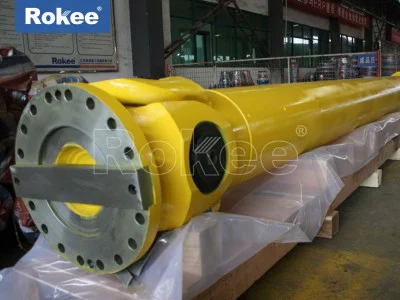
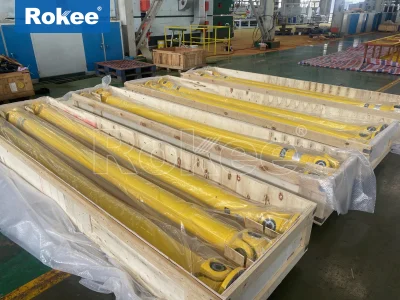
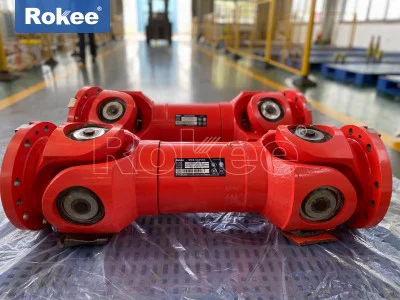
Cardan Shaft for Pumps
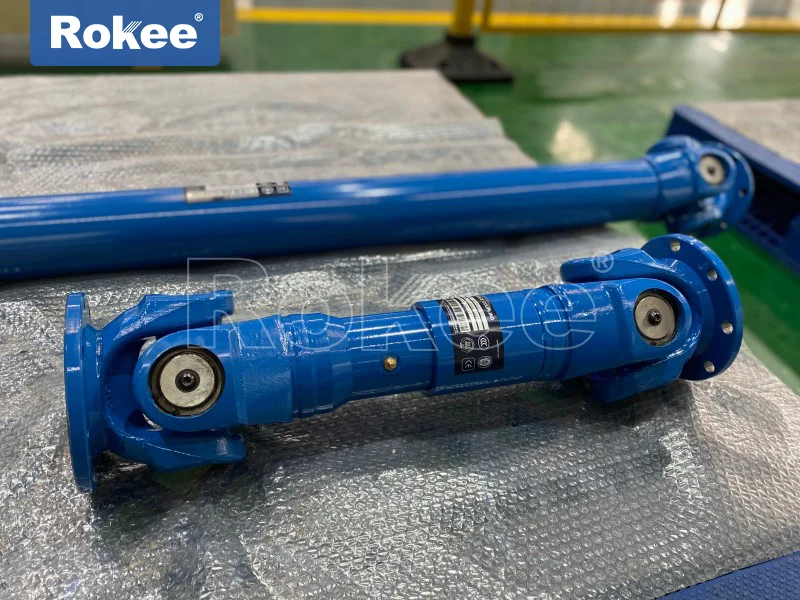
In modern fluid transportation systems, the smooth transmission of mechanical power stands as a fundamental prerequisite for the stable operation of various pumping equipment, and cardan shafts have emerged as an indispensable mechanical component in pump transmission structures due to their unique adaptive transmission characteristics. As a key connecting part between power driving components and pump working components, the cardan shaft undertakes the core task of transmitting torque while effectively coping with axial deviation, angular displacement and positional offset that inevitably occur during the operation of pump sets. Unlike rigid transmission shafts that are highly dependent on precise installation alignment, the structural particularity of cardan shafts enables them to maintain continuous and efficient power output under complex operating conditions, which greatly optimizes the operational stability of pumps in diverse industrial and civil application scenarios. With the continuous upgrading of fluid transportation technology, the structural design and material application of cardan shafts have been continuously optimized, making them more adaptable to high-load, high-frequency and long-term continuous working environments of pumps.
The basic working principle of a cardan shaft for pumps revolves around the flexible connection realized by universal joint structures, which can transfer rotational torque between two shafts that are not on the same central axis. During the operation of a pump system, deviations are commonly generated between the motor shaft and the pump rotor shaft due to installation errors, equipment vibration, thermal expansion and contraction of metal components, and foundation settlement. Rigid connection structures are prone to generating additional mechanical stress under such deviations, which leads to shaft deformation, component abrasion and even sudden equipment failure. The universal joint components inside the cardan shaft can freely adjust the transmission angle within a certain range, offsetting the adverse effects caused by misalignment of the power shaft and the pump shaft. When the driving end rotates, the cross shaft structure inside the universal joint drives the driven end to rotate synchronously, and the swing of the joint eliminates the torsional stress generated by angular deviation, ensuring that the torque is transmitted uniformly and stably to the pump rotor. This flexible transmission mechanism fundamentally reduces the rigid constraint between the power source and the pump body, laying a solid foundation for the long-term stable operation of pumping equipment.
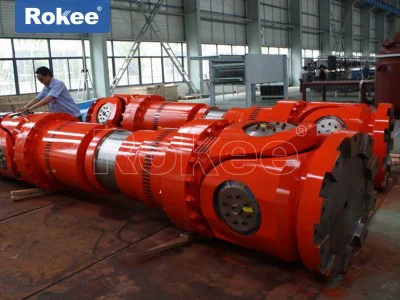
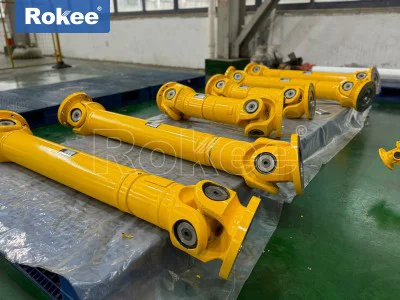
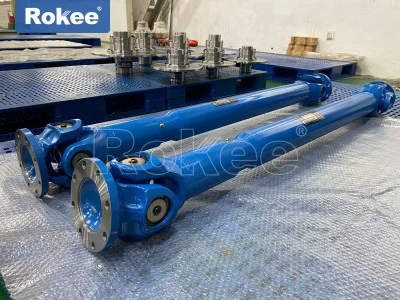
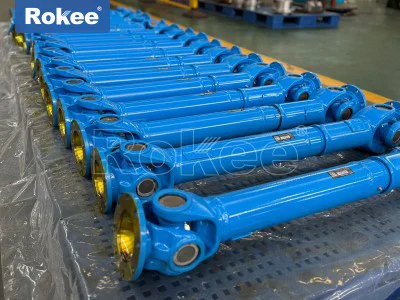
The internal structure of a typical pump-used cardan shaft is composed of multiple interconnected mechanical parts, each undertaking distinct functional responsibilities to jointly complete power transmission and displacement compensation. The universal joints at both ends serve as the core movable components, usually adopting a cross shaft rotary structure with rolling contact accessories to reduce friction during angular adjustment. The middle shaft body is an elongated metal component connecting the two universal joints, and its length is designed according to the installation spacing between the motor and the pump body. Most shaft bodies adopt an integrated forging structure to ensure overall structural rigidity and avoid bending deformation under high torque conditions. Sliding sleeve structures are often installed at the connection between the shaft body and the universal joints, which can realize fine axial stretching and contraction to compensate for linear displacement changes caused by thermal expansion of equipment components during operation. Meanwhile, sealing accessories are arranged on the outer side of the movable joints to isolate external dust, moisture and corrosive fluids, preventing internal friction parts from being polluted and worn. The reasonable combination of these structures enables the cardan shaft to simultaneously cope with angular deviation, axial displacement and radial offset, meeting the diversified displacement compensation requirements of pumps in actual working conditions.
Material selection is a critical factor that determines the service life and comprehensive performance of cardan shafts for pumps, and the selection criteria mainly focus on mechanical strength, wear resistance, fatigue resistance and environmental adaptability. The main shaft body is generally made of high-strength alloy steel with excellent tensile strength and torsional resistance. After integral heat treatment such as quenching and tempering, the material internal structure is optimized to enhance the toughness and rigidity of the shaft body, so that it can withstand high-intensity torque impact during long-term continuous rotation. The cross shaft and friction contact parts inside the universal joints require higher surface hardness, so carbonitriding surface hardening treatment is usually adopted to improve wear resistance and reduce friction loss in frequent angular adjustment movements. For pumps working in harsh environments such as chemical corrosion and humid water bodies, the outer surface of the cardan shaft will be coated with anti-corrosion protective layers to isolate corrosive media and slow down metal oxidation and corrosion. The sliding parts use low-friction alloy materials to ensure flexible telescopic movement while reducing mechanical abrasion. Scientific material matching enables the cardan shaft to maintain stable mechanical performance under variable load conditions and extend the service cycle of the transmission system.
Cardan shafts are widely applied in multiple types of pumping equipment, covering industrial production, water conservancy transportation, municipal engineering and other fields, and they show unique application advantages in different pump structures. In vertical long-axis pumps, the long-distance power transmission between the bottom rotor and the top motor is realized by cardan shafts, and the flexible joint structure offsets the vibration deviation generated by the long shaft during high-speed rotation, avoiding resonance damage to the pump body. In screw pumps that rely on eccentric rotor movement, cardan shafts connect the driving shaft and the eccentric rotor, accurately adapting to the planetary motion track of the rotor and ensuring continuous and stable fluid conveying capacity. In large-scale horizontal multiphase pumps, the cardan shaft buffers the torque fluctuation generated by uneven medium transportation, reducing the vibration amplitude of the pump set and lowering the mechanical noise of the equipment. In addition, some mobile pumping equipment used for emergency water supply and drainage also adopts cardan shaft transmission structures, whose strong environmental adaptability can cope with installation position changes and uneven foundation conditions. The universal applicability of cardan shafts makes them an essential transmission component in medium and large-sized pump systems.
Compared with other traditional transmission connection components, cardan shafts have prominent performance advantages in pump matching application scenarios. Traditional rigid couplings have extremely high requirements for installation accuracy, and slight shaft misalignment will cause severe component wear, which is not suitable for pumps with large vibration amplitude. Elastic couplings can buffer part of vibration stress, but their angular displacement compensation range is narrow, making them unable to adapt to pumps with large installation spacing and obvious positional deviation. In contrast, cardan shafts have a wide angular compensation range and strong axial displacement adaptability, which can tolerate installation errors and operational position changes of pump sets. Moreover, the integrated mechanical structure of cardan shafts has high torsional rigidity, which will not produce obvious elastic deformation during high-load torque transmission, ensuring the synchronization of the rotation speed of the motor and the pump rotor. The simple and compact assembly structure also facilitates daily disassembly and maintenance, reducing the difficulty of equipment overhaul. These advantages make cardan shafts gradually replace traditional transmission components in complex pump working conditions and become the preferred transmission solution for high-stability pump systems.
During the long-term operation of pump sets, cardan shafts will be affected by mechanical friction, load fluctuation and environmental factors, leading to natural wear and aging of components, and understanding common degradation forms helps to formulate targeted maintenance strategies. Friction wear of the universal joint contact surfaces is the most common aging phenomenon. Long-term frequent angular rotation will cause gradual abrasion of the cross shaft and rolling parts, resulting in increased transmission clearance and weak torque transmission efficiency. Fatigue cracks may appear on the surface of the shaft body after long-term bearing of alternating torque, especially at the stress concentration positions such as shaft body transition sections, which will reduce the structural strength of the shaft body. In humid and corrosive working environments, metal oxidation and corrosion will occur on the outer surface of the cardan shaft, damaging the surface protective layer and accelerating component aging. In addition, insufficient internal lubrication will increase the friction coefficient of movable parts, generating excessive operating heat and causing local thermal deformation of components. These potential degradation problems will not only reduce the operating efficiency of the pump, but also may cause sudden disconnection of the transmission system in severe cases, leading to equipment shutdown.
Scientific daily maintenance and standardized operation methods are crucial to prolong the service life of cardan shafts and maintain the stable operation of pump equipment. Regular lubrication maintenance should be carried out on the movable joints of the cardan shaft, and high-purity lubricating grease with stable viscosity should be selected to fill the internal friction gaps, reducing mechanical wear and heat generation. It is necessary to regularly check the sealing accessories of the shaft body to ensure that there is no damage or falling off, preventing external impurities from entering the movable joints. During the inspection process, attention should be paid to observing the rotation state of the cardan shaft. If abnormal vibration, noise or rotational jamming occurs, the equipment should be shut down in a timely manner to check for component wear and deformation. The pump should avoid long-term overload operation, because excessive torque will cause irreversible structural deformation of the cardan shaft and destroy the internal stress balance. After the equipment is shut down for a long time, manual rotation inspection should be carried out before restarting to confirm that the movable joints are flexible and free from jamming. Reasonable maintenance measures can effectively reduce the failure rate of cardan shafts and maintain the long-term stable working state of pump transmission systems.
With the continuous progress of mechanical manufacturing technology, the optimization direction of pump-used cardan shafts is gradually leaning towards lightweight, high durability and intelligent adaptation. In terms of structural design, the internal spatial layout of universal joints is further optimized to reduce the overall volume while improving the angular compensation range, making the cardan shaft applicable to more compact pump structures. In terms of material innovation, new composite alloy materials are being applied to the production of cardan shafts, which have lower density and higher fatigue resistance than traditional alloy steel, effectively reducing the self-weight of components and lowering the extra load of the pump system. In terms of processing technology, precision forging and numerical control finishing technologies are widely used to improve the surface smoothness and dimensional accuracy of components, reducing assembly gaps and friction resistance. In addition, some improved cardan shaft structures are equipped with built-in vibration damping components, which can further absorb the vibration energy generated during pump operation and optimize the operating stability of the equipment. These technological optimizations continuously enhance the comprehensive performance of cardan shafts to adapt to the increasingly complex fluid transportation requirements.
As an important intermediate transmission component of pumping equipment, cardan shafts play an irreplaceable role in ensuring the efficient and stable operation of fluid transportation systems. Their unique flexible transmission structure solves many pain points in the application of traditional transmission parts in pumps, such as strict installation requirements, poor vibration resistance and low displacement compensation capacity. From basic structural composition and working principles to material selection, application scenarios and daily maintenance, every link is closely related to the operational performance and service life of the pump system. In the future, with the continuous development of industrial automation and fluid transportation engineering, the performance requirements for pump transmission components will be further improved. Continuous optimization of the structural design, material performance and processing technology of cardan shafts will become an inevitable development trend. By improving the adaptive capacity, durability and transmission efficiency of cardan shafts, the operational reliability of various pumping equipment can be further guaranteed, providing stable technical support for the sustainable development of industrial production, water conservancy construction and other fields.